One language for all connected cars
In the previous episodes 1 and 2 on connected cars, we showcased car connectivity both as a huge market growth opportunity and as an ecosystem of 2.0 services around connected cars aimed at raising the user experience beyond the classic boundaries of simply owning a car.
The mobility world has undergone a significant transformation since the advent of connectivity. Before connectivity, cars were primarily mechanical devices that required manual operation.
With the introduction of connectivity, cars have become more advanced featuring a host of electronic systems and innovative features that enhance the driving experience and the exploitation of cutting-edge digital services.
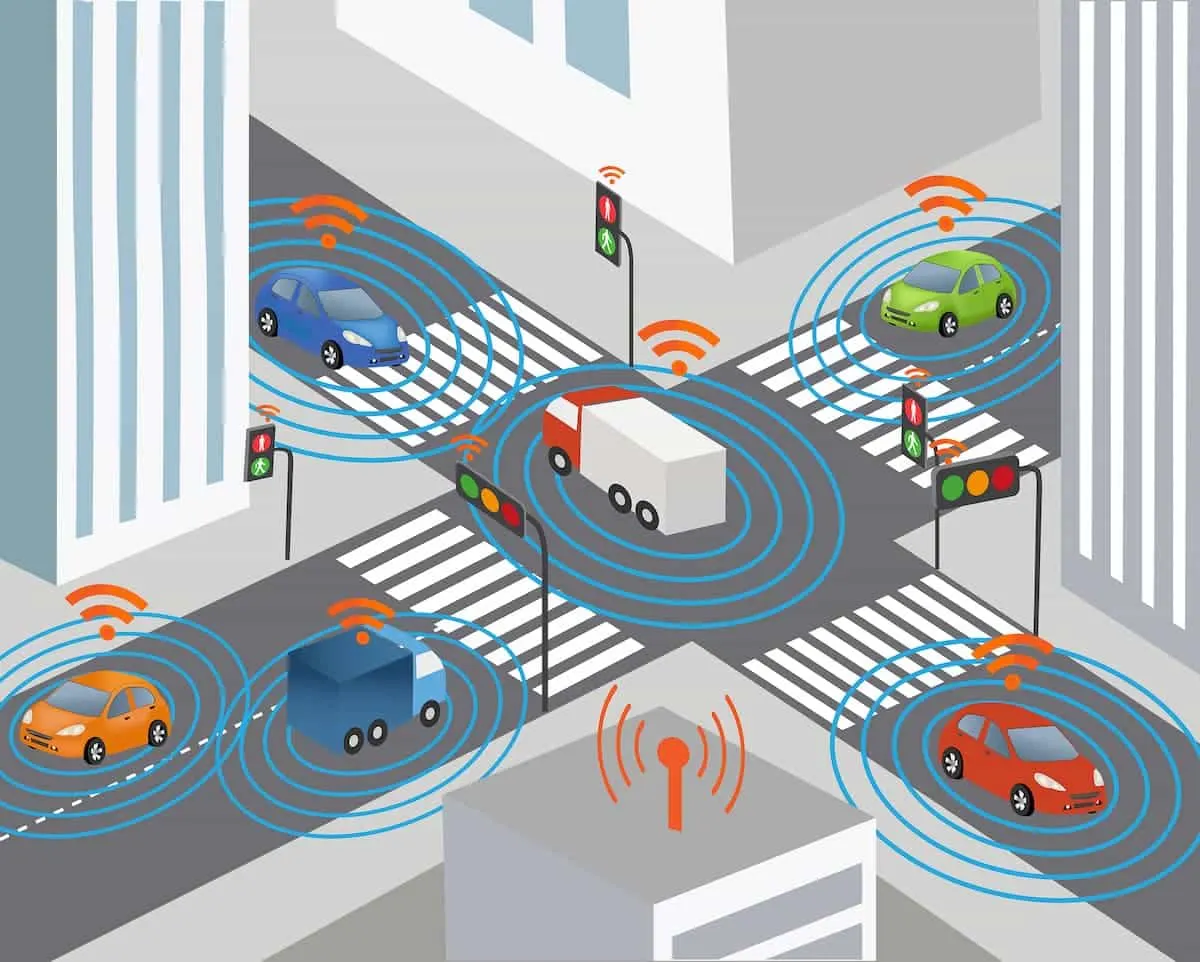
Users of connected vehicles will constantly connect to the internet and their devices. This will lead to several changes in the way we use cars including the ability to remotely start a vehicle, check its status, and even embrace new premium services for cars directly from the smartphone.
The car becomes the operational center of the user’s daily life, it becomes a 360-degree digital experience that unlocks infinite possibilities.
Connected services around cars, the existing ones but also those which will take a more concrete shape when demand and needs arise, will unlock countless possibilities, in turn, realizing and confirming what has been said so far.
Communication means Functionalities
On the one hand, we have all the OEMs: Stellantis, Toyota, Renault, Ford, and Mercedes are just a few of the major car manufacturers on the market. There are as many car manufacturers as languages that each of these vehicles speaks. And since each OEM uses its own proprietary communication protocol, then each service should be able to integrate each of these languages. A significant outlay of time, energy, and resources.
On the other hand, we have those working with vehicles: connected services around vehicles, Car Rental companies, Car sharing, and P2P car sharing companies. Each service focuses on providing the best solution and aims at optimizing the user experience. These services will have to be able to communicate with all the above-mentioned communication protocols, to provide a flexible and smooth service and to make the value of the premium service they offer worthwhile.
These two groups cannot communicate indistinctly, unless each of the service provider groups chooses to work with one and only one OEM group, which is very unlikely, or else commits endless time/resources to interface with each OEM’s communication protocol.
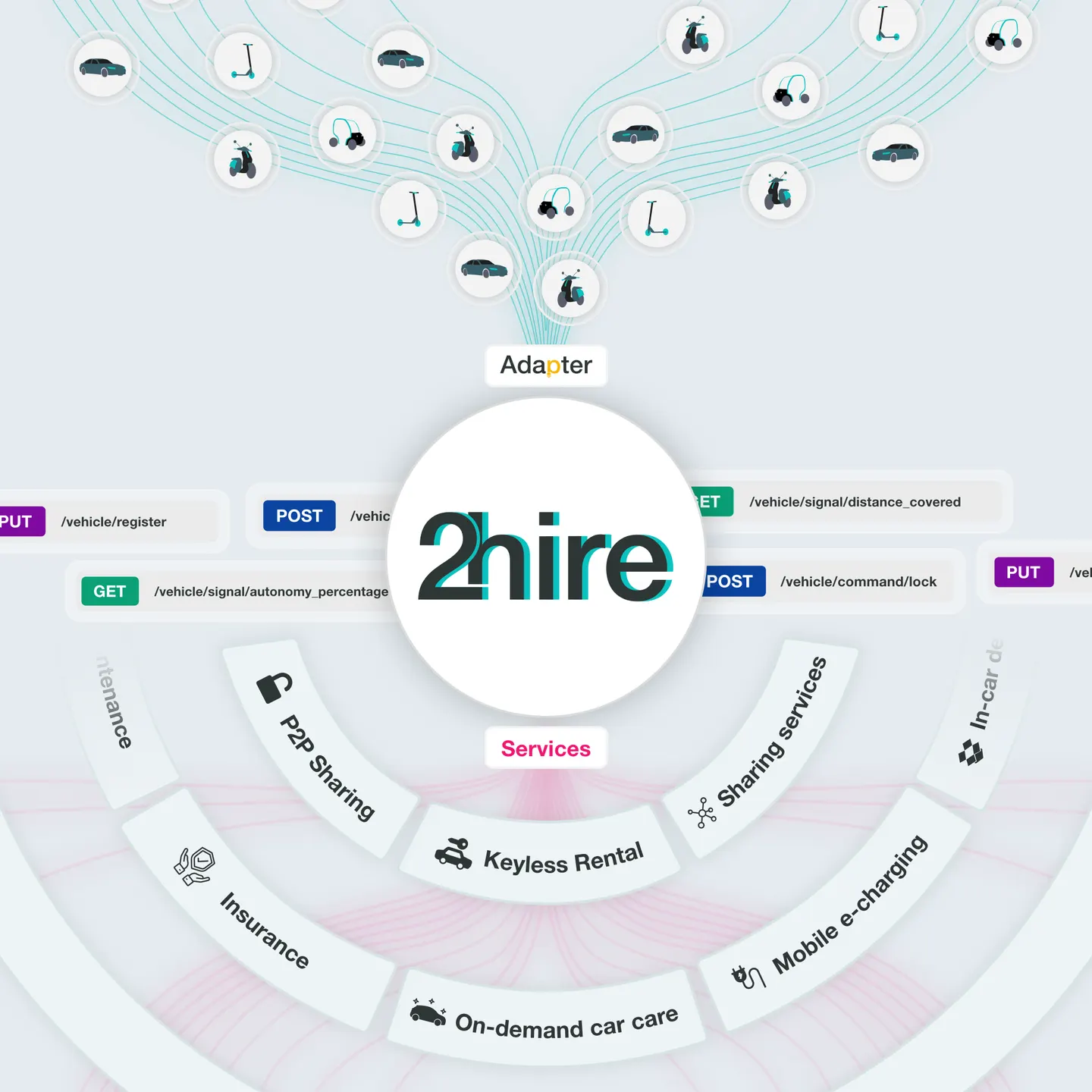
The best solution in between these entities? Adapter, 2hire universal layer.
Adapter makes it possible to…
- Homologate all the different OEMs so that connected services providers can communicate indistinguishably with all OEMs. Standardizing the languages used by connected cars is crucial for ensuring seamless communication and interoperability between vehicles and connected services. A standardized protocol for connected cars would enable all vehicles to understand and communicate with each other, regardless of their make or model.
- Increase the number of actors (car rental, end customers, P2P car sharing entrepreneurs, fleets) interested in several different makes and models of cars while also increasing the customer base that will later benefit from the services around vehicles, indiscriminately.
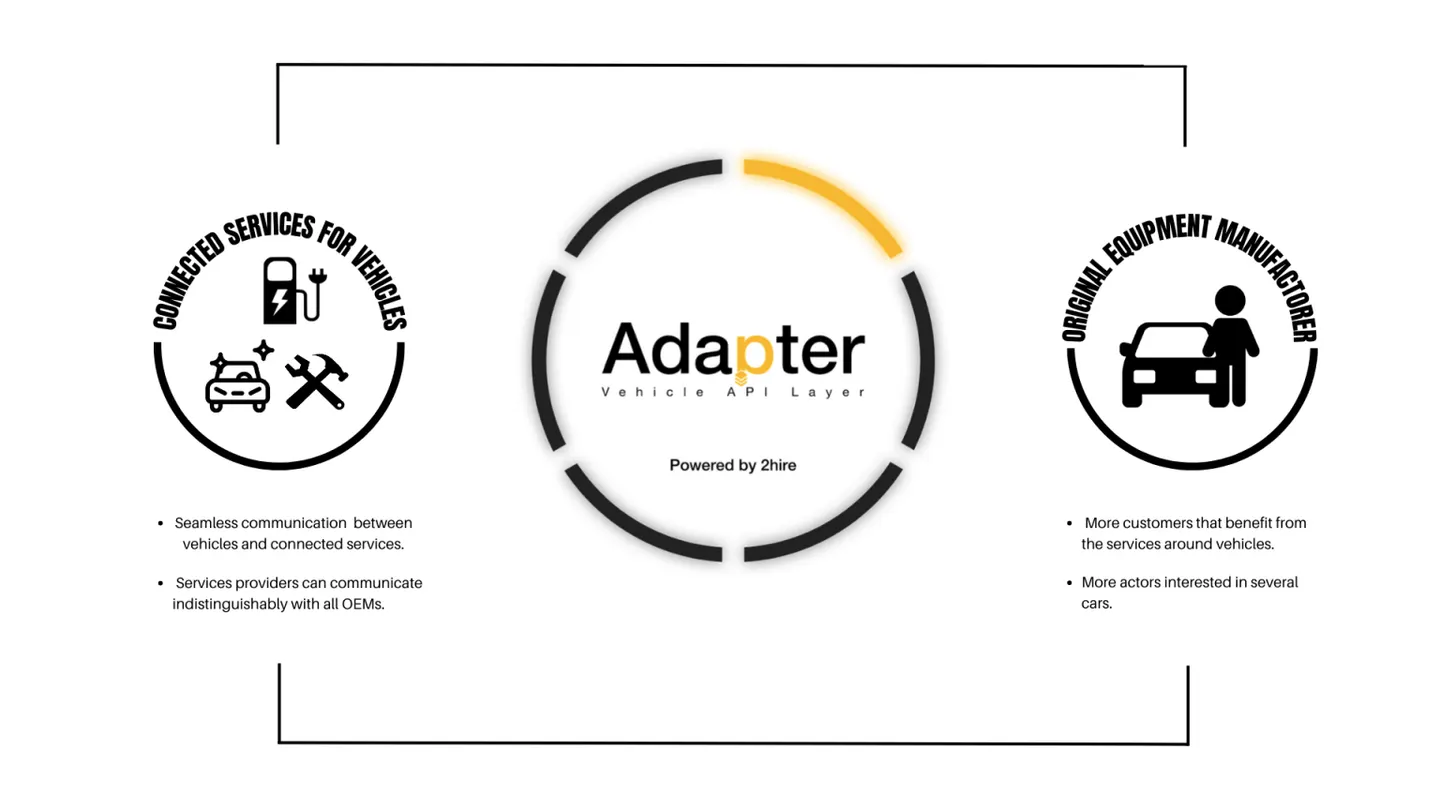
When a standardized solution (which encapsulates all OEMs) is offered, then the single OEM will be able to sell to a much larger basin of potential customers, and services (car rental, P2P car sharing, fleets, etc) will be able to manage cars digitally, regardless of make and model, solving the challenge with one software integration.
A new paradigm
2hire created Adapter, which is the single standardized access point to all the major OEMs’ vehicles. Adapter makes it possible, through a single API layer, to harness the embedded connectivity of cars, from the integration of countless vehicle Makes and Models to interact with, to the creation of an ecosystem of services around connected vehicles.
An integrated perspective
Standardizing car languages to a universal one is crucial for the connected car market to thrive. With every make and model using its language, communication with cars becomes difficult and can lead to issues such as lack of interoperability and increased complexity.
A universal language is what is needed to connect cars with services, no longer having connected cars and connected vehicles, but connected mobility!
Contact us and exploit cars connectivity to the maximum with 2hire!