27 Sep 2023 | 3 min read
After 2 years from the last edition, we finally hit the ground of IAA Mobility again!
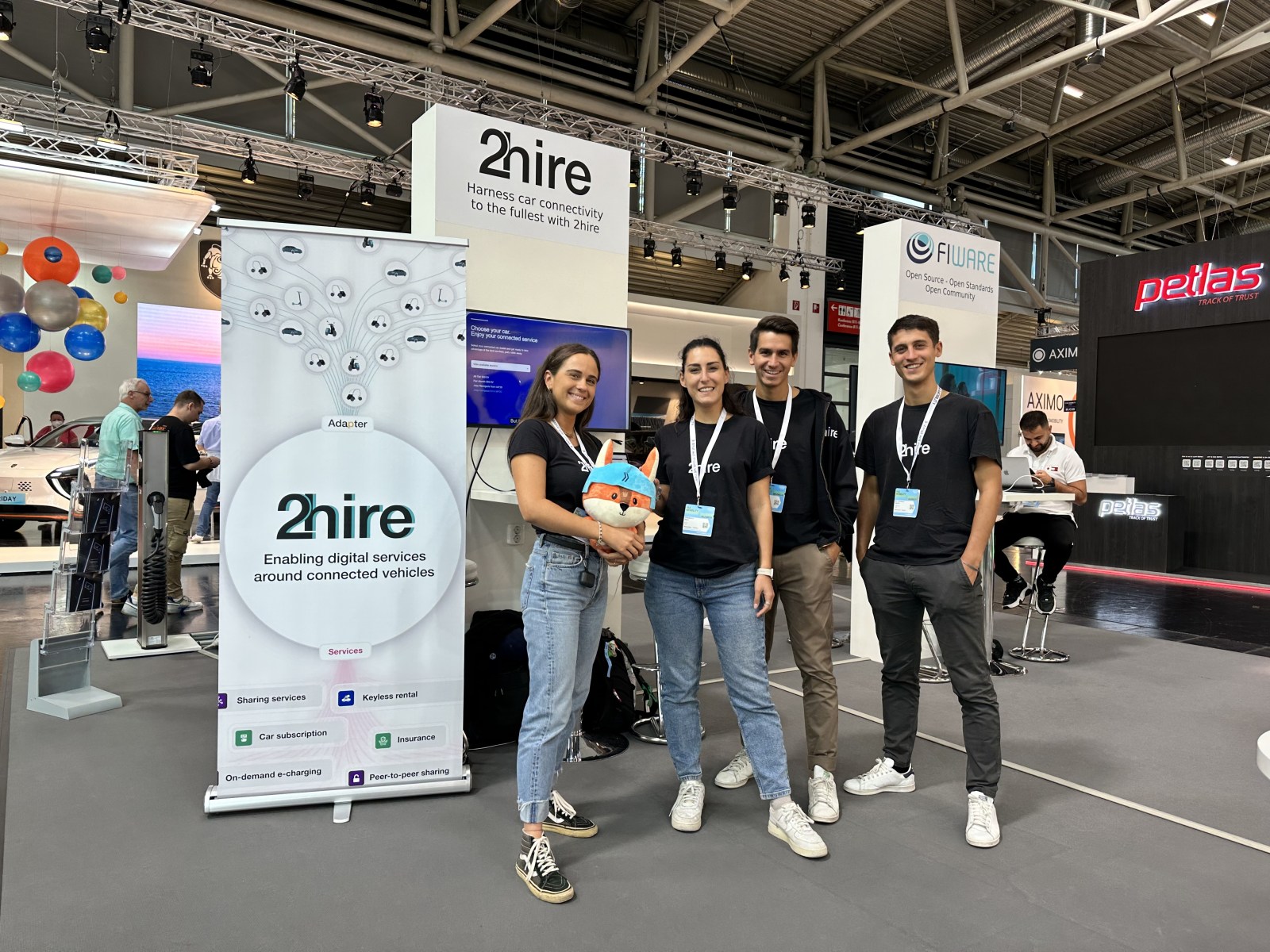
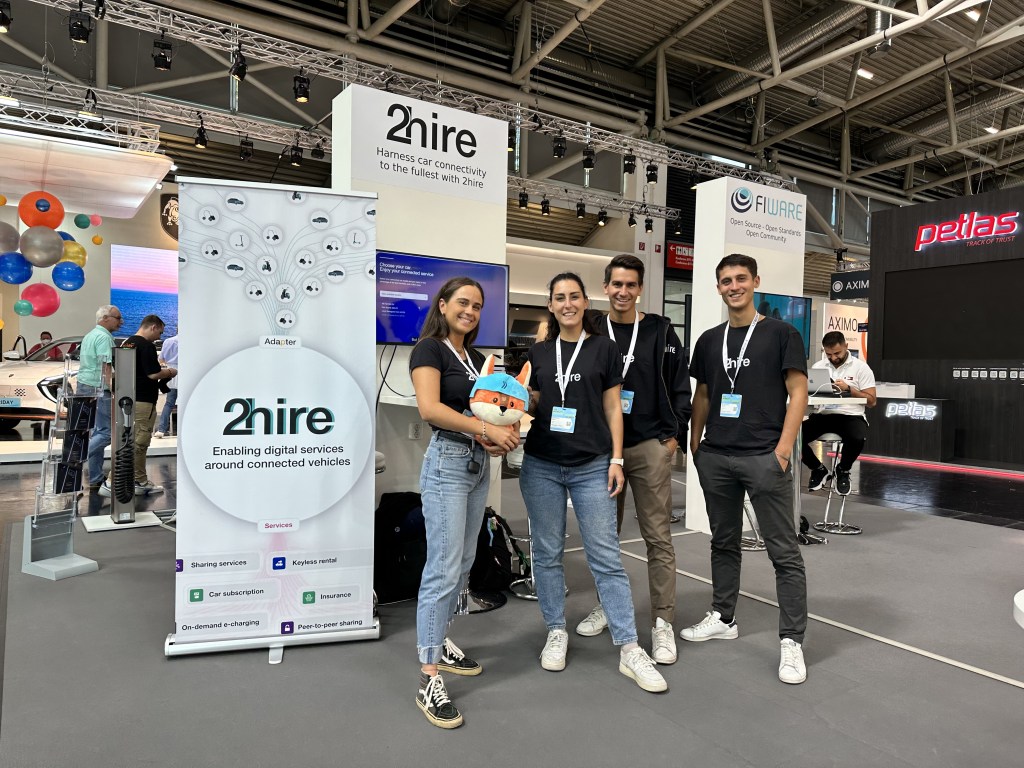
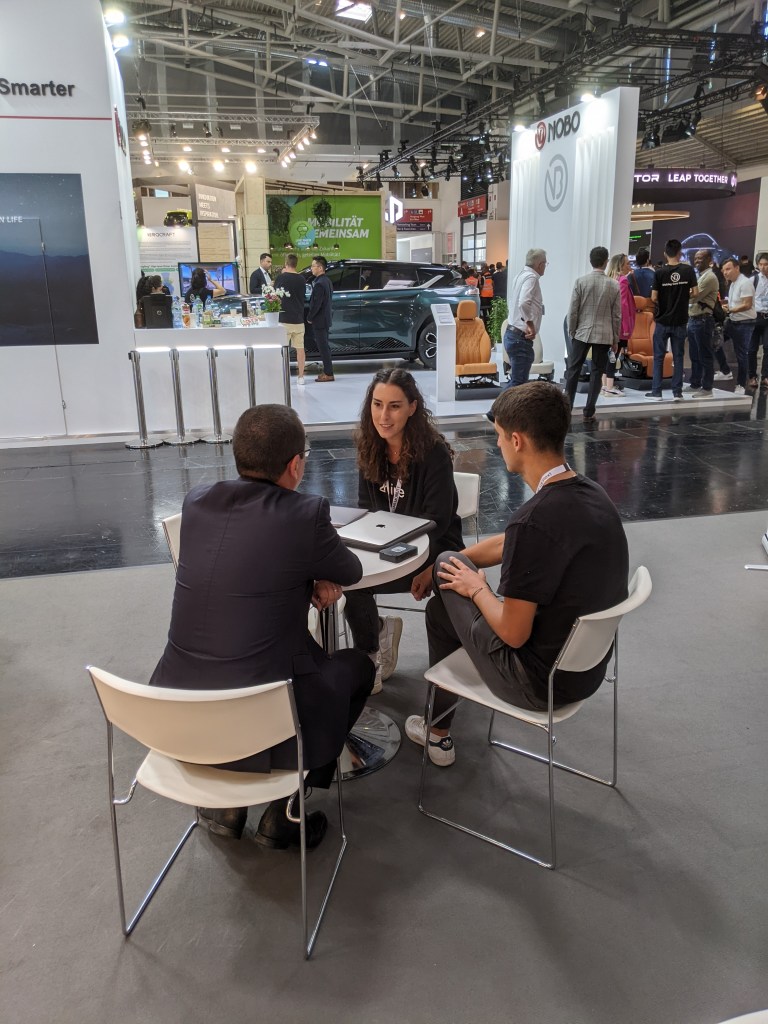
On September 5-8 the 2hire team exhibited at one of the most immersive automotive events worldwide held in Munich, Germany. 🇩🇪✈️
We exhibited within the Smart City Area, managed by the German Smart City Association, which has bundled several startups in the mobility field to create an all-round innovation area.
Thanks to the Smart City Association for the great set-up, the constant support, and the very good Italian coffees on hand. You helped us to fully concentrate on the event and make our experience at IAA even more valuable!The event unveiled a multitude of exciting trends, from electric vehicles and services around them taking center stage, to connectivity of cars bringing much light as one of the key solutions to seamlessly integrate smart technology into vehicles, creating a more personalized, convenient, and innovative experience for end users.
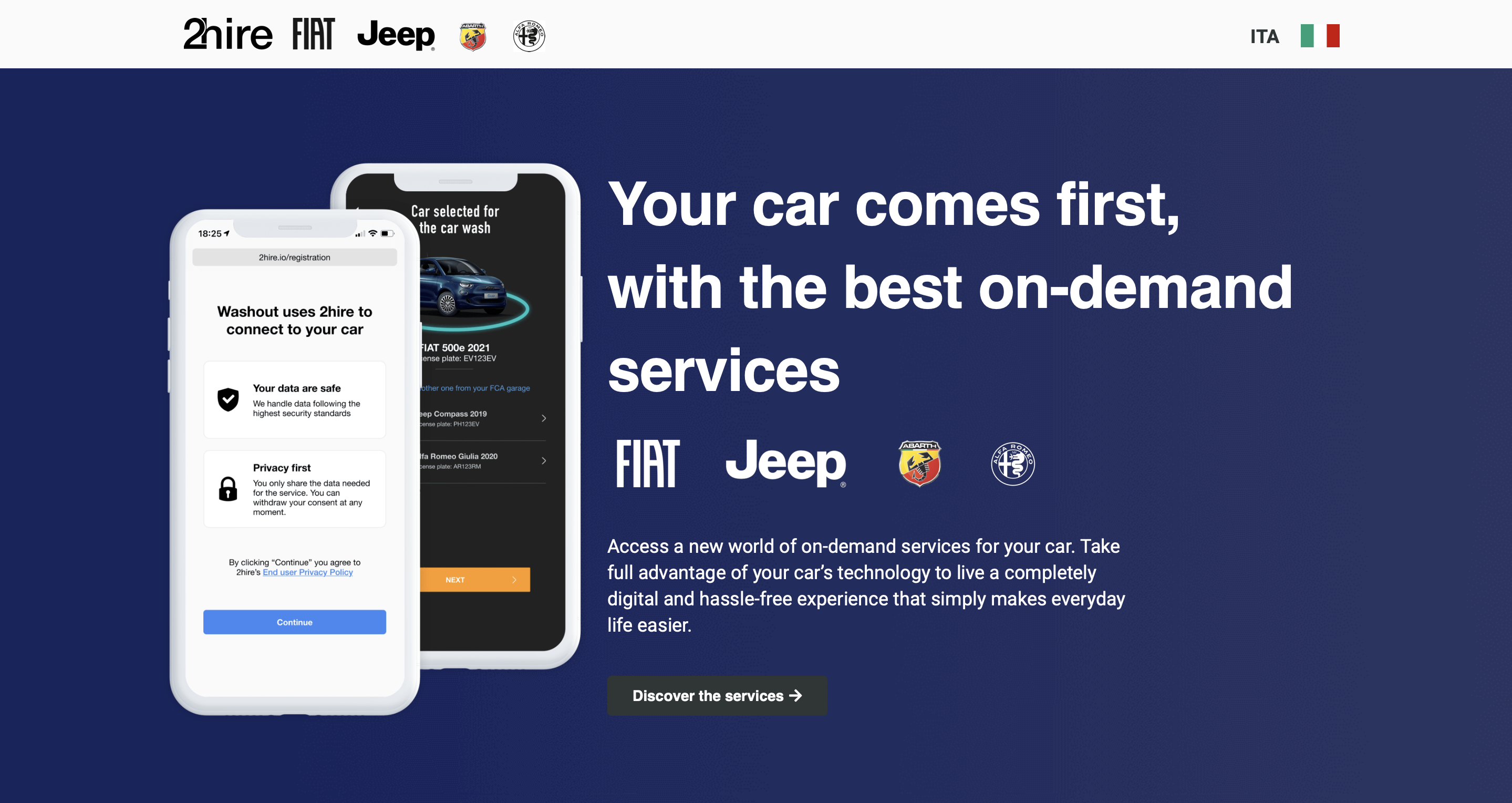
We took the opportunity of the IAA Mobility showcase to publicly share the recent partnership we launched with Fiat, Jeep, Alfa Romeo and Abarth concerning on-demand services for connected car owners. The ecosystem of services available is launching with the first four operators: on-demand e-charging with E-GAP and Reefilla, on-demand car care with WashOut, and in-car delivery with Poste Italiane!
Was nice to have a chat with Mobilisights, Data Business Unit of Stellantis Group, and E-GAP, energy delivery company, a pleasant moment to exchange feedback on the recent partnership and consolidate the working relationship carried on over the years.
Learn more about the partnership at: www.2hire.io/connected-services
There has been extensive talk about the increasingly popular alternatives to car ownership such as renting, leasing, car subscription, and sharing, and how technology can help make these services even more seamless and convenient. The exchange of insights involved some top mind professionals in the automotive and mobility sectors. We did enjoy our chat with Enterprise, exchanging visions on the most recent developments of telematics and connected solutions for fleets, digitisation of the rental process, and connectivity as a turning point for the exploitment of cars to the fullest.
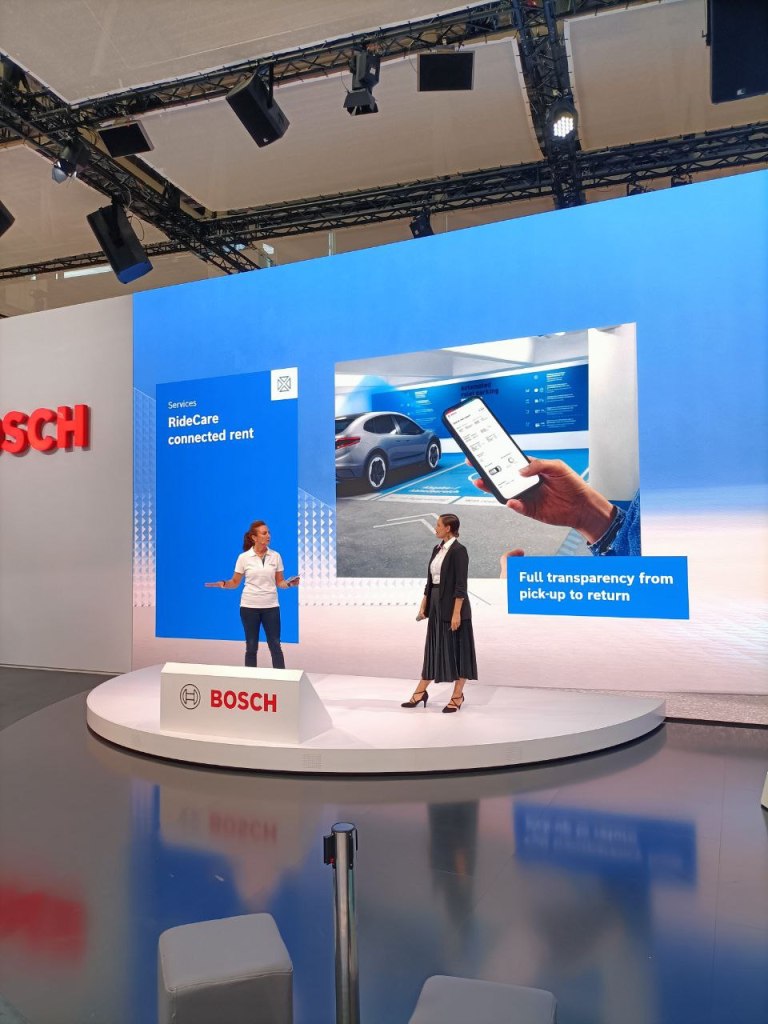
We pointed out several times the importance of digital management for rental companies (and not only rentals!). Bosch held a compelling session stressing the importance of digitisation of fleets.The aim is to provide a transparent, immediate, and innovative rental experience for end users and a smoother and seamless system management for operators. That’s exactly what we also believe in and where technology can make a difference! 💪🏼
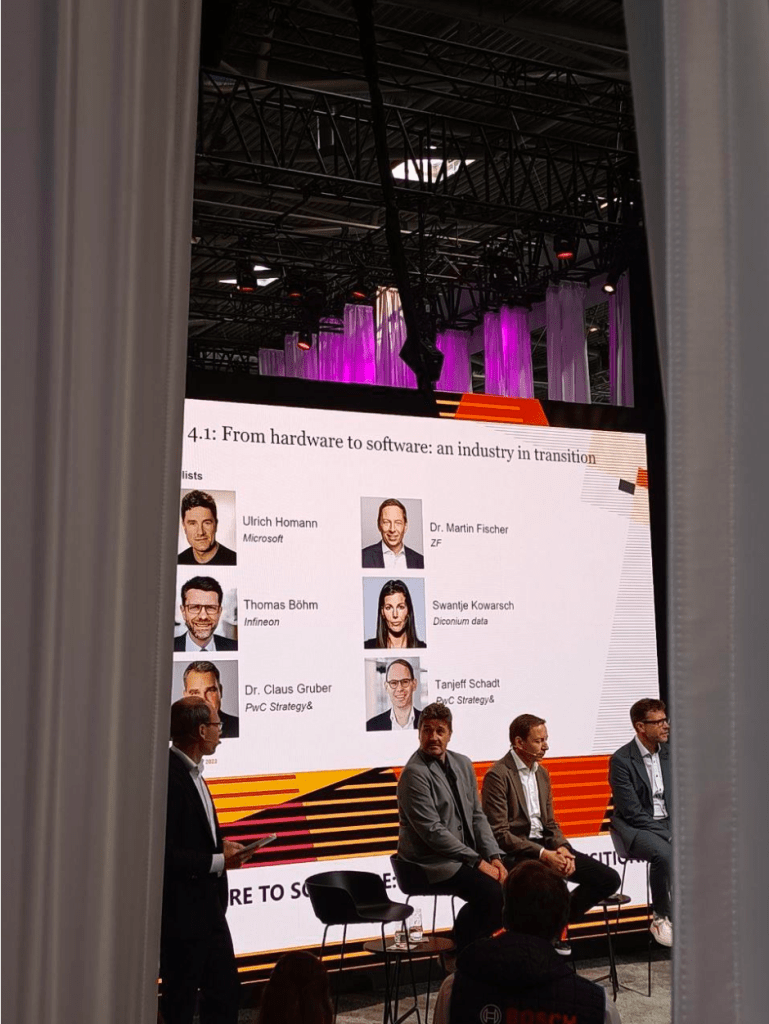
During the panel “From Hardware to Software: an Industry in Transition”, with speakers from Microsoft, ZF Group and other leading automotive experts, it emerged that by 2025, up to 40% of cars are expected to have new architectures and will be software defined. The panelists all agreed on identifying collaboration between players in the industry as the key enabler to make SW defined vehicles happen.
Users now expect their vehicles to offer features similar to those found in smartphones and other consumer electronics, so software-based models and connectivity are becoming pivotal for the modern automotive experience.
IAA Mobility confirms itself again this year as one of the automotive & mobility events par excellence, fully targeting our market goals. It provided our team with an exceptional opportunity to showcase our cutting-edge solutions around vehicles’ connectivity while talking to OEMs, Tier-1, and mobility experts from all over the world.
We cannot help but thank everyone who dropped by the stand, including Mercedes-Benz, with whom we defined the next core steps of the 2hire <> Mercedes collaboration around fleet connectivity; Drivetlv, leading innovation hub based in Tel Aviv, with which we delved into the international smart mobility market; the Tronity team for a great chat on the latest updates on car data and APIs.
It’s clear that the future of mobility is being shaped by technology around vehicles, and we’re excited to be at the forefront of this thrilling journey!
Digital Content and PR Specialist at 2hire
I love running and daydreaming losing count of the distance I’m covering, cooking (and especially eating) and Drake is my spirit guide.
Posted on September 27, 2023 by Benedetta Biggi
30 Jun 2023 | 3 min read
Car subscription is a relatively new way of making use of a car that offers an alternative to traditional car ownership or leasing and which is moving fast towards an innovative and technological approach.
It is a service where individuals or businesses pay a monthly fee to access and use a vehicle without the long-term commitment and responsibilities associated with owning or leasing a car.
The market size of Car Subscription exceeded $5 billion in 2022 and it is forecast to grow at over 35% CAGR between 2023 and 2032.
Vehicle subscription services are typically offered by car manufacturers, car rentals, dealerships but also third party car subscription service companies. Some examples in the current market are:
Under a vehicles subscription model flexibility comes first. Customers typically sign up for a specific duration, such as a few months or a year, and pay a monthly fee that covers various costs associated with owning and operating a car. These costs often include vehicle financing or leasing, insurance, maintenance, roadside assistance, and sometimes even registration and taxes.
The process may slightly vary depending on the provider but the overall path comprehends:
1- Selection of the vehicle subscription service that better suits the user’s needs.
2- Research of the car the user wants, the best make and model as if it was a leasing or rental mode.
3- Application and Approval comes once the user has defined the most tailored subscription option. In this phase, some economic, personal document, and driving license checks follow.
4- Vehicle pickup/delivery happens once the payment is processed. The car subscription provider may deliver the car to the customer’s desired location or arrange the pick up from a designated dealership.
5- Subscription period starts when the customer officially gets possession of the car. The customer can use the car for the agreed subscription period, usually on a monthly basis. The monthly fee covers several costs as previously mentioned: leasing of the vehicle, insurance, maintenance and other services specified in the subscription contract.
6- Flexibility is one of the main benefits when it comes to car subscription models. Depending on the contract and the contractor, users have the freedom to switch car models within the provider’s fleet. This allows them to change cars if their needs or preferences change. Some providers also offer the option to upgrade to a higher-tier vehicle for an additional fee.
7- Renewal or termination of the subscription is the final step of the process, and it’s pretty easy. Customers can either decide to proceed with another term renewal or close the contract and return the car.
When it comes to costs, it is important to have an overview of the investment involved before making a medium-to-long-term commitment.
Vehicle subscription services typically involve a monthly fee that covers various expenses, vehicle financing, maintenance costs, and many others, so there are no specific monthly extras such as insurance. Everything is part of the monthly subscription.
When it comes to the end of a contract:
A classic lease, which typically lasts two to four years, gives the customer three options:
– Final installment payment with subsequent car ownership
– Ownership of the car having paid regular monthly installments
– No final installment by stipulating a new leasing contract with a new car.
With car subscription it’s slightly different: at the end of the contract, which is a month-to-month based subscription for a specific period, the customer cannot take ownership of the car but can decide either to switch vehicle (or keep the same one) and renew the contract or simply close the contract without any additional installment to be paid.
Some of the main benefits of a Car subscription service are:
While some of the main disadvantages in Car Subscription are:
As the transportation landscape continues to evolve, vehicle subscriptions are likely to become an increasingly popular option for individuals and businesses alike. Providers may expand their fleets to include more sustainable vehicles, offer more flexible contract terms, and partner with other companies to offer additional services and benefits. By embracing the car subscription model, individuals can navigate the evolving transportation landscape, enjoy hassle-free mobility, and redefine their driving experience in a way that suits their lifestyle.
Sales and Marketing Associate at 2hire
I love running and daydreaming losing count of the distance I’m covering, cooking (and especially eating) and Drake is my spirit guide.
Posted on June 15, 2023 by Benedetta Biggi
30 Sep 2022 | 4 min read
Hiya everyone!!
I’m Alessandro Gallo and I have been working as a Backend Developer in 2hire since June 2020. I have lived in Rome since 2015 while studying computer engineering.
I started working quite early, in 2017, before graduating with my bachelor’s degree, and was eager to put into practice everything I studied and assimilated during my years of learning, and apply it in a real work context.
My first job was in a consultancy company, I had the idea of gradually tackling a series of different projects. It was certainly an experience that both formed and taught me a lot, but in 3 years I only managed to work for one client in the telco market… Too dull for a professional career that just started.
Even with my previous employment I was used to remote working, I never experienced office life, I did not live the daily activities, spend time with colleagues, or enjoy face-to-face interaction. But then…
I went through a waiting period, typical of any young person looking for a new job. I was jumping from interview to interview in search of something that struck me, that would set off a spark… but nothing caught my attention, and I certainly didn’t want to settle.
Of course, I should specify that it was also early 2020, and as you can imagine, switching jobs during a pandemic is not an easy process!
After about 10 different interviews, a recruiting company called me to propose a fresh new opportunity in a startup (yep, that was 2hire!).
It always fascinated me to participate in the early stages of building a company, to help shape something new is exciting for me. So I gladly agreed to participate in the interview.
The recruiting process went smoothly, the technical interview part was challenging and fun at the same time, which rarely happens to me: usually, I am quite nervous during interviews.
Due to this positive impact on the process carried out by 2hire, it did not take long for my current team leader Angelo Di Pilla to convince me to join the 2hire team.
My first impression of the 2hire values (both the company one and the devs team I am part of) and the experience I gathered from them was very good. I immediately felt an active part of the company, happy to have started this new journey.
I joined in June 2020, hoping that the pandemic situation in Italy would be better so that I could start in the office and bond with the team. The first few days in the office flew by, I was barraged with a thousand pieces of information about the team, the products, and the methodology.
❓Did you know that 2hire has a corporate Wiki❓📚
It is the company encyclopedia, containing details of 2hire’s history, who is part of it, the ecosystem of services it offers, and of course who uses it… our customers!
Let’s just say that to understand what environment you have landed in, the wiki is what you need!
After understanding my surroundings (shout out to the 2hire team for the fireball of information when I was the new kid on the block!) I immediately started helping the technical team develop new features for our technology.
In October 2020, the pandemic worsened again, so I kindly asked to start working from home until I felt safe being with others.
During the first lockdown, I had to stay alone in my house in Rome, that’s when remote working started to be part of my experience in 2hire. I was stuck and could not reach my parents in Foggia, my hometown. That’s why I made the decision to switch to remote working before it was too late again and I risked being stuck once again. It was during the pandemic that I discovered some of the health problems that make me more vulnerable to the after-effects of Covid-19.
Knowing all this, I decided to make remote working both an asset and an opportunity to work even better.
Remote working in 2hire certainly doesn’t mean being alone or not being involved in the company news and the team dynamics… Actually, way far from this!
From day one, we have been using a range of tools to keep in touch: from Discord for team voice chats, which is useful for co-operating on a task, to Zoom for team meetings, retrospectives, and gatherings with the rest of the 2hire team.
Oh, of course, let’s not forget the recent introduction of code-sharing tools, which have exponentially improved our productivity during pair programming sessions📈
Do you remember the company news I mentioned earlier? 📢
Every Monday morning we can’t miss the traditional meeting with the whole company, where we share the important news of the previous week, the highlights of the current week, and also fun moments where we can chat freely about any topic.
So many little things that make a difference, zeroing in on the feeling of distance from the guys in the office.
I am honestly impressed by how much my productivity improved since I am working fully remotely.
Time optimization is one of the core benefits I noticed when switching to the remote worker’s life. Things like traveling to the office by public transportation made me lose a lot of time during the day. I used to live a bit far away from the 2hire office, so I always had to calculate time efficiently (transport disruptions included), to arrive on time.
📑 Time investment made everything better ✅
When I switched to remote working, I started spending the gained time studying and getting better with the technologies we used to deal with in 2hire.
I was also able to use my spare time better: instead of moving around the city by public transport to reach my apartment, I focused on a side project that I always postponed because of the obvious lack of time and also the necessary knowledge required.
I have always been into mobile apps, they are the reason I first got interested in IT and became a developer.
My other passion is cooking (and eating… of course😋). That’s why I decided to invest my spare time in developing a mobile app called FoodStamps. FoodStamps addresses the problem of food waste at home to inspire people on how to correctly use ingredients, cook recipes without any leftovers, and how to organize purchases to avoid excessive stocks.
I am very grateful for the opportunity I had, I don’t think I would have been able to achieve this without the time optimization by working remotely.
Of course, there are always two sides of a coin. I can’t always be in the office when celebrations take place (but still the Zoom link to be there virtually never fails!), nevertheless, the company retreats make up for some of these shortcomings.
Having the opportunity to spend multiple days together, between workshops and leisure activities, helps you feel constantly part of something beautiful, innovative, and inclusive, and yes, I can say that I found all of this by joining 2hire.
Backend Developer at 2hire
I like playing basketball, video games, and reading about new technologies. I also love to develop personal projects in my free time to acquire new skills in the IT world.
Posted on August 25, 2022 by Benedetta Biggi
26 Aug 2022 | 3 min read
The societal shift after Covid-19 and people’s change of habits made the 9-18 office-based model less and less common, with more people working in far more flexible ways.
This doesn’t mean that we have to give up the social and collaborative aspects of working in an office. Coworking spaces are becoming increasingly popular as a way to bring these benefits into our lives, without having to stick with the regular full-time office job.
This is a new trend that emerged in recent years, revolutionizing the way of thinking about work as a static, sedentary thing. It gives everyone who wants to broaden their horizons and see different contexts the chance to do their job as if they were in an office… except for the fact that in these offices you find different people all the time, from all over the world!
While the primary driver of the rise in the use of coworking space is undoubtedly the Covid-19 pandemic, there are other factors at play.
A study by Deskmag found that the number one reason people use coworking spaces is to meet other like-minded people and work in a social environment. This was closely followed by the need for a more flexible working environment, the desire to escape distractions at home, and the willingness to see different ambients.
The office is the pivot in the life of all workers (full remote excepted). Having a ‘headquarters’ where everything is created and developed is part of the process, but the watertight concept of the office has now vanished.
Coworking spaces offer a happy medium – they provide the flexibility of homeworking with the social interaction of an office environment. And for freelancers or remote workers, they can provide a much-needed sense of community. Not to forget that they also offer the possibility of an international experience. An innovative and well-stocked base with the advantage of being located (almost) anywhere in the world!
Currently, the coworking space market in 2022 is worth $16.17 billion, but this is expected to rapidly spike as the prediction shows the number of coworking spaces increasing from 40,000 by 2024, compared to just 18,000 in 2019. By 2026, the coworking space industry is expected to reach a value of $30.36 billion.
The flexible workspace market will represent 30% of office stock in the U.S alone, catering to more than 5.1 million workers.
There are a few key reasons for the coworking space phenomena:
The coworking market is growing exponentially, with new players entering the market all the time. Some of the key players in the coworking space market include:
Coworking spaces are re-imagining work by providing an alternative to the traditional full-time office. Coworking spaces offer a more flexible and collaborative environment that can be tailored to fit everyone’s needs, making the working environment positive and productive, wherever an employee is.
Coworking spaces are here to stay, and they’re only going to become more popular as the workplace paradigm continues to evolve.
At 2hire innovation is at the root of everything we do.
We don’t just go for a no if something is out of our comfort zone. We have opened 2hire doors and have a multi-located team that can work and is productive everywhere.
Luiss Enlabs, the accelerator we joined during our early stages, has also been the first coworking experience for us in this sense.
Since our acceleration program there, the relationship with the organization has always been pretty active. Many times we have found ourselves with part of the team dislocated, in Milan for example there is an EnLabs office that 2hire guys use as a workspace when they are in the city and need to keep operational, the ideal space to reconcile concentration and comfort.
Shout out to Luiss EnLabs for providing us with a coworking space when we are around Milan, allowing us to keep on working when we need a solid base!
Sales and Marketing Associate at 2hire
I love running and daydreaming losing count of the distance I’m covering, cooking (and especially eating) and Drake is my spirit guide.
Posted on August 24, 2022 by Benedetta Biggi
30 Aug 2022 | 4 min read
“Startup success can be engineered by following the right process, which means it can be learned, which means it can be taught.” – [Eric Ries]
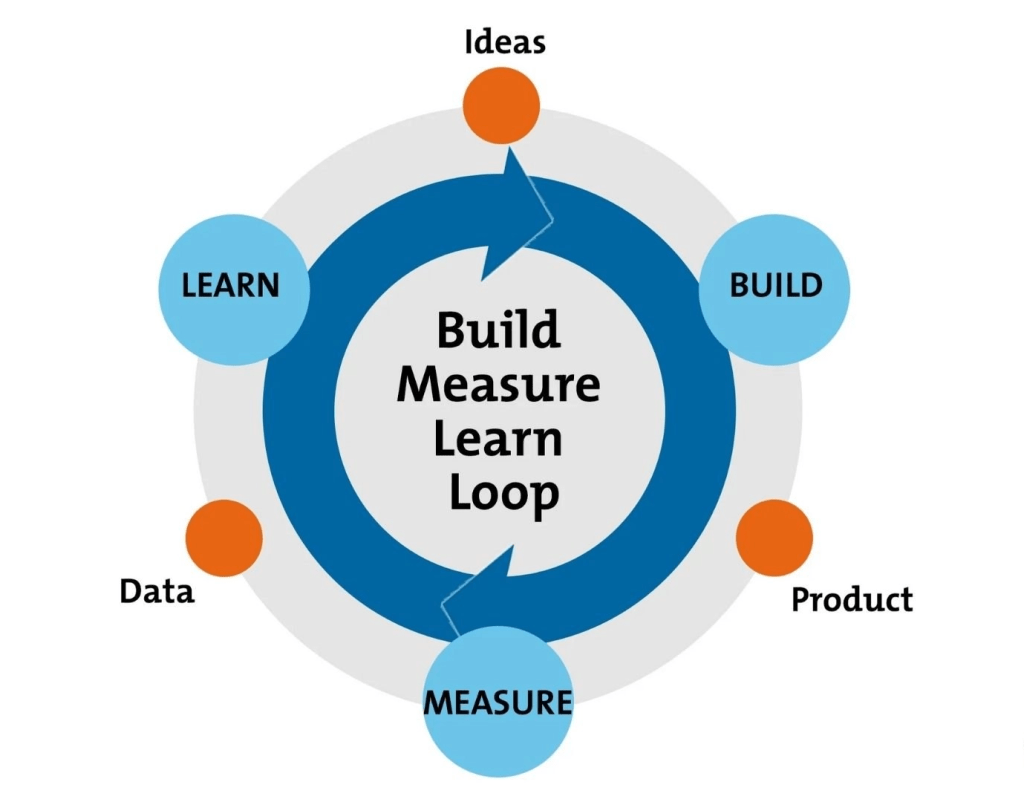
Eric Ries coined the term Lean Startup to describe a methodology geared towards supporting organizations to complete phases of experimentation and iterate on these when looking for a sustainable business model. At the root of Lean, we find the BML process, which in layman’s terms means: Build – Measure – Learn/Iterate.
In this article, we will discuss the implications of this decision and what it could mean for the future of automotive transportation and the diffusion of more and more electric vehicles.
In terms of how a lean startup behaves, its actions can be broken into these three above mentioned steps:
Build → Building experiments where the entrepreneur acts as a scientist. He/She, through the manipulation of controlled variables, notes the variation of independent variables. These are used to test the business model hypotheses. There are tons of types of experiments to test, and Minimum
A concept coined by Ries stresses the impact of learning in new product development. According to him, an MVP is the version of a brand new product that allows a team to collect the maximum amount of validated learning about customers with the least effort.
A) Pivoting is the “all in” phase in which the action of radically changing one/more dimensions takes place to formulate new hypotheses and test them again.
B) Iterating is more “calm and steady”, it’s about pushing and promoting one/more changes in the product/service/business model to test the new hypotheses.
C) Escalating is the “go for it” phase, where the entrepreneur understands the business model might be the right one and is willing to invest more in it to obtain economies of scale.
D) Giving up can simply be the “game over” phase. It occurs when tests, feedback, and experiments clearly show the business vision and the product/service are not able to generate a solid business model.
In the early stages, BML most likely generates obstacles and bad news. That’s why keep following the learning – feedback loop is important, pivot repeatedly, and then persevere. Every failed MVP is a good chance to learn, grow, and recommit to the feedback loop. Perseverance is the secret ingredient to the success of the Business – Measure – Learn process.
A Californian file hosting service providing cloud storage, personal cloud, file synchronization, and client software. It is one of the most suitable examples to give an insight into the application and positive outcome of this framework applied at a company level.
Dropbox developed an MVP: a 3 mins screencast showing to consumers what Dropbox was able to do. In just a couple of days, dozens of people gave their opinion on it, sending a huge amount of feedback to the company, which helped them develop a fast-evolving, one-of-a-kind solution in the market.
Some numbers? With a Lean-oriented approach, in 15 months Dropbox increased registered users from 100,000 to 4 million.
1- Risk is harsh: giving all your energy and time to something that people might not want at all is the biggest risk.
2- Holding back is worse: having a production timeline is important, and not launching or delaying is painful. But not learning for haste is fatal.
3- Feedback storm: put something in people’s hands and get concrete feedback asap.
4- Authenticity: Be honest with your target. Speak truly.
Not all startups choose to follow a lean methodology. Those that do, however, may exponentially increase their chances of long-term viability for the simple reason that the build-measure-learn framework forces innovation.
The model of testing in small steps, measuring, and changing based on the gathered data is very useful for a startup that has little time, few resources, and wants to grow fast.
Lean startup (LS) in 2hire is indeed a mental approach of our company . It made us understand how to structure the entire team and how to try to have this methodology at the root of everything: how to launch new services, products, and initiatives, and how to keep working on innovation.
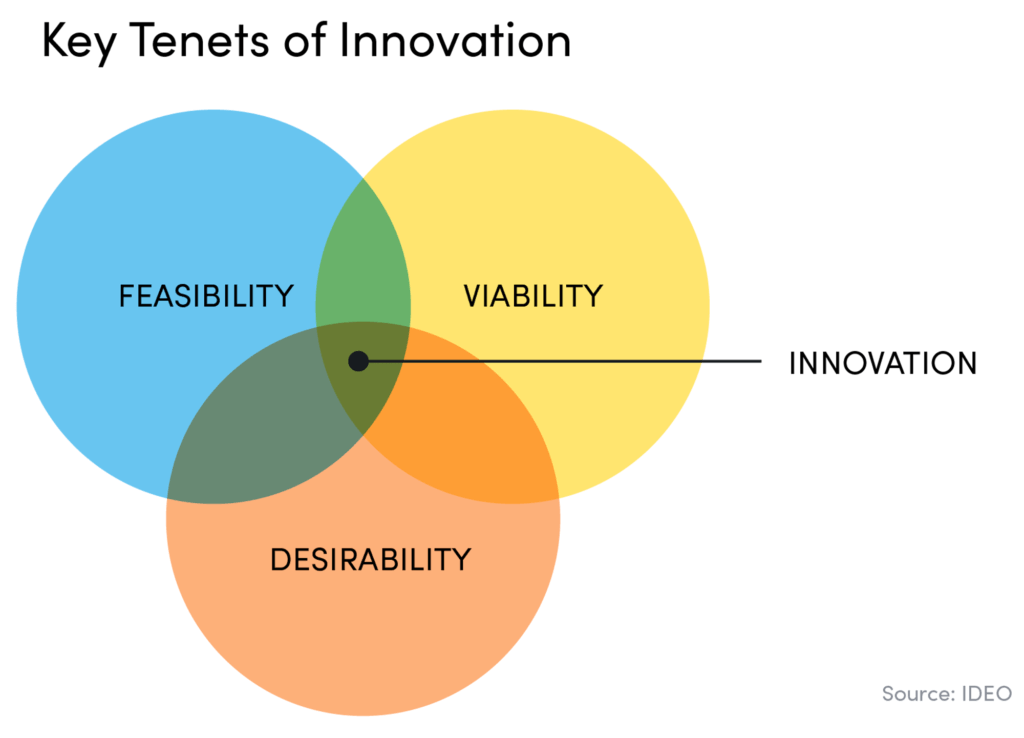
Lean’s final goal is fostering innovation, but innovation does not only mean something new, it’s about proving economical viability, technical feasibility, and therefore its success in the market.
According to Tim Brown, CEO of IDEO, an MVP must be desirable, viable, and feasible. Many companies rush headlong into the implementation of their MVP without considering one of the most valuable resources: the user’s point of view.
That’s why many products/services fail: the developed idea doesn’t actually solve a user’s problem, in the eyes of the users the MVP is not desirable.
Hence why Build, Measure and Iterate is part of the 2hire process. Those are the principles for what we do in 2hire. That’s the framework we use. It’s a universal framework that our team adopts in the development of our solutions: from our rental product to how you start to do communication. Every project developed in 2hire has an underlying footprint that is based on this approach. The outcomes produced are measured on a weekly/bi-weekly basis by analyzing the projects we are carrying out.
Through retrospectives and regular meetings, we can track the results and progress of our work. Notably, retrospectives in 2hire are done every two weeks, we do a review of what was done and the obtained results, giving us goals for the next two weeks and correcting if something is not working as expected.
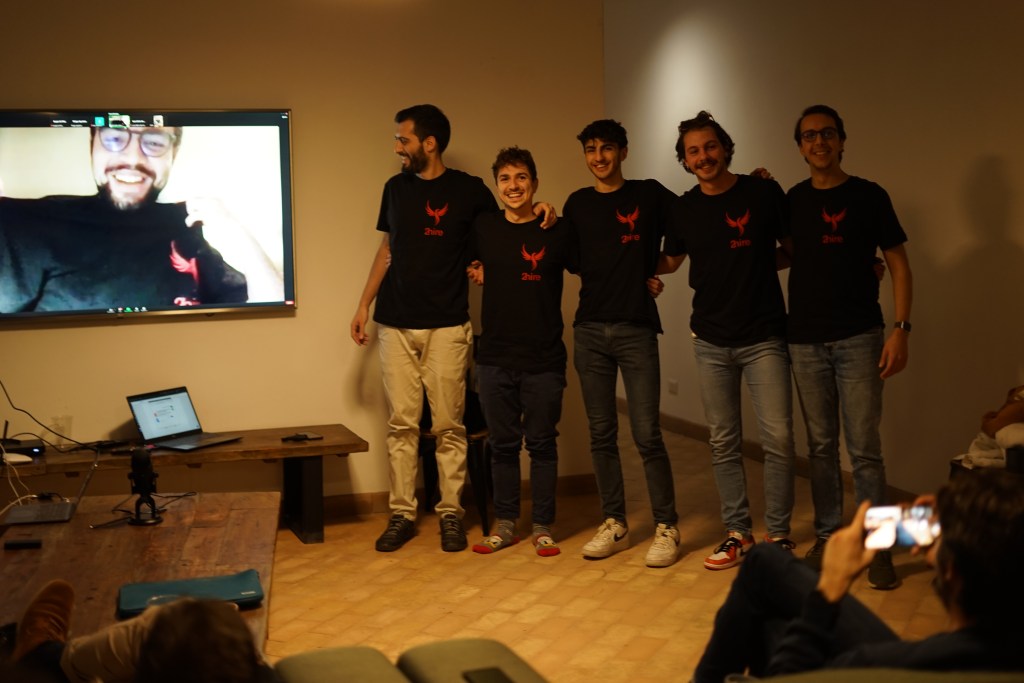
According to this, a great example to showcase how we adopt a process of evaluating the state of progress and measuring results afterward is the application of the Agile Methodology within one of our development teams at 2hire: Phoenix.
We use these retrospectives to analyze and measure results, but also to gather feedback on how we can improve to move forward better and faster.
From what we know, from what we’ve understood so far, Lean methodology can really be useful for a young company, a startup, but also larger companies. As long as we continue to be satisfied, we will continue to use lean methodology to keep us at the cutting edge of mobility, to reach our final goal of connecting all vehicles and making millions of people move.
Sales and Marketing Associate at 2hire
I love running and daydreaming losing count of the distance I’m covering, cooking (and especially eating) and Drake is my spirit guide.
Posted on July 14, 2022 by Benedetta Biggi
22 June 2022 | 3 min read
Hi y’all!
I am Matteo Scarpello and I have been working as a Backend Developer in 2hire since January 2021. From day 0 I worked remotely from my hometown, Chieti.
Even with my previous employment, I never experienced office life, I did not live the daily activities, spend time with colleagues, or enjoy face-to-face interaction. But then…
Once I got the job, the onboarding process was very cool and well structured.
Firstly, a “buddy” was assigned to me, Emanuele Loreti, 2hire’s Customer Support Specialist, who gradually introduced me to a member of each team.
Then 2hire’s Head of Backend Development, Angelo Di Pilla, introduced me to a more technical onboarding process.
This technical onboarding was made in order to align with the rest of the tech team; and since we have embraced the Agile methodology, the onboarding has become even smoother, in less than two weeks a new developer is able to contribute independently to the project.
Finally, I also had a meeting with Filippo Agostino and Elisabetta Mari, our CEO, and COO, who gave me an overview of the company, a detailed 2hire background, and a roadmap of the progress made so far.
I immediately felt surrounded by a very cool atmosphere, supported by all the team.
I clearly remember my first visit to the office in Rome, just two weeks after my recruitment. At the end of January, I was invited to the office for my official presentation to the 2hire team. I was a bit scared and shy. It felt weird to finally realize I was no longer an all-remote worker but a hybrid figure, I finally had the opportunity to enjoy an in-person space, surrounded by so many different stimuli.
Once I got there, I experienced on hand the ambient, the people, and the mentality of helping each other that characterize 2hire. In a nutshell, I can easily say that one week was more than enough to realize that I would have wanted to move to Rome and experience office life on a daily basis.
Remote Working is definitely comfortable and cheap, why would you want to change this?
Well…There are several reasons.
When working remotely you have nothing to worry about in the morning, no waking up hours in advance to get ready and travel a route, perhaps stuck in traffic that will make you worry about being late for the office. So, it can be very cool if you are a logical person fan of task optimization like me!
But, there is a big BUT.
From my personal experience, at home, I definitely felt more alone. There, I had a time when I spent several days without even knowing the weather outside. And just to be clear, I am not a metheoropathic person, but if there is something I am sure of, it is that as comfortable as smart working is, I love being surrounded by people (even with the bad weather!).
Ok, that’s a legitimate thought.
The moment I found myself, by my own choice, deciding between working at home or outside, I said to myself that if I wanted to move from home it made more sense to simply join the team in Rome. At 2hire I always had the possibility to choose, but for me, it wouldn’t have made sense to keep working remotely, and simply change location.
The devs room in the office is called “Open space”. The cool thing about every room in the office is that if you want to exchange a feeling, if you have a doubt, or simply want to “go with the flow” and know more about everyone’s status (not only about devs 👀), you just have to speak up!
For me it was a natural step: if I wanted all of this, daily, I had to work in the office.
In January 2022, after a year of working remotely at 2hire, my moment arrived and I finally moved to Rome!
So far, what I can say is that it was (and still is) a great decision for my personal growth and my career. Here at the office, I feel like I am more actively participating in the workflow. Thanks to the proximity not only to the Tech Team, to which I belong, but also to the Business Team, I am also more up-to-date on the daily progress of our prospects and customers, as well as the growth possibilities that our company is working on.
In-person it is also easier for me to come up with interesting ideas and proposals. The latest proposal we implemented, for example, was to involve Cosimo Calciano, Business Developer at 2hire (not just a colleague but also long time friend from the University days) to present 2hire to Svoltastudenti, a big students association of Politecnico di Milano, of which we were both members when we studied engineering there.
There was a triple objective in proposing this mission:
The opportunity to bring one’s own ideas to the table and put them into action is an incredible opportunity that 2hire gave me, and that gives to everybody on the team.
I am glad I embraced this opportunity and made it a reality. I think that there is nothing better than being appreciated for who you really are, especially in the work you carry out daily.
Backend Developer at 2hire
I’m a logical person fan of time optimisation and organization. Not the first Matteo in the team, you can call me Chopper if you prefer (like the doctor reindeer).
Posted on June 22, 2022 by Benedetta Biggi
7 Apr 2022 | 4 min read
Sharing mobility is a whole world.
Starting a new service of sharing mobility is tough.
You have to choose what kind of fleet you want (mopeds, kicks, scooters, bikes, cars… or a mix of them).
You have to choose what kind of the selected type of vehicles you want (NIU, SuperSoco, and so on).
You have to choose a provider for the connectivity of your fleet.
You have to choose the name of the service, its colors, the app.
You have to choose. A lot.
Even when everything above is set, you have to answer the million-dollar question. How many vehicles do you need for your service?
The decision is crucial to the fortunes of your service, and still, there is no clear answer.
Why?
Because they will tell you that every city is different. Every country is different. Every person has habits, rules, timetables.
Well, guess what.
It’s a lie, and this article is all about this.
From our experience as 2hire, we found a rule which helps you to answer the most difficult question you will ever face in the starting process of a mobility service: how you choose the number of vehicles in your fleet.
Finding a rule that fits different cities, with different climates, and different habits is not an easy process. In the summer of 2021, however, at 2hire, we had the opportunity to observe a single service act across multiple cities. The Elerent service has been active in almost 30 cities in Italy, from North to South, from East to West, from the mountains of Abruzzo to the seaside resorts of Sicily, Sardinia, and Puglia. The dataset lends itself to analysis for many reasons, but one of the things that makes it so valuable is that each site uses the same app, with similar costs for end-users. Often, when comparing different services, too much diversity in user experience can lead to lost value in the analysis. This is not the case here.
For each city, for each day in August, the following variables were selected as variables:
At the end of the month, for each city, the information collected contained:
As expected, these numbers are not comparable with each other: it would be wrong to compare the earnings of a city with a fleet of 60 vehicles with those of a fleet of 10. The same goes for the number of trips, users, or active vehicles. What is needed is a different measure, generated by putting together more than one of the metrics above.
Our analysis considered the Net Profit per Trip (NPT), calculated as the algebraic sum of profits, minus some fixed costs such as operational costs, IoT provider, and so on.
A sharing service will have to sustain other costs, but they will generally be costs that will impact with the same proportion all the earnings and that, for now, we can exclude.
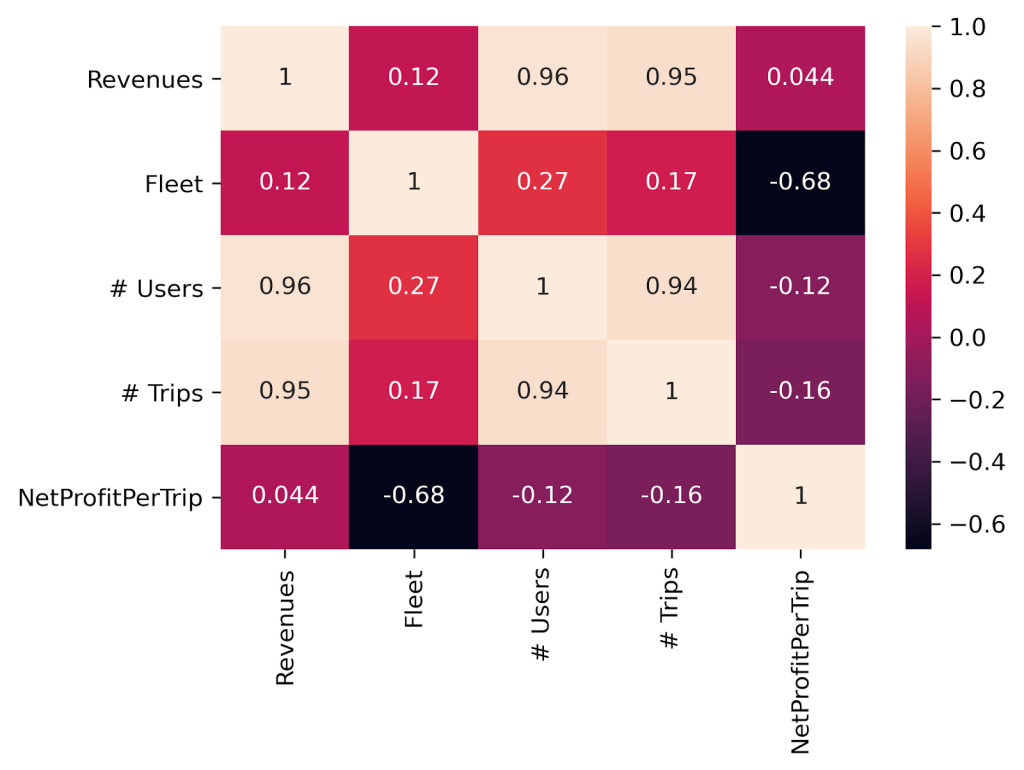
We put the four standard quantities (revenues, fleet size, number of active users, and number of trips) in a correlation matrix with the Net Profit per Trip. The goal is to understand if the NPT is valid as a control metric. A correlation matrix is a tool for understanding whether quantities are in any way proportional to each other. The higher the correlation between two variables, the closer to 1 is the value. If two metrics are not correlated, the corresponding number on the matrix tends to be -1.
As you can see, the Net Profit per Trip is not correlated with the other quantities, which are strongly related to each other as expected.
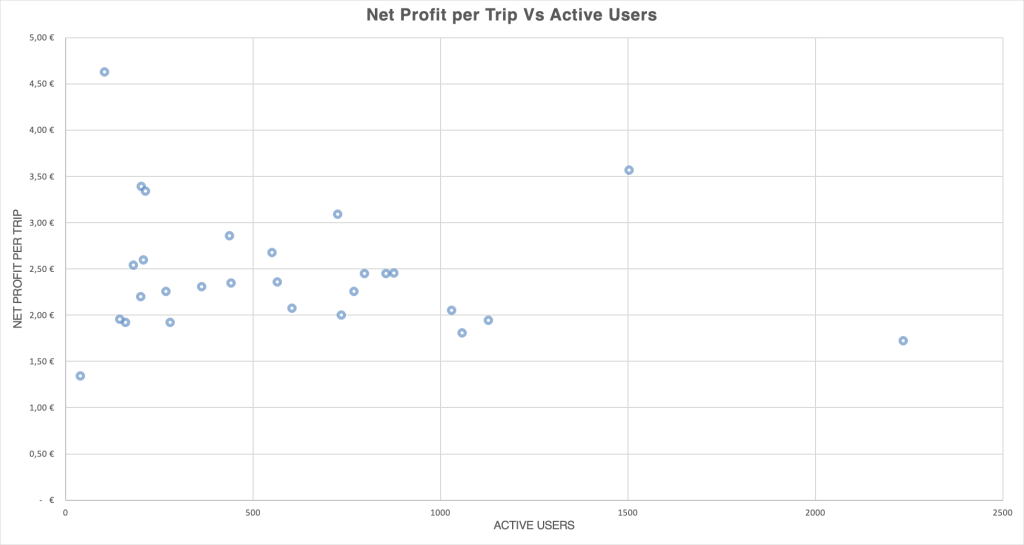
This means that Net Profit per Trip is a good informative metric, and since it is independent of fleet size, the number of active users, trips, and revenues that are made in a city, it must depend on some external factor (such as the average trip duration, which maybe depends on the size of the geofence, or the habits of the inhabitants of that particular city).
We know that Net Profit per Trip is independent of other quantities, and we can estimate it around 2.5€ per trip, according to the dataset we analyzed (graph) and the estimation previously made. So, this number can change according to possible fixed costs variations, and it is not intended as specific for the use case.
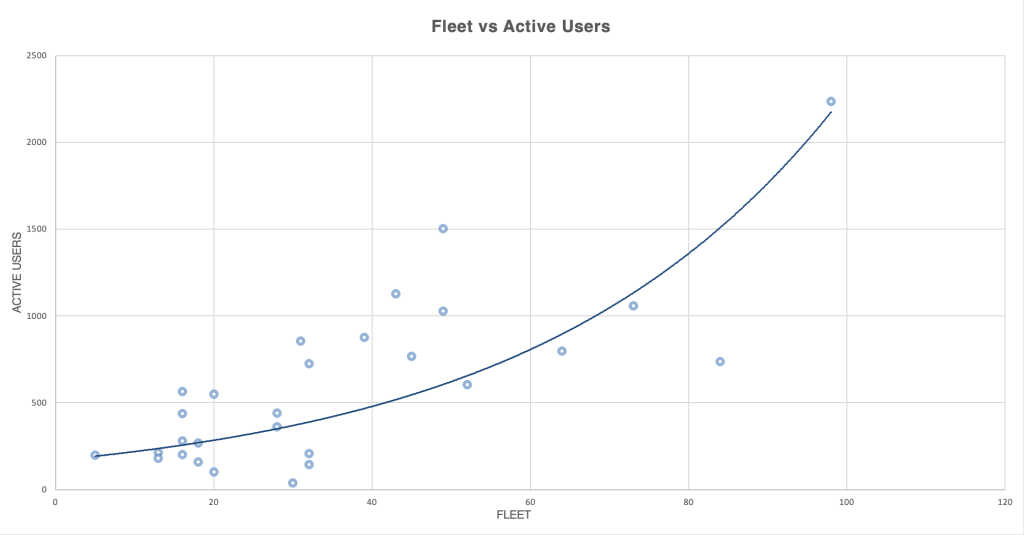
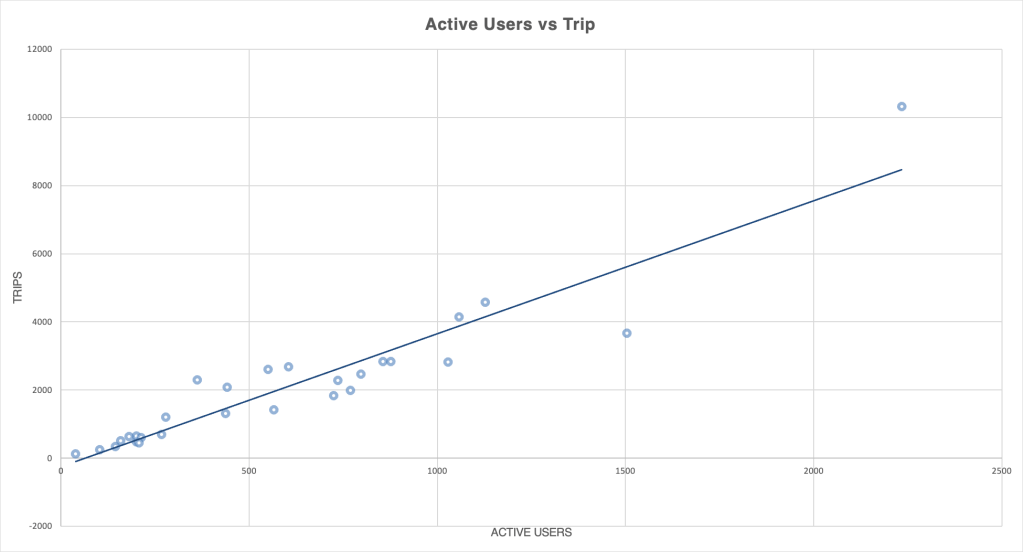
We know that fleet and users are correlated, as well as users and trips, as shown in the figures below
The Net Profit per Trip is crucial to start a sharing service because it can be used as a starting point to calculate the number of vehicles needed for the service to have a certain amount of monthly gain.
For example, suppose you want to earn 10K€ per month (Net Profit).
We know that the number of trips needed can be evaluated starting from the Net Profit, divided by the NPT, so 10000/2.5 = 4000 trips.
From figure 4, we know that for 4000 trips are needed about 1100 users, which according to figure 3 are obtained with about 60-70 vehicles.
Nothing more than that.
This is not as random as it sometimes seems. You just have to know how to read the numbers
All this needs to be parameterized and scaled, considering that the analysis looks at the month with the most trips in the year, but it is the information that the analysis contains that is crucial, much more than the final numerical result. Finding a rule that can give our customers an idea of how many vehicles they need, answering the million-dollar question that no one ever answers.
Data Scientist at 2hire
Less is more. I look for science and numbers in all my interests and emotions with the people I surround myself with.
Posted on April 7, 2022 by Benedetta Biggi
1 Mar 2022 | 4 min read
“Processes don’t do work, people do” [John Seely Brown]
In 2hire there were 4, then 5, then 10, and now there are 30 of us.
When we were five, the process concept was simple as you can get: input → development → output. We all knew all the issues, the product, the destination of the product, the development.
As we became more, the concept of establishing a process took hold. It is not easy to take care of a process, whatever you choose. A well-designed board is not enough for the process to be simple. On the other hand, we were immediately struck by the concept behind Agile: “people before processes.”
It is long, and maybe even not interesting, to point out every step we took from day 0, but the turning point was July 2021: we decided to fully commit, all together, to the “process of establishing a process.”
We had in mind four main lines:
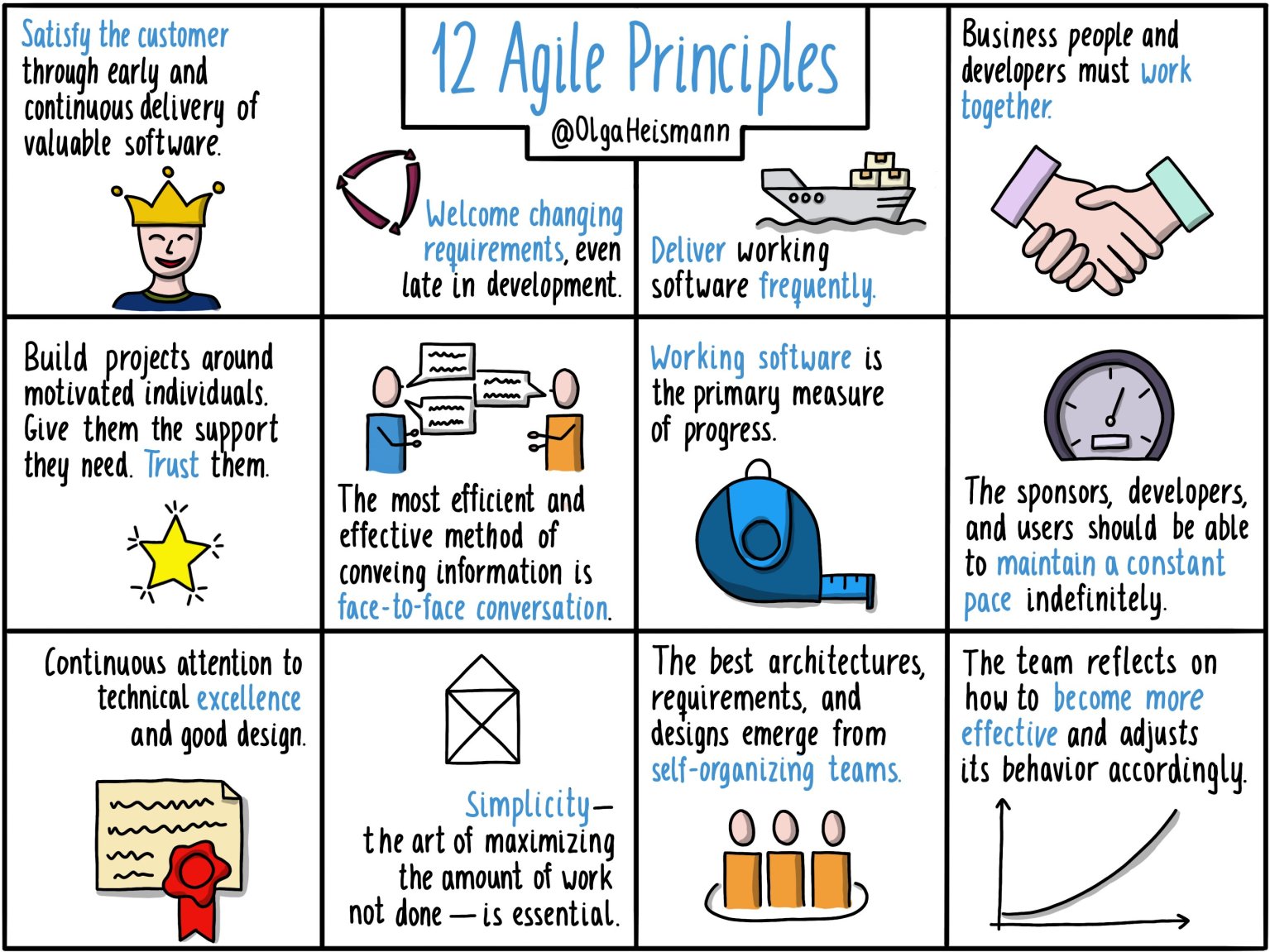
Agile methodologies are ways of development that align with the principles and values laid out in the Agile manifesto for software development. Agile approaches aim to produce the correct product using gradual and regular delivery of smaller portions of functionality. This is accomplished by small self-organizing teams that are cross-functional and allow frequent feedback from customers with subsequent adjustments where needed.
The advantages of Agile include its capacity to support teams in adapting to a changing environment, focusing on the efficiency of delivering business value. The collaborative environment created by Agile can also boost efficiency across the company since teams work in tandem and recognize their respective role within the process. Moreover, companies that employ Agile Software Development can be certain that they are releasing quality products since testing is conducted throughout the development process, the ability to make adjustments as needed and notify teams of any issues that might arise.
By doing this, Agile aims to right the problems posed by traditional “waterfall” techniques of delivering large items over prolonged periods in which customers’ requirements often change, which results in the wrong items being delivered.
Agile software development refers to an assortment of software development techniques based on iterative development in which requirements and solutions are being developed through the collaboration of self-organizing, cross-functional teams.
Agile methodologies (or Agile processes) generally advocate a disciplined and systematic process of managing projects that promotes regular review and adjustments and a management philosophy that encourages teamwork, self-organization, and accountability.
It is a collection of best practices in engineering designed to facilitate the rapid release of high-quality software and an approach to business aligned with the customer’s requirements and business goals.
Agile development is any method of development that is in line with the principles in the Agile Manifesto. The Manifesto was formulated by 14 prominent figures from the software industry and reflects their knowledge of the various approaches that work and do not work for software development.
Since 2001, Agile methodologies have gained acceptance, and with the advent of Agile methodologies, more and more companies and teams embrace the techniques and practices.
An ecosystem has been developed which includes everyone who uses Agile software development, as well as the individuals and organisations that aid in the process by providing workshops, consultation, and structures and tools.
In July 2021, we began planning for this change. In October 2021, we formed the first development team, and we started the first project, within the estimated deadline of January 2022. It seemed impossible, but it just turned out to be difficult.
It’s not “just” having a process that works, it is being more confident in our reliability as developers when it comes to giving a feature delivery date, and our ability to get new members of each team productive as soon as possible.
Having a process is not a panacea to every problem, but it is a way to gain structure and be more efficient. It’s then up to people to make sure the structure has a good foundation, and every one’s work is more efficient.
Those were the first lines of the article, and the last lines as well:
“Processes don’t do work, people do“.
Want to join the team? Check out our open positions or feel free to send a spontaneous application!
Project Manager at 2hire
I’m not a big fan of the self description, but if I have to do it, and this is the case, I’d say that my brightest trait is curiosity.
Posted on March 1, 2022 by Benedetta Biggi