17 Apr 2023 | 2 min read
The term “connected services” refers to services delivered by a technologically-powered mechanism that features entertainment, communication, navigation, and maintenance.
There are several types of connected services according to their functionalities, such as the on-demand e-charging to charge your electric car wherever you are. Or the so-called “On-demand Car-wash” service that allows you to have your car washed, where it is parked, without the need to drive extra miles to get to the car wash.
On-demand car wash and on-demand e-charging are just some of the services around cars available to date.
Some of the more ahead-of-the-curve OEMs have already integrated connected services to their cars.
Car makers are catching on to the power of this type of services implemented to connected cars and for this reason, they’ve embraced them to their fleets.
Starting from Stellantis, which provides this kind of services through innovative technologies, and some car makers have embraced this opportunity, improving the user’s driving experience. Brands that benefit from technologies made available by Stellantis are Jeep, Alfa Romeo, and Fiat.
Focusing on one of the several functionalities, “My Alert” is about prevention and support. With “Anti-theft Notification”, the driver will receive a notification if the vehicle detects a suspected theft attempt, such as unauthorized towing. This includes moving the vehicle or break-in attempts if the anti-theft alarm is present.
Stolen Vehicle Assistance: this service provides assistance in case of theft. The user can call the contact center for assistance directly by pressing the “Call” button on the mobile app, and once the theft is confirmed with a report to authorities, security features, including vehicle tracking, will be activated.
Another key player in the automotive industry, Lamborghini, decided to incorporate connected services in some of its vehicles.
Among the various features available from them, Lamborghini provides:

The many functionalities of connected services could greatly help the drivers who use them, finding their lives simplified. Nevertheless, the main roadblock to exploiting this type of services remains driving a connected car:
To ensure a 360-degree driving experience, connectivity has become increasingly crucial!

Digital Content and PR Specialist at 2hire
I love running and daydreaming losing count of the distance I’m covering, cooking (and especially eating) and Drake is my spirit guide.
Posted on April 17, 2023 by Benedetta Biggi
7 Apr 2023 | 4 min read
Peer to peer car sharing services typically operate through an online platform/mobile app that connects car owners with renters.
But connectivity doesn’t stop there, not only owners (known as “hosts” in the P2P car sharing slang) and renters (known as “guests”) are connected, but owners’ cars are (or should be!) connected too.
It’s all about vehicle connectivity, which makes owned cars, originally often used at less than 10% of their potential, real business clusters for an individual.
The P2P car sharing concept as a new mobility trend is growing fast, especially as a result of the effects of the pandemic in which the priority for travel has veered towards more immediate processes to avoid contact.
Today we want to break down how keyless technology is a source of numerous advantages not only for rental companies and their customers but also for private vehicle owners.

Placing your car on a P2P car sharing platform and exploiting it with keyless technology gives it a threefold life:
With the advent of keyless technology and remote car access, it is possible for a host to build a parallel business without needing a physical presence near the vehicle. Keyless technology is the way to go in this sense.
This means that the host can rent out their cars to people who need it even when they are not physically present at the location. This allows for greater flexibility and convenience, as hosts can rent out their car from anywhere, at any time. Additionally, this type of business model can lead to reduced overhead costs and increased scalability since the host does not need to maintain a physical storefront or rental location. Overall, the keyless technology of private vehicles has opened up new opportunities for hosts in the peer to peer car sharing industry, allowing them to build a more flexible and scalable business model.
Control is an important factor when it comes to peer to peer car sharing platforms. Since hosts are essentially renting out their personal vehicles to strangers, it’s common to have concerns about safety and security, especially when it comes to a keyless way of renting.
However, many peer to peer car sharing platforms have implemented safety measures to help alleviate these concerns. For example, they conduct background checks on guests, require them to provide a valid driver’s license and offer insurance coverage for the rental period. Additionally, the keyless technology unlocked all the control features that only connected cars can give to a host. An added layer of security since the host can control and monitor the vehicle’s location in real-time while also having a 360 degrees overview of the vehicle status.
Overall, while there may be initial concerns about the safety of renting out personal vehicles, P2P car sharing platforms and technological solutions have created the perfect balance to surf the wave in the most controlled and smooth way.
By renting out private connected cars, a host can generate additional income and potentially offset the costs of owning multiple cars. Additionally, owning multiple cars could make it easier to rent out one or more vehicles while still having a car available for personal use.
From small city cars to larger SUVs and even luxury vehicles, there is a wide range of options for both personal use and rental, here technology serves as a trump card to have an eye on all the cars’ status and maintenance. This can make it easier for vehicle owners to justify owning multiple cars, as hosts can use them for different purposes and still generate income by renting them out when they’re not needed.
Being a host can be viewed as a business venture too.
Hosts can either lease a car for use in a peer to peer car sharing platform with several advantages, particularly if the car is rented out frequently and is, for the guest, an appealing rental due to the digital, immediate, and contactless format. Or can buy cheap cars, taking care of them and keeping them ideal for a P2P car sharing activity.
There are two possible scenarios of hosts:
– Those who use Peer to Peer car sharing as a source of economic profit to offset the cost of a premium car for which a leasing solution is the go-to choice.
– Those who use Peer to Peer car sharing as a tool for entrepreneurial growth for scaling their business, with several cars technologically managed and always on the road. Here car purchase might be the most suitable option.
Both options have pros and cons. It is up to the direction the owner wants to take for his/her host path to decide which one to choose.
In both cases, it can be a worthwhile investment for those looking to earn additional income, especially if they are willing to treat it as a small business and carefully manage their fleet of connected cars.

Keyless technology has transformed personal vehicles into connected assets that can be controlled digitally, giving car owners the opportunity to generate additional income while offsetting the costs of owning multiple cars.
With keyless technology and remote car access, hosts can build a parallel business without needing a physical presence near the vehicle, leading to reduced overhead costs and increased scalability.
Keyless technology of private vehicles is definitely opening up new opportunities for hosts in the P2P car sharing industry, allowing them to build a more flexible and scalable business model while making new revenue streams.
Digital Content and PR Specialist at 2hire
I love running and daydreaming losing count of the distance I’m covering, cooking (and especially eating) and Drake is my spirit guide.
Posted on March 30, 2023 by Benedetta Biggi
30 Mar 2023 | 2 min read
Peer to peer car sharing is growing in popularity! It provides several benefits to the hosts. Not by chance pre-packed peer to peer platforms allow hosts to easily manage a greater amount of vehicles, leveraging keyless solutions. Moreover, P2P car sharing companies provide valuable visibility to their hosts, facilitating customers’ reach-out process. Surely the platform has a cost, which corresponds to a percentage (a fee ranging from 30 to 40%) of each host’s earnings.
Trevor B. is a great example of how a peer to peer platform can help you become an entrepreneur. He benefits from Getaround, one of the key players in the P2P car sharing market.
Trevor began with a single vehicle, a Nissan Versa, that provided him with some much-needed passive income at a critical time. By sharing it, Trevor was able to completely cover charges of the Versa and started getting extra income with it.
Then he listed two more cars on Getaround: a highly fuel-efficient hybrid vehicle and a Jeep Cherokee. Thanks to the bookings he received, all his vehicles were paid off within a short period. So any bookings that cars received were 100% profits for him.
“When I’m not using them, they’re paying for themselves and then some!”
Trevor is valuable proof of how people can become entrepreneurs through the usage of an intuitive peer to peer platform.
Thanks to this platform hosts can cover the entire leasing cost of their vehicles and sometimes make profits from extras.
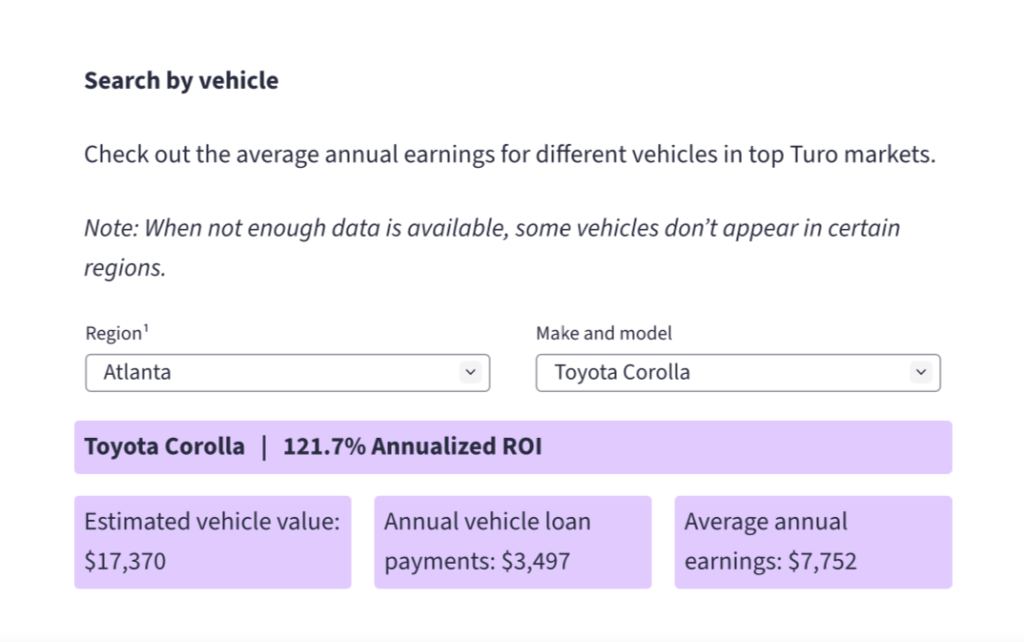
The average price to lease a city car as Toyota Corolla is about € 300 per month, while the minimum daily pricing for renting a city car is about €30.
Numbers speak: you must rent a car for about 10 days to cover the monthly lease payment! This will be possible when peer to peer car sharing companies are spread evenly in all countries, making the car sharing process easier for the hosts.
Digital Content and PR Specialist at 2hire
I love running and daydreaming losing count of the distance I’m covering, cooking (and especially eating) and Drake is my spirit guide.
Posted on March 23, 2023 by Benedetta Biggi
28 Mar 2023 | 2 min read
Peer to peer car sharing is a growing automotive trend that is catching on year after year. Its success is due to the several benefits it brings to both hosts and guests.
The best advantage on the host side lies in the possibility of making it a real business opportunity, ensuring potentially growing economic revenues.
This and other benefits have resulted in more and more people deciding to start their own business as a peer-to-peer host from scratch, such as Kristen.

Kristen H.: from top customer service agents at the post office to power host with 9 cars and more than 800 trips on Turo’s platform.
Kristen is just one of the numerous people who decide to turn her life upside down, leaving a full-time job and starting a business on her own through Turo, one of the P2P car sharing companies.
“I felt like I was missing their childhood,” she said. When the pandemic hit, childcare was hard to come by. She already had four cars, so she decided to try hosting on a peer to peer car sharing platform. Four months in, she quit her job at the post office to host on Turo full-time.
“ […] I always wanted to be an example of what would happen if you do Turo at the highest level.”
Kristen is a great example of how being a peer to peer host allows people to create a lateral or core business from scratch not requiring basic wealth.
Peer to peer car sharing offers numerous benefits for both hosts and guests, ranging from economic revenue to convenience and affordability. Kristen’s success story highlights how the platform can provide a unique opportunity for individuals to start a business from scratch and achieve financial independence: “Power Hosting” becomes easier with a solid platform that supports managing fleets and gives greater visibility to referring hosts.
So, as long as there’ll be demand, peer to peer car sharing will be an ever-expanding market. Just take a glance at the last predictions made by Prescient & Strategic Intelligence: the peer to peer car sharing market is projected to reach $7,225.2 million in 2030, with a growth rate of 17.6% during 2022–2030.
Digital Content and PR Specialist at 2hire
I love running and daydreaming losing count of the distance I’m covering, cooking (and especially eating) and Drake is my spirit guide.
Posted on March 23, 2023 by Benedetta Biggi
16 Mar 2023 | 4 min read
Contactless rental is not only a wise choice for the car rental operator, but also for the customer. When we speak about contactless rental we mean a software solution to digitize and automate a car rental business. A digital rental model enables time-saving, operational costs optimization, and efficient fleet management for a premium car rental experience.
The car rental market is becoming more competitive and is quickly sliding into the world of fleet digitization. Car rental companies must grab the opportunity here since the 25-45 years old age group represents 75% of the rental market and are more willing to pay a plus price for a digital and immediate experience.
In the article on the advantages for the car rental operator, we set out the carousel of reasons (benefits, rather than reasons) why a car rental business should go digital. But we do not want to stop there, today we showcase another vital side: the user experience.
Today’s user seeks immediacy and convenience in booking and picking up their rental car. Choosing a contactless rental gathers all these needs and generates 2.0 benefits that a traditional car rental could never provide. Let’s see them together!
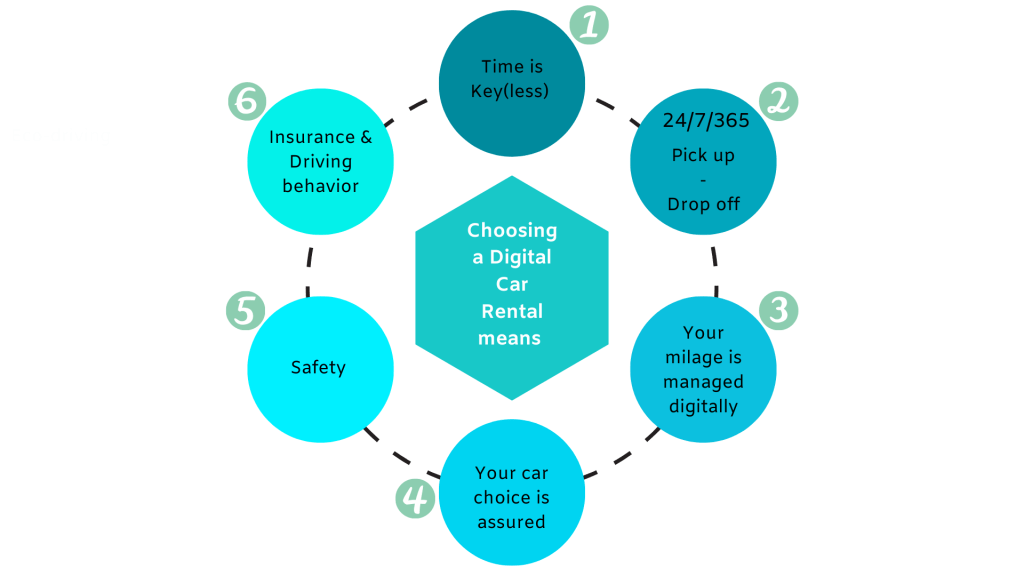
Choosing a contactless car rental over a traditional one can offer significant time savings. With contactless car rentals, car keys are often directly inside the connected car, making them ready to be picked up with just a few clicks from the renter’s phone. This not only eliminates the need to wait in line at a rental desk but also drastically cuts off time to complete paperwork in order to pick up the keys. Additionally, the choice of a contactless rental can greatly reduce the amount of paperwork required, including ID, driver’s license, and contract signatures.
With the convenience of technology, renters can save valuable time and streamline their user car rental process, allowing them to get on the road quickly and easily.
With a contactless rental, contactless vehicle access can be done in a much more distributed manner across the territory. The end user will be able to use the GPS location to go to the car or even have it delivered near him/her.
The ability to rent a vehicle 24/7 is a significant advantage for the end user when it comes to choosing a contactless car rental with connected vehicles. Unlike traditional car rental companies, which typically operate on fixed business hours, a connected fleet allows for digital management of operations. It provides users with access to their car rental vehicle at any time of the day or night 365 days a year. With digital management, car rental companies allow remote control of their vehicles. Furthermore digital car rental companies allow users to access their booked cars without the need for physical interactions with other people or at the front office. Thanks to a contactless rental model digital pick up and drop off is made possible. The 24/7/365 access allows for unlocking and locking of the vehicle. The retrieval and return of the keys is also managed digitally.
This not only provides greater flexibility and convenience for the end user but also streamlines the car rental process, reducing wait times and minimizing the potential for errors or delays.
When it comes to renting a car, one of the most tedious tasks is keeping track of the mileage. From remembering the initial mileage at pick-up to ensuring that you don’t exceed the allotted kilometers, it can be a hassle to keep track of it all. However, with more and more connected cars in rental fleets, this task is becoming a thing of the past.
For the end user, this means that the car is equipped with an odometer feature and GPS tracking. These components automatically record the car’s trip and distance traveled. In this way there’s no need for the user to manually enter the kilometers at pick-up and drop-off. Surely the chances of errors or disputes over mileage is extremely reduced.
In addition to the time savings, another advantage of choosing a contactless car rental is that the specific car model and features are often guaranteed.
When renting a traditional car, it is possible that the desired make or model may not be available, leading to disappointment or the need to make last-minute adjustments. With contactless car rentals, once you book a connected rental car, you will receive a direct reservation to that specific vehicle that includes contactless rental. This ensures that you will no longer have to worry about any unforeseen timing issues due to vehicle availability. Additionally, you simply have to go straight to the car without going through a front office, the place where more often the unexpected car change occurs.
With the use and availability of safety features such as GPS tracking, DTC (Diagnostic Trouble Code for car issues identification), service alerts for car maintenance, odometer, and many more, car rental companies can have a better understanding of the condition and usage of their vehicles. This can lead to more accurate maintenance and repair schedules, ultimately resulting in a better car rental experience for the end user.
Opting for a contactless car rental can provide clients with significant advantages, particularly when it comes to car insurance based on driving behavior. With the availability of connected cars in contactless rentals, driving behavior can be tracked and analyzed in real-time. This advantage allows for customized insurance premiums that accurately reflect the individual driver’s risk profile. By driving safely and responsibly, clients can demonstrate a low-risk driving pattern and potentially qualify for lower insurance rates. This also promotes safer driving habits and helps reduce the overall risk of accidents on the road.
A carmaker example of this driving behavior-based insurance is Tesla. Tesla, based on user driving behavior, offers clients different insurance plans. If you are a “careful” driver you pay less than a more “witty” driver.
Many insurance companies are starting to use black boxes to do this kind of analysis on their customers to tailor their offers based on different driving profiles. By choosing a connected car with these specific features, clients can enjoy a more environmentally-friendly and cost-effective driving experience.
Based on the topics covered in the first two articles, by leveraging cutting-edge technologies, the car rental operators on one side are poised to remain at the forefront of innovation and continue to meet the evolving needs of their customers in the years to come. On the other side, choosing a contactless rental for the customer is the go-to for having the desired amenities only a click away. Whether you’re a frequent traveler, a busy professional, or just looking for a better way to rent a car, a contactless rental is the go-to!
Stay tuned for the next episode where we will talk about…
Digital Content and PR Specialist at 2hire
I love running and daydreaming losing count of the distance I’m covering, cooking (and especially eating) and Drake is my spirit guide.
Posted on March 6, 2023 by Benedetta Biggi
09 Mar 2023 | 3 min read
The world of mobility is changing rapidly, with two trends walking on two different but parallel tracks:
When it comes to car rentals, their strength lies in the wide choice of models available and their global presence.
Moreover, Car Rentals have taken notice of the importance of staying up-to-date with the latest automotive trends. To date more and more car rentals are implementing features that make the car rental process completely digital.
As keyless technology it’s spreading, Car Rentals demonstrate their adaptability but also their intention to meet the new needs of consumers that have arisen after the Covid-19 pandemic.
Fewer people want to take public transport, so car rentals have become safer and more reliable, increasing demand. Just because of this, car rentals and more specifically keyless rentals have found an additional market share in which they meet perfectly consumer needs.
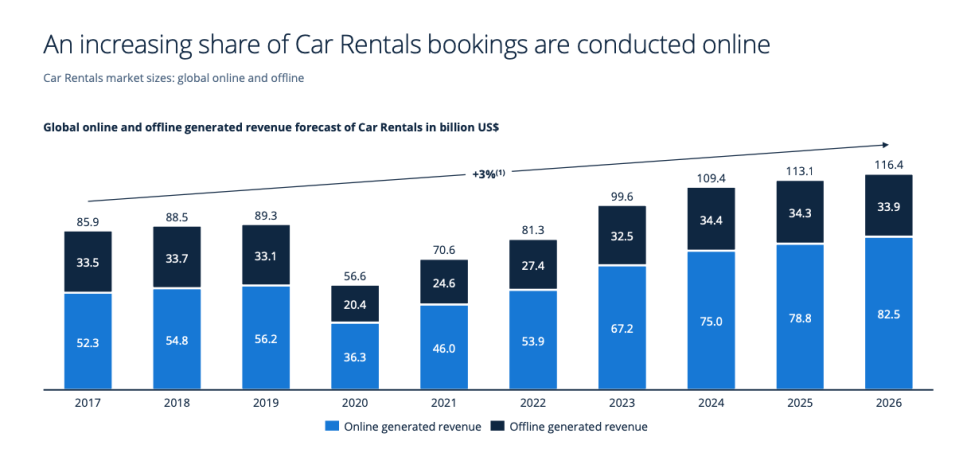
A recent study by Research and Markets outlines the current and future growth of the car rental market: The Europe Car Rental Market was valued at 10.5$ billion in 2021 and it is expected to grow at a CAGR of 13.1% to reach a value of 20.1$ billion by 2027.

The graphic shows how the Car Rental growth is spreading all over the world although to varying degrees. These data demonstrate the increasing knowledge around the world related to the potential of car rentals.
Peer to peer car sharing is an exciting new branch in the mobility market. It represents a new source of income for many individuals, providing people with the opportunity to become small entrepreneurs.
P2P car sharing allows Hosts to create concrete businesses aside, giving a new lease of life to little-used cars and reducing waste.
One of the strengths of P2P car sharing is the cheaper option compared to classic car sharing, making it an attractive choice for budget-conscious individuals.
Although P2P car sharing has fewer models available and doesn’t have as wide a reach as Car Rentals, it is gaining popularity at an incredible rate.
More and more people are discovering the benefits of this innovative new trend, making it a serious competitor in the mobility market.
The P2P car sharing wave is hitting the entire world. As Research and Markets reports: The P2P car sharing market was valued at $1598,3 million in 2021 and it’s expected to reach $7225,2 million by 2030, with a CAGR of 17,6%.
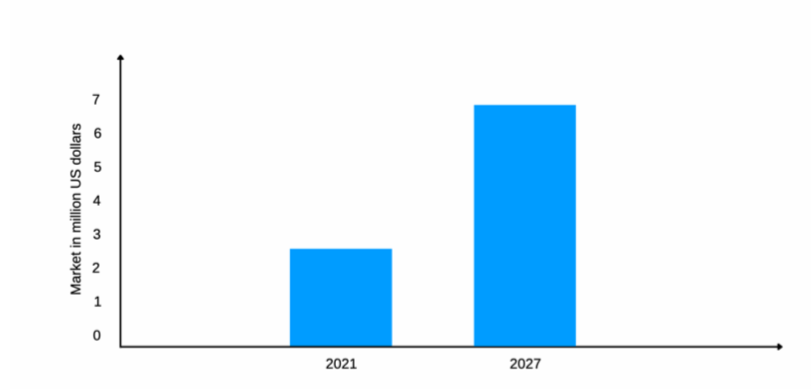
As the picture shows us: P2P car sharing is among those services that will experience strong growth, already visible between now and 2030. The major factors propelling the demand for such transport services surely include convenience both for hosts and guests.
Several advantages make car rentals and peer to peer car sharing two clearly pushing trends. Even if one service is surely well established and the other is in big growth in their market. What they have in common is the way they invest time and resources in digitizing as a strength and competitive advantage in the marketplace.
Digital Content and PR Specialist at 2hire
I love running and daydreaming losing count of the distance I’m covering, cooking (and especially eating) and Drake is my spirit guide.
Posted on March 6, 2023 by Benedetta Biggi
23 Feb 2023 | 4 min read
Car rental innovation is keyless.
Now more than ever, with the spreading of connected cars and connected fleets, this is getting real.
After the heavy losses caused by Covid, the chip shortage, and the related decrease in available vehicles in fleets, an inevitable rise in prices emerged.
Users’ needs have also changed. More and more requests for car rentals (despite rising prices) made them a convenient and safer alternative to public transportation in close contact with other people. The outdated classic car rental systems have been morphing to slowly heal this situation and start giving users what they want. A seamless, peace of mind, and fast renting experience.
Contactless rentals can dismantle this old management and make innovation the real focus of car rentals. Having a connected fleet gives access to an extended merry-go-round of benefits for the fleet manager and the entire car rental company.
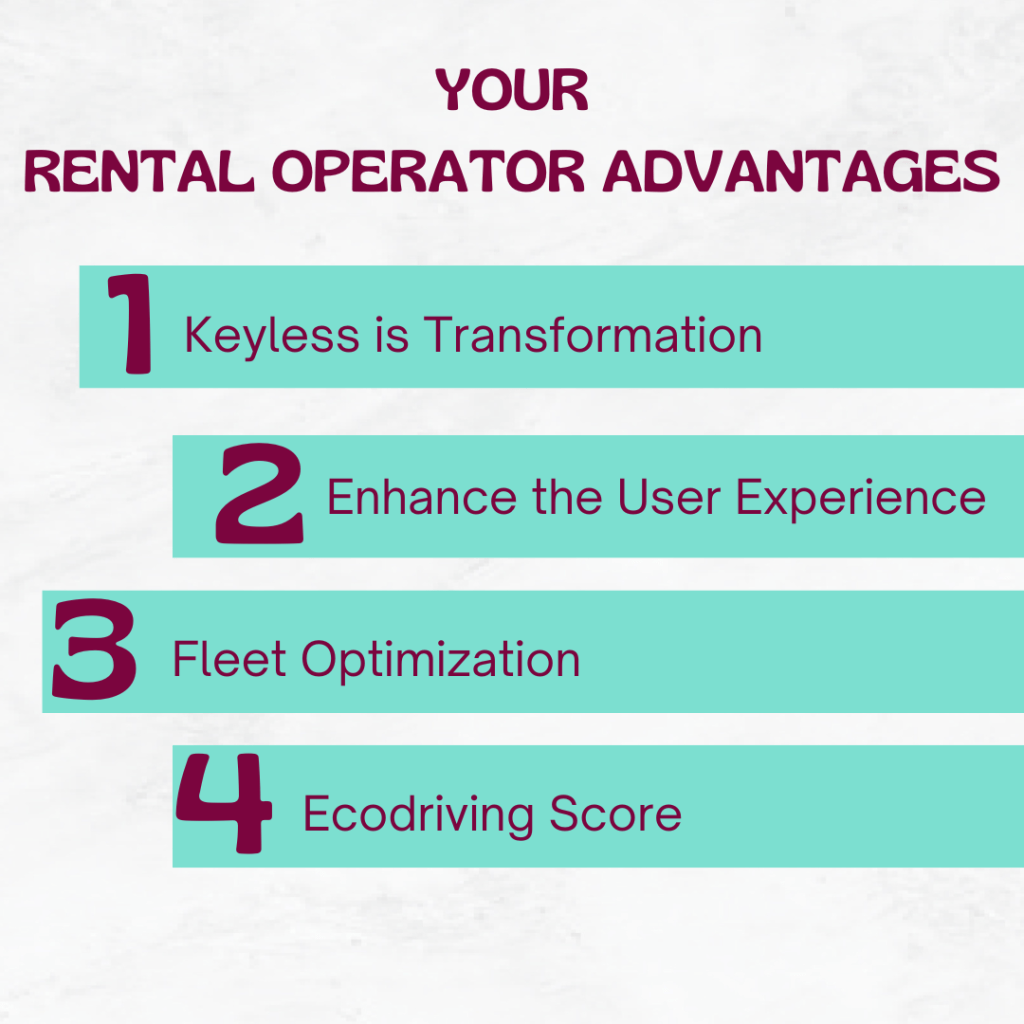
The first thing that comes to mind when talking about connected cars in a contactless rental fleet is the ability to interact with vehicles, lock and unlock them, without the need for keys. No need to hand over the keys to the user, you just have them placed directly inside the car that will be opened digitally.
What does it mean in terms of benefits?
Firstly, significant time savings for both parties (operator and customer). The customer no longer has to go through the front office to sign documents and retrieve the vehicle keys (which will already be inside the vehicle, ready to be opened digitally), and the operator does not have to invest extra manpower, money, and energy running a service point dedicated to this step. The step itself is eliminated and incorporated by the keyless technology process, which will make it possible to actively manage your contactless rental business 24/7.
Thereafter, a better quality of service, faster, more straightforward, and more flexible. Not to mention the financial savings on service personnel and the possibility of expanded fleet deployment across the territory.
With the rise of the on-demand economy, people are looking for quick, easy, and hassle-free solutions to their car rental needs. Contactless rentals meet this demand by providing a convenient and streamlined process for renting and returning cars.
One of the key benefits is the ability to rent and return cars on the go. This is especially appealing to today’s young worker, who is used to a 24/7 connected life and is looking for a service at the same pace. By using a mobile or web app, customers can quickly and easily find and rent the car they need, 24/7, 365 days a year.
Fleet management shouldn’t be complicated, slow, or muddling. Optimizing your connected fleet means having access to a range of valuable data to optimize your operations. In support of this, some of the most valuable data available are real-time ones such as GPS localization (a trump card also useful in case of fraudulent driver behavior, to have constant control over the position of the vehicle), fuel level or battery level, odometer, and maintenance status. All relevant data for efficient and ready-to-go management.
Fleet managers adopting a technological solution for their fleet of cars can keep a constant watchful eye over how their vehicles are being used in the field while focusing on their myriad of other responsibilities.
Better maintenance is an essential aspect too when it comes to real-time data on the condition of vehicles. In this sense, fleet managers can schedule maintenance more effectively, reducing the likelihood of breakdowns and prolonging the life of the vehicles. Time-consuming inventory management is one of the biggest pain points in this regard. Many operators spend so much time and energy registering vehicles returned to the fleet, checking their odometer and battery/fuel level to officially close the previous car rental and prepare the vehicle for the next one. Technological optimization of a rental aims precisely at maximizing the car rental’s operational efficiency by making the fleet controlled, safe, and productive to the utmost.
It is possible to intensify rental vehicle usage with an economically attractive program of incentives. This can exert influence upon the behavior of drivers and shape their preferences also with the change of driving style to a more economic or ecological one.
The eco-driving score makes it possible to analyze the driving behavior of the car user and offer economic incentives with dynamic pricing based on user behavior. Research company OVE Consulting estimates that eco-driving can create cost savings of up to 25%.
A good driving style where drivers are maintaining a steady speed to limit unnecessary fuel loss whilst keeping a safe distance between their and other vehicles to avoid harsh braking is key.
Implementing connected solutions within a car rental fleet, like GPS tracking among other features, can give companies visibility of how their staff is driving, enabling them to spot issues and support drivers.
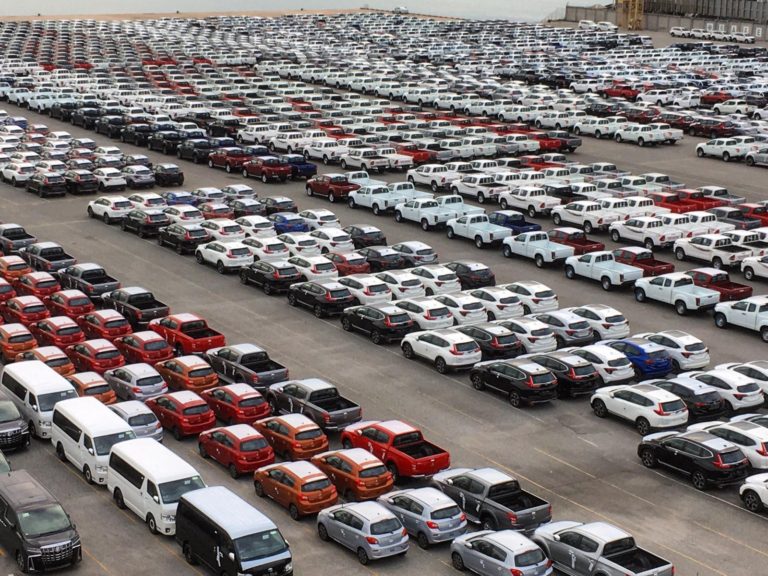
As consumers live an increasingly on-demand lifestyle, car rental companies need to invest in technology to provide more personalized service. It’s evident how technology marks a pivotal role in car rental business optimization, simply having cars available for your users will not be enough to stay ahead of the curve.
By transforming the car rental business into a software-based model, operators will ensure themselves a place on the road to the future among the most ahead-of-the-curve players.
Digital Content and PR Specialist at 2hire
I love running and daydreaming losing count of the distance I’m covering, cooking (and especially eating) and Drake is my spirit guide.
Posted on February 21, 2023 by Benedetta Biggi
21 Feb 2023 | 3 min read
Peer to car sharing has revolutionized the traditional car rental industry by connecting car owners with those in need of a vehicle for a short period of time. Instead of depending on a centralized rental company, P2P car sharing allows individuals to rent out their personal vehicles to others, providing a more convenient, cost-effective, and environmentally friendly alternative.
In this article, we will explore five of the most popular P2P car sharing companies!
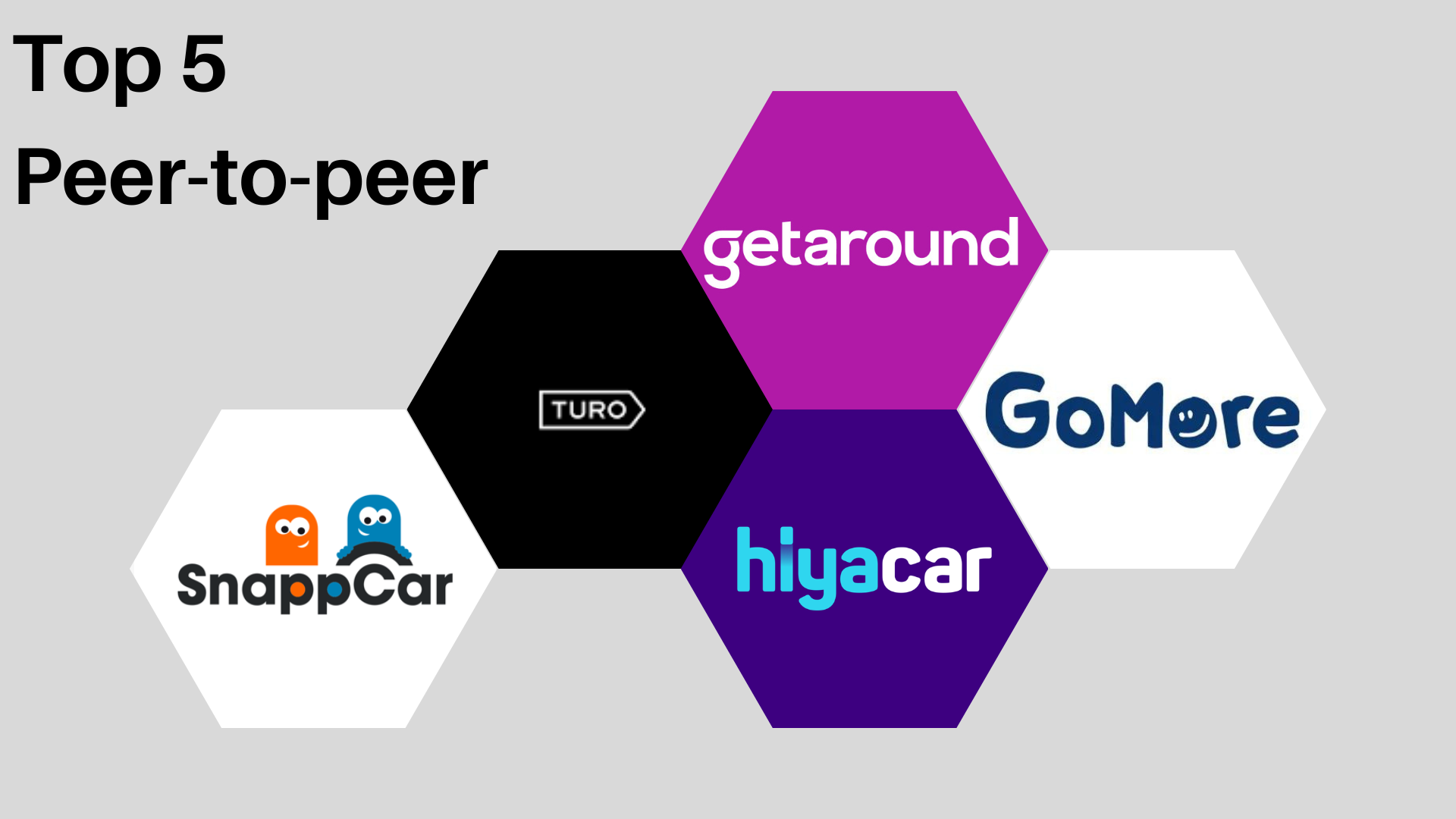
Firstly, Turo is the largest P2P car sharing marketplace with the biggest community.
Based in San Francisco, it provides a platform for car owners to rent their vehicles. The service is available in over 7,500 cities across the US, Canada, France, and the UK. Additionally, the company offers more than 1,300 different makes and models.
Turo’s biggest strength lies in its huge community, and it places significant importance on its employees. Not by chance Turo’s president won the Gold The Stevie Awards for Great Employers in 2022.
Another key player in the peer to peer car sharing sector is GetAround.
The start-up launched “GetAround Connect”. It is a connected-car compatible service that allows renters to instantly book a car without waiting for approval from the owner. The service is extremely intuitive and user-friendly and renders the entire rental process much smoother.
Evidently , the company is constantly evolving, it reached several milestones at the end of 2022, such as :
GoMore operates in several countries including Denmark, Sweden, Norway, and Germany.
The peer-to-peer company provides:
Snappcar is a peer to peer car sharing platform which operates in several countries, including the Netherlands, Germany, and the UK. The company is keeping up with the times offering updated services, such as keyless technology solutions for several types of cars.
The group is becoming increasingly present and this is demonstrated by the achievements of important results in the past 10 years:
Lastly, Hiyacar operates with over 100,000 members throughout the UK. The company offers quality service with peer to peer car sharing insurance and multiple layers of digital driver verification like facial recognition and liveness detection.
The first to offer QuickStart Keyless technology, Hiyacar’s easy and safe way to share cars, alongside best-in-class member support.
Moreover, Hiyacar is the first peer to peer car sharing platform to offer a fully accredited car club (COMO UK) using owned cars from Toyota and other manufacturers.
The company believes very strongly in what it does and plans to continue to grow, not by chance Hiyacar’s vision claims: “To be present on every street in the UK and change the way people use cars forever”.
Summing up:
P2P car sharing companies like Turo, GoMore, GetAround, SnappCar, and HiyaCar disrupted the traditional car rental industry by providing a more convenient, cost-effective, and environmentally friendly alternative. Thanks to keyless solutions P2P car sharing is catching on and riding the fast lane of a new perception of mobility!

Digital Content and PR Specialist at 2hire
I love running and daydreaming losing count of the distance I’m covering, cooking (and especially eating) and Drake is my spirit guide.
Posted on February 15, 2023 by Benedetta Biggi
11 Feb 2023 | 3 min read
Keyless Rental is a new technology that enables users to rent a vehicle, pay for it, and lock/unlock the vehicle through their smartphones without physical interaction. This technology is revolutionizing the car rental industry and is rapidly growing with an expected user base of 63.4 million by 2027.
Although the market is not yet saturated, big and medium fleet-size operators are shifting towards contactless rentals for easier fleet management and to keep up with the times.
Here you can find the five coolest contactless car rentals in the international scenario: SIXT, Hertz, Ada Location, Green Motion, and Ufo Drive.
SIXT is a German company founded in 1912 that operates across 105 countries worldwide. The company has more than 2,200 car rental stations and a fleet of over 220,000 vehicles. The company recorded its best quarter in 2021, with a 21.4% increase in revenue and a 94.8% increase in profits compared to the pre-Covid year 2019.
Sixt shows its commitment to the digitalization of the car rental process through the introduction of the SIXT APP.
The app makes the pick-up much faster thanks to the keyless car rental entry. Moreover, it gives the possibility to choose a vehicle 30 minutes before the rental starts.
SIXT Fastlane is another service provided by the company that further speeds up the car rental process. Choose the vehicle via the app, go to the car, open it via the app, and just enjoy the ride.
Hertz, founded in 1918, is one of the largest car rental companies in the world.
The company has always been innovative and has launched Hertz 24/7, a service that simplifies the car rental process: no keys, paperwork, or hassle.
Users can :
The vehicle is then returned by leaving the keys inside the vehicle.
Founded in 1986, Ada Location is a French car rental company with over 1100 rental agencies spread throughout the country
Ada Location provides a fully digital car rental experience through the Ada application.
Users can unlock the car and finalize the car rental contract with the departure inventory through Bluetooth communication with the vehicle. Through the app, customers start the engine of the car. The drop off of the vehicle can happen at flexible hours, with no need to pass through any front office.
Green Motion, established in 2007 in the UK, is an eco-friendly car rental company that offers a range of hybrid and electric vehicles for rent.
The company has embraced technology to offer a keyless rental process using a virtual key that allows users to unlock and start the car without physical interaction.
Green Motion provides various features and services to make the rental experience smooth and convenient, such as : 24/7 customer support, flexible car rental options, and the ability to rent a car at multiple locations across the world.
Ufo Drive is a car rental company based in San Francisco that aims to provide the world’s fastest and easiest car rental experience while reducing paperwork, queues, fuel, and emissions for its users.
The service is available 24/7 in several city and airport locations across 8 European countries and has already saved 487,000 liters of fuel.
The keyless rental process allows users to book through a mobile app and access the car immediately through keyless technology. Another core of Ufo Drive’s business is its commitment to the environment, Aidan McLean – Ufo Drive’s founder – told TechCrunch:
“One of our biggest concerns, when we started UFODrive, was making people comfortable using an EV and minimizing or removing anxiety throughout the car rental — not just at pick-up.”

The keyless rental industry is certainly making waves within the vehicle car rental industry itself. With added features like keyless pick-up and drop-off, GPS tracking, and comprehensive insurance. Keyless rentals are proving to be much more than your average car rental service.
Keyless technology will certainly play a major role in the way we interact with cars in the future, and these car rental companies are proof this wave is becoming stronger.
Digital Content and PR Specialist at 2hire
I love running and daydreaming losing count of the distance I’m covering, cooking (and especially eating) and Drake is my spirit guide.
Posted on February 7, 2023 by Benedetta Biggi
10 Feb 2022 | 3 min read
The automotive industry is constantly evolving, with new technologies and trends emerging yearly.
The increasing pace of innovation in the automotive sector gives life to “software-defined vehicles”.
“Software-defined vehicle” (SDVs) is a term that describes a vehicle whose features and functions are primarily enabled through software, a result of the ongoing transformation of the automobile from a product that is mainly hardware-based to a software-centric electronic device on wheels.
The major SDV’s benefits are the “over-the-air updates”, namely the possibility to receive software updates remotely, allowing manufacturers to quickly and easily fix bugs, improve car performance, and add new features without the need for a physical visit to a dealership.
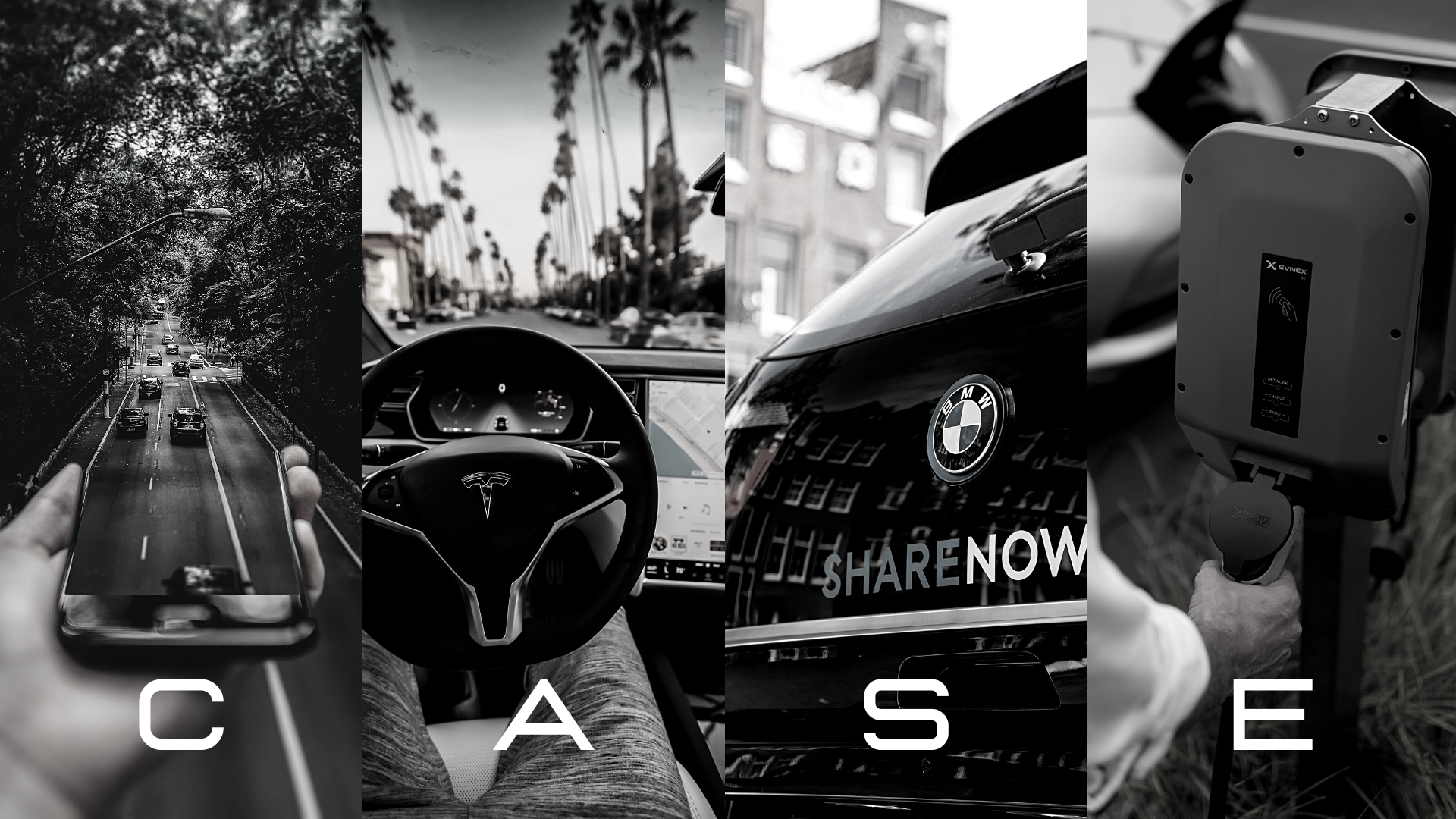
If we had to choose one word to summarize 2023 trends in the automotive industry, we would choose CASE, which stands for Connected, Autonomous, Shared mobility, and Electrified.
Let’s dive the terms deeper:
It is evident how industry players are accelerating the speed of automotive technology innovation as they develop new concepts of Connected, Autonomous, Shared, and Electrified Mobility.
“After Covid-19, we believe companies will start to localize some of their production. Factories will need to be more digitalized and automated […]. The Industrial Internet of Things, 5G, and industrial software are all key enablers of the transformation to smart manufacturing.”
– Alexander Stiehle, Analyst, UBS
The COVID-19 pandemic had, at the same time, both negative and positive impact on the automotive industry.
Starting from the negative speed bump for sales, due to the increasing prices, lower vehicle production, and less dealer inventory.
The semiconductor shortages: a global shortage of chips, considering their key use in a wide range of automotive applications. Additionally, other shortages with similar effects on the automotive industry have been the mini controllers, sensors and display panels ones.
Despite the downward effects, the pandemic also had a positive outcome, boosting the pace of innovation in the automotive industry.
The studies report an increased demand for contactless and self-service technologies, a considerable focus on the development of keyless technology, e-vehicle charging, and self-driving cars.
Last but not least, the explosion of streamlined operations, virtual services and sales, and higher profits.
The experience of driving has been, for the most part, linked to the vehicle’s drivetrain, engine, and how it puts power on the road.
However, in more recent years aesthetic features and infotainment have taken hold in the scenario. From aesthetic features such as more and bigger screens to the integration of infotainment involving voice controls, streaming audio, video, and gaming.
These are just a few of the several elements that through the implementation of IoT and connectivity make the diver’s experience fully intuitive and totally immersive.
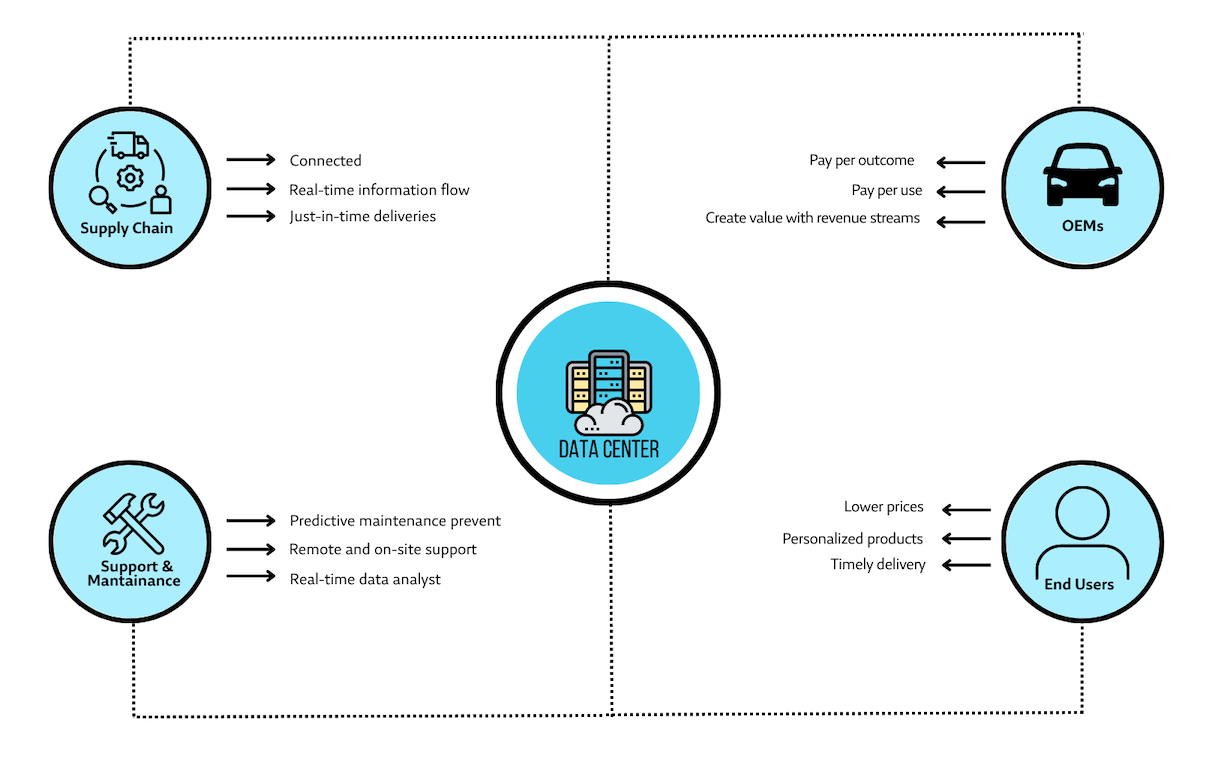
With the adoption of industry 4.0, we are witnessing the fourth industrial revolution, and enabling entire ecosystems of devices to connect, communicate, diagnose, and solve problems. By receiving the data from these products, manufacturers can enhance the user experience and further improve the products.
Tesla is a great example of this: its owners are always sharing feedback with the manufacturer who then deploys over-the-air updates to the vehicles.
The sheer amount of data collected by cars on the road may also open up new revenue streams: data generated through sensors are sold to other manufacturers to help them to improve their design and production process. This new usage of data creates a market for after-sales add-on products!
Sales and Marketing Associate at 2hire
I love running and daydreaming losing count of the distance I’m covering, cooking (and especially eating) and Drake is my spirit guide.
Posted on January 20, 2023 by Benedetta Biggi
8 Feb 2023 | 4 min read
In the previous episodes 1 and 2 on connected cars, we showcased car connectivity both as a huge market growth opportunity and as an ecosystem of 2.0 services around connected cars aimed at raising the user experience beyond the classic boundaries of simply owning a car.
The mobility world has undergone a significant transformation since the advent of connectivity. Before connectivity, cars were primarily mechanical devices that required manual operation.
With the introduction of connectivity, cars have become more advanced featuring a host of electronic systems and innovative features that enhance the driving experience and the exploitation of cutting-edge digital services.
Users of connected vehicles will constantly connect to the internet and their devices. This will lead to several changes in the way we use cars including the ability to remotely start a vehicle, check its status, and even embrace new premium services for cars directly from the smartphone.
The car becomes the operational center of the user’s daily life, it becomes a 360-degree digital experience that unlocks infinite possibilities.
Connected services around cars, the existing ones but also those which will take a more concrete shape when demand and needs arise, will unlock countless possibilities, in turn, realizing and confirming what has been said so far.
On the one hand, we have all the OEMs: Stellantis, Toyota, Renault, Ford, and Mercedes are just a few of the major car manufacturers on the market. There are as many car manufacturers as languages that each of these vehicles speaks. And since each OEM uses its own proprietary communication protocol, then each service should be able to integrate each of these languages. A significant outlay of time, energy, and resources.
On the other hand, we have those working with vehicles: connected services around vehicles, Car Rental companies, Car sharing, and P2P car sharing companies. Each service focuses on providing the best solution and aims at optimizing the user experience. These services will have to be able to communicate with all the above-mentioned communication protocols, to provide a flexible and smooth service and to make the value of the premium service they offer worthwhile.
These two groups cannot communicate indistinctly, unless each of the service provider groups chooses to work with one and only one OEM group, which is very unlikely, or else commits endless time/resources to interface with each OEM’s communication protocol.
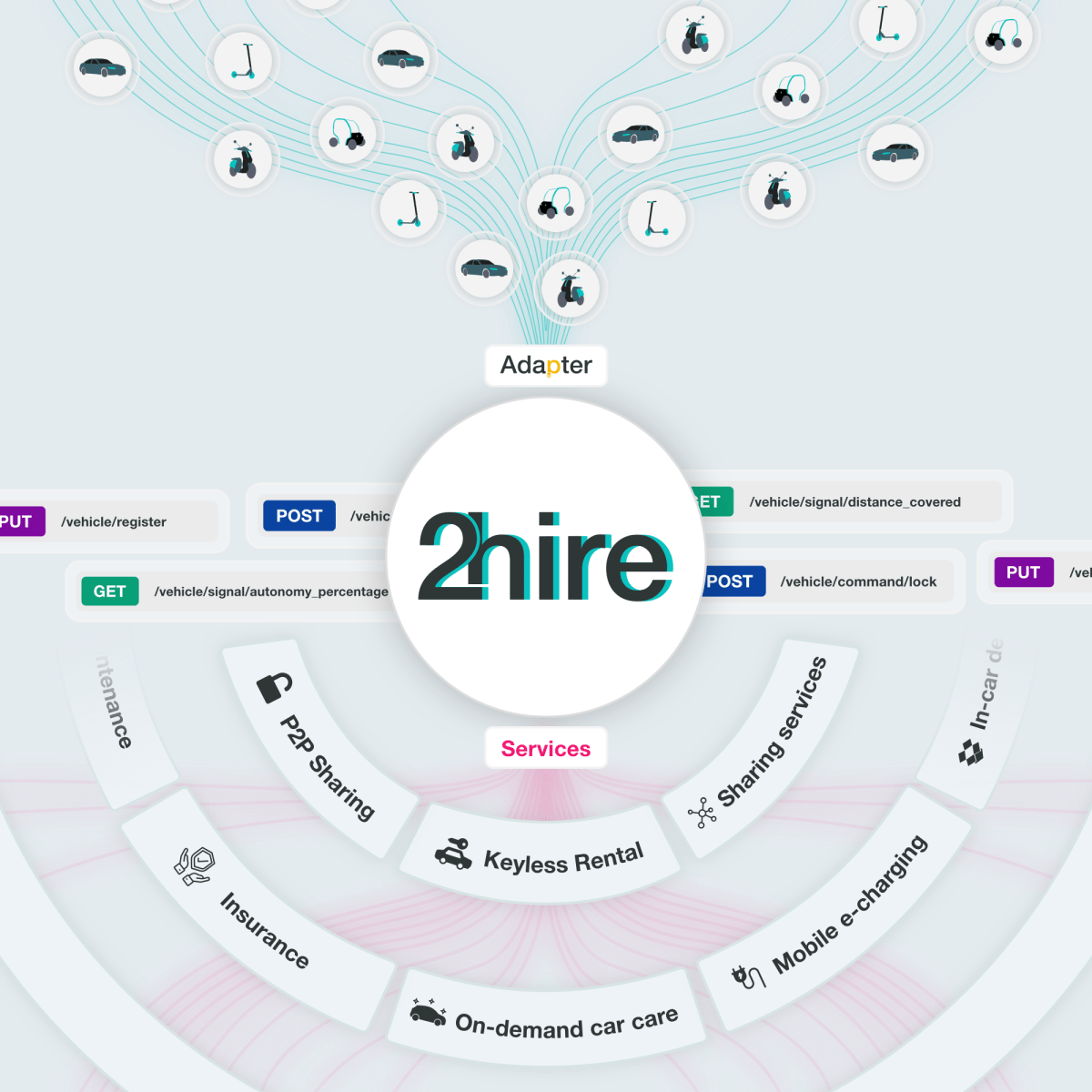
The best solution in between these entities? Adapter, 2hire universal layer.
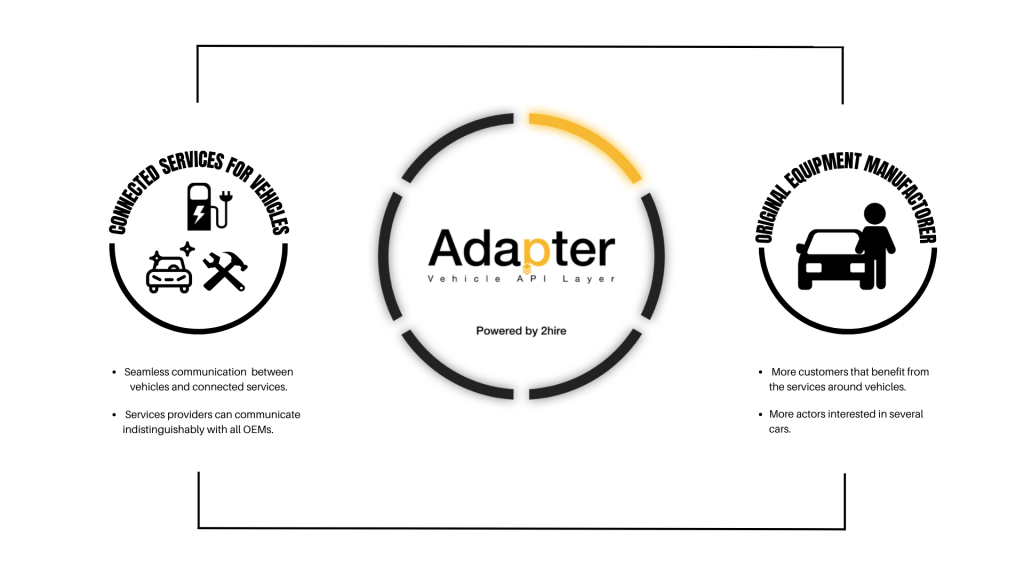
When a standardized solution (which encapsulates all OEMs) is offered, then the single OEM will be able to sell to a much larger basin of potential customers, and services (car rental, P2P car sharing, fleets, etc) will be able to manage cars digitally, regardless of make and model, solving the challenge with one software integration.
2hire created Adapter, which is the single standardized access point to all the major OEMs’ vehicles. Adapter makes it possible, through a single API layer, to harness the embedded connectivity of cars, from the integration of countless vehicle Makes and Models to interact with, to the creation of an ecosystem of services around connected vehicles.
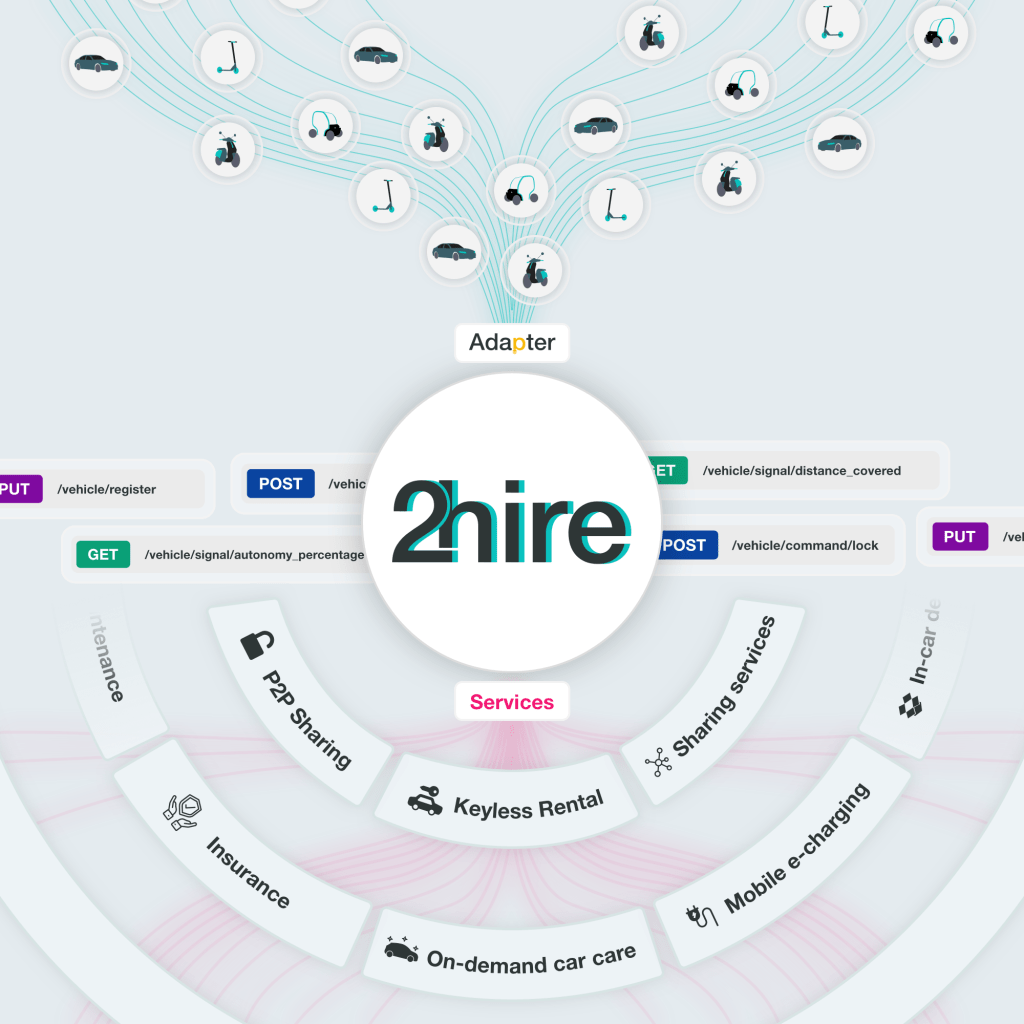
Standardizing car languages to a universal one is crucial for the connected car market to thrive. With every make and model using its language, communication with cars becomes difficult and can lead to issues such as lack of interoperability and increased complexity.
A universal language is what is needed to connect cars with services, no longer having connected cars and connected vehicles, but connected mobility!
Digital Content and PR Specialist at 2hire
I love running and daydreaming losing count of the distance I’m covering, cooking (and especially eating) and Drake is my spirit guide.
Posted on January 17, 2023 by Benedetta Biggi
30 Jan 2023 | 4 min read
“OEMs are intensifying their work around vehicle connectivity either by acquiring, creating or looking for companies to improve vehicle software or directly by intensifying the production of natively connected vehicles.”
Connectivity brings with it a hub of additional values, disentangling the concept of the car as a mere means of transport, leading it to become a cluster of services.
Connected services are part of the all-around connectivity. OEMs want to create a digital ecosystem that not only allows the seamless exchange of data and information between vehicles but also provides new tailor-made services for their customers.
While services used to be strictly vehicle-related, today OEMs put the vehicle one step further by providing 2.0 services that take the user experience beyond the classic boundaries of simply owning a car!
It is evident how connected vehicles are making more and more concrete and real opportunities that were not even conceivable before.
The use cases for the implementation of services around connected vehicles are manifold and split between mobility services that make the driver’s life safer (i.e. ADAS services such as lane assistance or brake assistance) and those that make it more comfortable (i.e. on-demand wash/e-charging/in-car delivery). For users, both branches are becoming paramount.
Connected data is increasingly valuable in the current value chain of the connected car ecosystem market. Car manufacturers are focusing their efforts more and more on implementing digital strategies, and collecting and studying data to gain insight into the wants and needs of end users. The scope of all this? To build and propose an ecosystem of connected services to cater to these wants and needs.
The Global Automotive Consumer Study 2023 by Deloitte points out that 78% of consumers who own a petrol/diesel car want to switch to electric. Electric cars are surfing the wave of the new connected mobility and with them, some disrupting connected services too. With more and more EVs out there, the shift of focus toward software and connected services is around the corner. The software move brings EV owners to discover a world of valuable services revolving around their connected cars.
Smart charging means you can intelligently manage how your EV charges by connecting it to the grid. When an EV is ‘smart charging’, the charger is ‘communicating’ with your car, the charging operator and the utility company through data connections. While Smart EV Routing comprehend apps and services that provide the best route from A to B, including charging stops at the best stations for the user route
Within the spectrum of these services, we observe the strong role of on-demand connected services.
On-demand e-charging, which allows users to charge their electric cars at any time by making a request directly from their smartphone, conveniently and hassle-free. Once the charging service has been booked, the operator only has to accept the request, locate the car, and go to the spot where it can be recharged contact-free. Some services already well-established in the market are Sparkcharge, E-GAP, and Reefilla.
On-demand car care, which means to take care of your car without having to go to a specific spot. The service is coming to you, you just need to book via smartphone and your car parked will be washed and ready to shine!
On this spectrum, some services already active in the market are Spiffy and Washout.
In-car delivery, which means to make your connected car the order collection station. Therefore, you can collect packages even when you are not at home or in the office. A perfect example is the service launched by Škoda, called Car Access, introducing a new function within the Škoda app that allows customers to get their parcels delivered straight to the trunk. The service is currently active in the Czech Republic with selected e-commerce and courier delivery partners with plans to be expanded soon in other international markets.
An outlook of real game changers in the current market considering the still weak volumes of urban infrastructures available.
Within the spectrum of these services, we also observe the strong role of on-demand connected services such as on-demand e-charging, one of the most innovative ones in the digital and connected ecosystem.
A user with a connected vehicle has access to such an integrated service, enabling the operator to even open the charging flap of the vehicle digitally, keyless, and in total safety, and then close the vehicle and leave it fully charged and ready to go!
Some services already well-established in the market are Sparkcharge, E-GAP, and Reefilla, real game changers in the current market considering the still weak volumes of charging infrastructures available.

Data is at the center of everything. As we previously claimed: data = value which leads to a stronger position in the market.
Data can also be leveraged to create partnerships with service providers (i.e. traffic information, e-charging, in-car delivery companies, etc).
An example of service implementation is Stellantis. One of the world’s leading OEM groups has now launched an independent Business Unit called Mobilisights to harness data from all Stellantis group brands to deliver new user experiences.
It shares this data securely with third parties so that users can decide with whom and for what they want to share their data in full disclosure.
Besides the benefits and increased safety, another point highlighted in the article was the connected car as a side source of income. The ways are many: it can be with Peer to Peer Car Sharing and the harnessing of the car to the fullest or by selling the data of one’s commute for the development of consumer-oriented services.
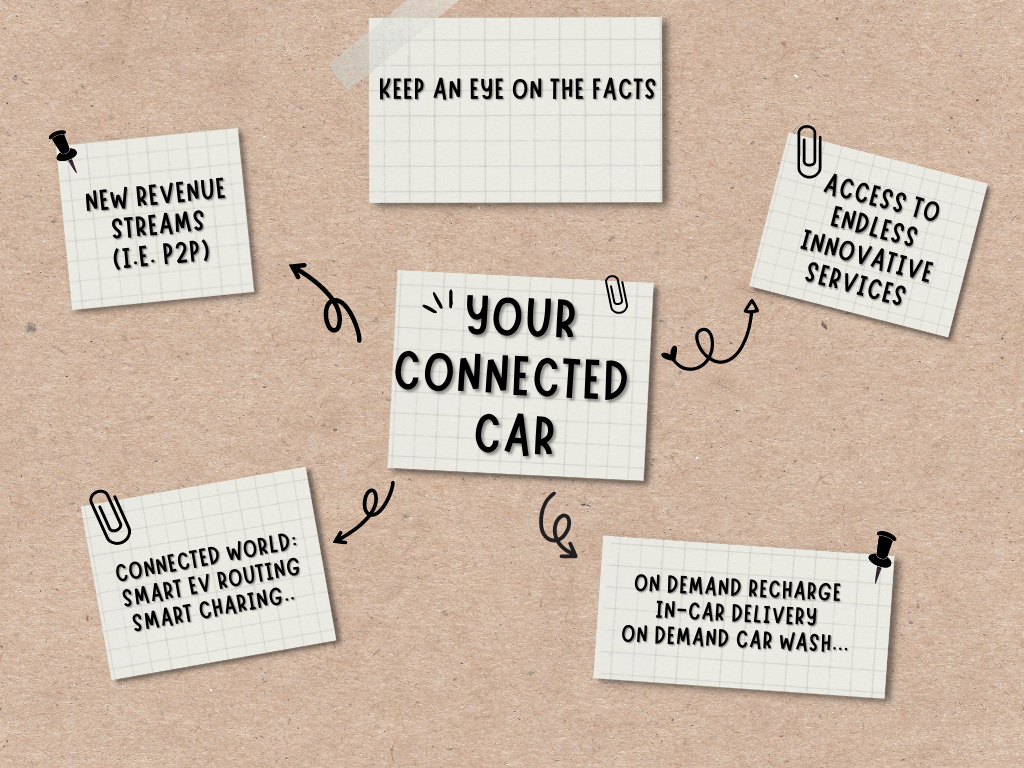
The use cases around connected vehicles and services are ever-expanding, to create a cluster of connected services that make the car a real operative center for users!
That’s only the start of something bigger, stay tuned to learn more about the connected revolution!
Digital Content and PR Specialist at 2hire
I love running and daydreaming losing count of the distance I’m covering, cooking (and especially eating) and Drake is my spirit guide.
Posted on January 12, 2023 by Benedetta Biggi
20 Jan 2023 | 3 min read
Connected services are the revolution in the automotive industry!
Classic car owners go to problems to meet their needs, due to a lack of time and resources. Fortunately, connected services solve this problem and give owners of connected vehicles several benefits.
Connected vehicles and connected services combo makes the driver’s life pretty much easier!.
Connected services are services delivered by a technologically-powered mechanism that offer the user a broad range of entertainment, communication, navigation, and maintenance functionalities.
For the last few years, car manufacturers and service providers have introduced more complex functionalities within the connected cars ecosystem, such as roadside assistance, e-charging or remote diagnostics, thereby improving customer services.
Connected services render the driver experience better by providing the latest cutting-edge services around connected cars.
For instance: the on-demand e-charging for E-vehicles, such as E-GAP or Reefilla is a type of connected service that fully meets the necessity of more electricity columns, which is one of the biggest advantages of on-demand e-charging.
We can collect the connected services advantages into three main groups:
A demonstration of the extremely positive impact of connected services consists of the constant predicted growth of cars endowed with connected services.
A Research by Maximisemarketresearch reports: “The Global In-vehicle Connected Services Market size is projected to reach US$ 85.25 Bn. by the end of 2027, at a CAGR of 16.1%.”
The following image reports the number of subscribers to auto-embedded telematics services worldwide in 2020, with a forecast for 2021 through 2026.

On-demand car washes don’t take place in a classic car wash building, but rather at the customer’s convenience, wherever and whenever they want.
Starting with the on-demand car wash and providing a real use case: Spiffy.
Spiffy is a car wash company, whose accessing services is effortless: book an appointment through an app, and the company comes to you with all they need and your car sparkles like a diamond!
Why should people choose an on-demand car wash instead of the standard one?
Surely, this kind of connected service allows you to save tons of time. You don’t have to worry, use a split moment in between to run to the car wash, the service comes to you at any time, without worrying about being there personally.
Different story but same feeling: What about when you have to receive a parcel, but you’re not at home? Here’s where it is delivered into your car!
We’re talking about the In-car delivery service around connected cars.
The mechanism of in-car delivery is extremely intuitive: delivery service providers gain access to the user car’s trunk to deliver a postal item (mostly e-commerce items) through a specific software that allows them to interact with the car during the delivery moment.
The receiver of the parcel will then receive a message with delivery confirmation.
This connected service saves time and offers an even greater flexibility compared to conventional home deliveries.
“Known as the ‘Airbnb of cars”, P2P Car Sharing sees private individuals (in jargon known as “Hosts”) as car providers, their owned cars being shared for users on P2P car sharing platforms.”
P2P car sharing is surely a connected service: The Host uses a specific fleet management platform for managing its activities and providing customized services to its clients.
This connected service provides many advantages, just focusing on the possibility to generate a further source of income for owners of one or more unused cars.
Without P2P car sharing they could not earn extra money, and they also could not provide a high tech and innovative experience for users of this kind of service.
Connected services are taking hold thanks to their potential in creating value through additional revenue streams, operating cost reduction, and improvements to safety and security.
OEMs tend to capitalize on all these types of value creation, putting their customer’s needs first. Meanwhile, they are acutely aware that the lifetime revenue for a given product will expand greatly by offering services beyond the point of sale.
Curious about how to boost your service around connected cars?
➡ Send an email at info@2hire.io to discover it!
 Benedetta Biggi
Digital Content and PR Specialist
I love running and daydreaming losing count of the distance I’m covering, cooking (and especially eating) and Drake is my spirit guide.
Posted on January 10, 2023 by Benedetta Biggi
21 Dec 2022 | 3 min read
“Intelligent Vehicles”, this is how Stellantis, the leading global automaker and mobility provider, defines connected cars.
Also Ford describes connected cars as “vehicles equipped with a modem and the ability to communicate and share information about the maintenance status, potential malfunctions and operational conditions”.
So, it’s intuitive that connected cars are connected to Internet.
Yet the connected car technology is far more than that: thanks to mobile data networks vehicles can have bi-directional communication with each other, but also with mobile devices and infrastructures.
Also, connected cars are able to generate data: OEMs, suppliers, insurers, mobility providers, fleet owners and many other parties that can benefit heavily from this vehicle data.
The connected car data represents actually an opportunity to monetize the data through different business models. The vehicle data is useful to elevate the consumer experience, offer new services or improve the vehicle’s performance.
Here are some of the applications of car data:
Becoming aware of the advantages that connected cars provide, Statista esteems that in 2020, around 48% of all new cars shipped that year had in-build connectivity. It is projected that by 2030, this share will double. In 2030, 96% of all new cars shipped worldwide are expected to be connected cars.

The Cadillacs hosted the earliest version of connected cars technology thanks to a dealer-installed device called “On star”, a connected car tech platform. It was firstly introduced by General Motors in 1996, and was one of the industry’s first built-in-telematics systems.
However, the most striking changes occurred at high speeds: BMW in 1980 integrated the on-board computer for Formula 1.
The innovative tool was able to transmit car data onto the box by ensuring connection between cars and the environment. This successful technology transfer made them the pioneers of the connected car series.
“Cars, trucks, buses, and other vehicles will be able to “talk” to each other with in-vehicle or aftermarket devices that continuously share important safety and mobility information with each other. Connected vehicles can also use wireless communication to “talk” to traffic signals, work zones, toll booths, school zones, and other types of infrastructure.” – The US Department of Trasportation
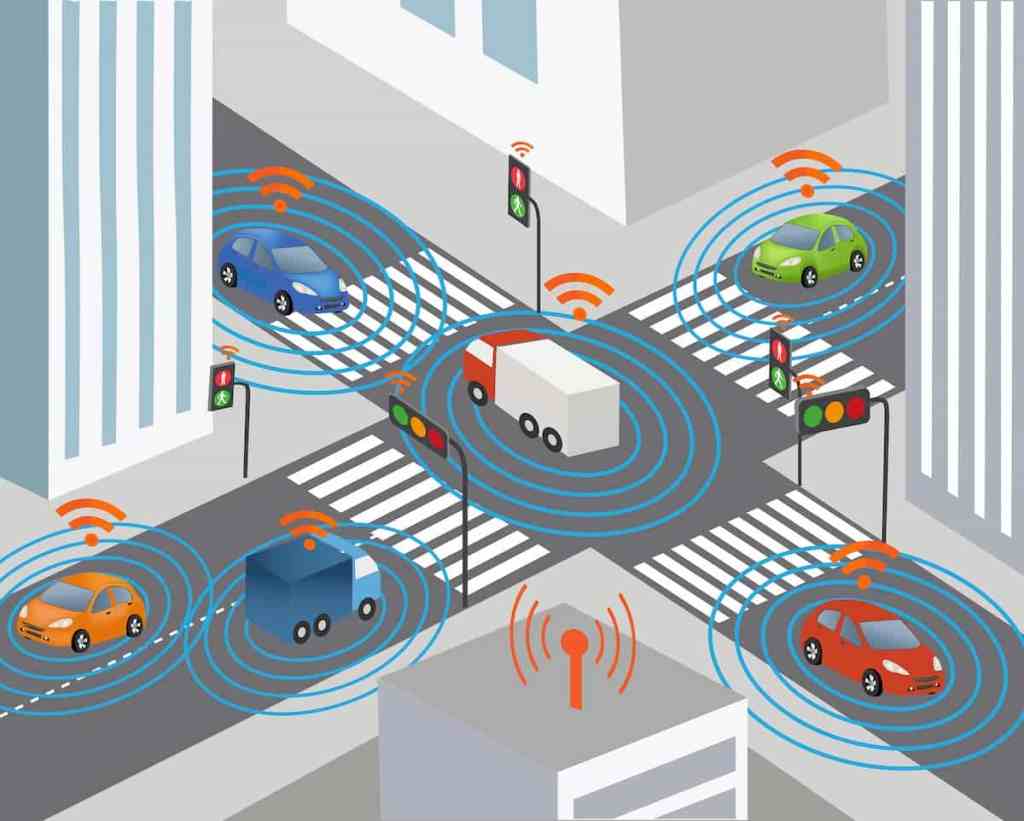
The acronyms V2V, V2U, V2I and V2X identify the several applications of connectivity.
Starting from the Vehicle to Vehicle communication: its functionalities include Turn Assist, which warns drivers not to turn in front of oncoming traffic, and Intersection Movement Assist, which warns drivers not to enter an intersection because the probability of colliding with another vehicle is high. When combined, Turn Assist and Intersection Movement Assist prevent up to 600,000 crashes per year, according to the US Department of Transport.
Vehicle to User communication allows sharing owners to monitor their fleets, but also let his customers have access to specific vehicles and leave them whenever they want.
Vehicle to Infrastructures sensors are able to capture infrastructure data and provide travelers alerts about such things as construction zones, parking availability, traffic, and road conditions. Traffic management supervision systems adjust traffic signal phases and timing, aswell as speed limits based on vehicle data in order to optimize fuel economy and traffic flow.
Vehicle to X, stays for “vehicle to everything”: it express the variety of interfaces which connected cars are able to communicate with, such as other vehicles, pedestrians and transport infrastructures. Using this technology, cars can detect other vehicles’ intentions, warn pedestrians before crossing the road, and learn and react to problems ahead.
C-V2X, or cellular “vehicle-to-everything technology”, has been a key announcement at CES 2019, with companies describing how it will reduce traffic congestion and reduce road deaths and injuries.
V2X communication underlines the improvements of technology which leads to a huge benefit growth both for people and for the environment, not surprisingly according to a recent report from Statista:
The market for vehicle-to-everything (V2X) technologies in vehicles is expected to grow to around six billion U.S. dollars by 2025.
Due to their ancillary functionalities, connected vehicles will certainly dominate the automotive sector in the coming years. However, they can communicate with all types of entities. Users will be able to extract the information and data they are most interested in, and will have a much greater mastery of their vehicles than in the past.
Sales and Marketing Associate at 2hire
I love running and daydreaming losing count of the distance I’m covering, cooking (and especially eating) and Drake is my spirit guide.
Posted on December 21, 2022 by Benedetta Biggi
16 Jan 2023 | 4 min read
When the pandemic landed in our lives, it changed many things. This is a well-known fact.
What you (maybe) don’t know is what has changed in the automotive market since the pandemic. Here are a couple of cornerstones for you:
The cost increase came in when the car’s quality upgrade started. That’s something that has been simmering in the pot for some time and is now peaking since the dawn of the Internet of Things.
How? With connected cars.
According to the carmaker Hyundai Motor Group: “The simple-looking term (connected car) actually refers to a wide range of technologies and services. Cars are now connected to wireless networks and have become ‘mobile computers’. They are not just a means of transportation anymore, but rather a gateway to leading a super-connected intelligent lifestyle.
Data at hand, the globally connected car market has grown exponentially in recent years. The value of this market in 2021 was over $23.6 billion. By 2026 however, according to a report by MarketsandMarkets it is expected to grow to over $56 billion. That is staggering growth, highlighting how many more vehicle manufacturers are adopting connectivity in their models.
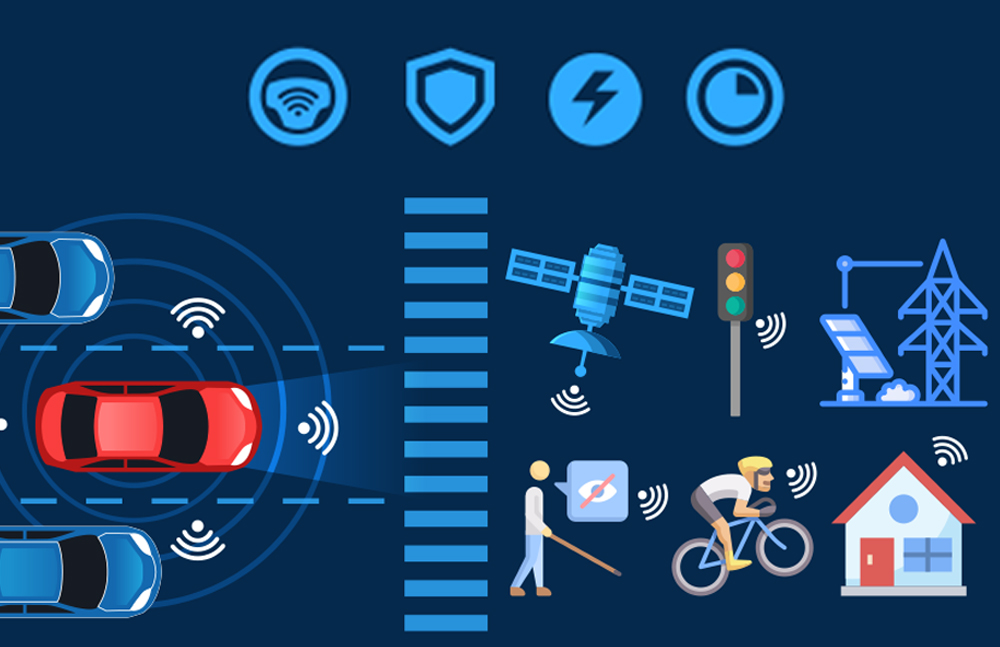
It is the basin that embodies the entire communication system of the car. Connected cars add a whole big compound of comfort when it comes to the state of the art digital experiences.
According to Siemens, V2X refers to an intelligent transport system where all vehicles and infrastructure systems are interconnected with each other.
Advanced connectivity will provide higher quality traffic knowledge across the entire road network, leading to further relevant innovations such as building new services around connectivity, cutting accident numbers, minimizing emissions, and optimizing traffic.
💡 V2X encloses several use cases. Today we’re speaking about V2V and V2U.
Vehicle communication (V2V) exploits the ability to wirelessly exchange information on the speed and position of surrounding vehicles and holds great promise for avoiding accidents, easing traffic congestion, and improving the surrounding environment.
There is only one way in which V2V can fully work: vehicles must all be connected and be able to speak a universal language with each other.
The term refers to vehicle communication with the occupants and driver. It’s all about infotainment and a fully personalized travel experience.
The user experience is the focus of interest of OEMs who are no longer aiming at the quantity of production but the quality of production. The creation of a vehicle designed to be a home, an office, a foothold, no longer a mere means of transport but an extension of the human experience.
Car connectivity is the burning pivot that fuels this digital experience 🔥🚙📶

In this connected world, when it comes to mobility, everything that is an innovative experience revolves around connected vehicles. But as of now, although the connected car ecosystem market predicts that by 2030, 95% of new cars will be connected.
OEMs are intensifying their work around vehicle connectivity either by acquiring, creating or looking for companies to improve vehicle software (e.g. Volkswagen’s software company, Cariad, with the aim of building a unified technology and software platform for all Volkswagen brands) or directly by intensifying the production of natively connected cars.
On the other hand, all the non-connected cars already on the market can become so via aftermarket devices.
We speak of connected cars when they are born with embedded connectivity provided by car manufacturers.
Non-connected cars, in turn, can become so aftermarket, through the installation of an IoT device that gives access to an infinite carousel of benefits.
It acts as an Internet of Things hub that sends data to a cloud service, where it can be processed and made accessible to the vehicle owner or fleet manager.
The evolution of the car is definitely evident. It has gone from being considered a simple fabrication to carry people from A to B, to now where it is still like that, but sends data that can be used in a multitude of ways and can lead to a more progressive view of the car.
The future still holds much in store around the connectivity of vehicles, which will soon become true service clusters.

Digital Content and PR Specialist at 2hire
I love running and daydreaming losing count of the distance I’m covering, cooking (and especially eating) and Drake is my spirit guide.
Posted on December 6, 2022 by Benedetta Biggi
15 Nov 2022 | 5 min read
“Most privately owned vehicles sit idle more than 90% of the time” – P2P Car sharing Market Analysis by Robert C. Hampshire and Craig Gaites
The solution to monetise all this time? Peer to Peer car sharing.
In one year, a private car sits idle 328.5 days. Yes, we know, this made you blink.
Let’s take a step back and explain what Peer to Peer Car Sharing (P2P) is.
Known as the ‘AirBnB of cars’, P2P Car Sharing sees private individuals (in jargon known as “Hosts”) as car providers, their owned cars being shared for users on P2P car sharing companies. So, when a user signs up to the platform, he/she searches for an available car at a convenient place and date, and books it from a private party in exchange for money, which is controlled and tracked through the P2P car sharing platform.
For the guest, co-protagonist of this market, P2P car sharing is an alternative to the more traditional car rental, which implies considerable cost savings. As reported in the previous article on Car Rentals and the episode on the microchip crisis, the rental market is experiencing a drastic downturn in the availability of cars. This is causing rental prices to rise exponentially, while P2P car sharing is gaining ground.
Just as some rentals do, peer to peer car sharing also allows the guest to choose the car model. While only some rentals do it for a higher rate (conventionally they guarantee the category/segment and not the specific model), for P2P car sharing it is a granted option.
Each car shared removes between 4.6 and 20 private cars on the road. In addition to the removal of unused private cars, P2P car sharing wants to provide a scalable carsharing solution that addresses both the high costs of private vehicle ownership and the reduction of greenhouse gas emissions.
👉🏾 Turo (US, Canada, and UK) – The world largest P2P car sharing marketplace widely spread around US and Canada (500k cars approx.) and a good presence also in the UK, mostly around London (7k cars listed). In the EU scenario, they also recently acquired the French P2P car sharing platform Ouicar which counts approximately 30.000 vehicles listed on the platform.
👉🏾 Getaround (US, EU, and UK) – European P2P car sharing company counting around 20k vehicles listed in the platform and more than 5M users.
👉🏾 GoMore (Denmark) – The Danish P2P car sharing is currently present in 6 markets around Europe: Denmark, Sweden, Finalndia, Spain (Amovens), Austria, and Switzerland.
👉🏾 Snappcar (NL) – Dutch P2P car sharing with currently 12k cars on the platform.
👉🏾 Hiyacar (UK) – A 100k members P2P car sharing company operating throughout UK.
👉🏾Auting (IT) – The P2P car sharing player in the Italian market.
Before the pandemic hit, car sharing mainly covered journeys in the evening and on the weekend for leisure, daily short trips mainly.
After the pandemic, nearly 60% of people started to avoid non mandatory travel and stayed home. People who don’t have a private vehicle, usually opt for alternative mobility means to avoid mass public transportation, and here is where the use and potential of vehicle sharing is exploited to the fullest.
One of PWC recent surveys on 1000 consumers recorded that, in 2019, 72% of people indicated a radical shift towards sharing mobility. With the advent of the global pandemic, the economy suffered a drastic drop, and digital channels kept being more important every day to overcome this descent.
“Consumers in shared mobility are prioritizing health and preventive measures rather than monetary offers”.
Vinod & Sharma stated in a survey on Covid-19 impact on the sharing economy pre and post pandemic that, before the pandemic, the major demand in mobility services was revolving around discounts offerings and cheaper rates.
While after the pandemic, has been noted a radical rise in other parameters such as cleanliness, safety, and propensity for more immediate processes to avoid contacts.
In the survey of 115 people, 88 of them (more than 75%), were more likely to use sharing mobility if their needs are taken care of in the right way. This is the need in which digital innovations must take root to bring about the change that everyone needs. The modern user wants convenience and security rather than the cheapest price for a more uncomfortable condition.
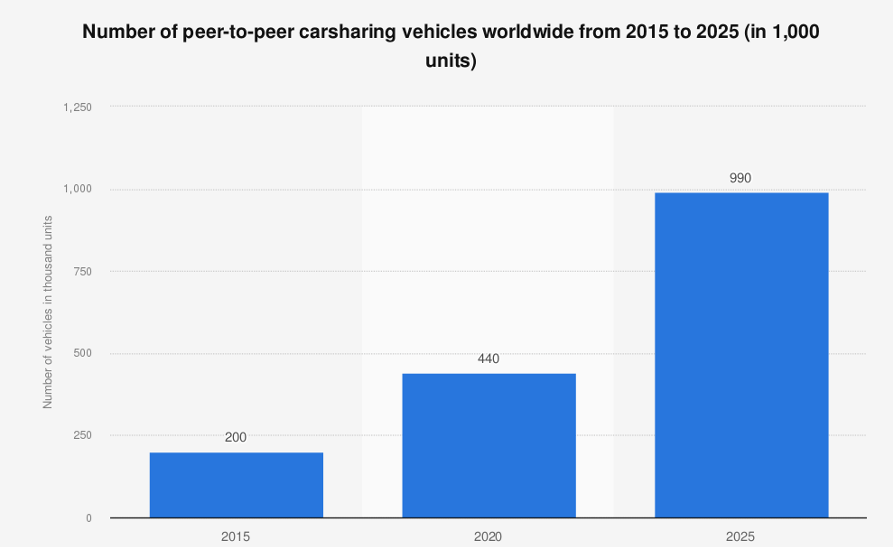
Statista depicts a projection graph on the increase of vehicles in the P2P car sharing platforms from 2015 to 2025. Period encompassing the pre and post-pandemic, noting how, over the next 3 years, forecasts predict about 1M vehicles listed on the various platforms.
“Turo’s main selling point is convenience.”
The sheer convenience and immediacy of P2P car sharing has grown tremendously during the pandemic. In fact, sales skyrocketed, tripling in the first nine months of 2021 to almost $350M.
Starting from one of the most appealing aspects of P2P car sharing, hence convenience, we can identify some aspects that make the P2P car sharing market so innovative and enticing for the modern user.
1) Switch of experience 🆕🚙
The lack of vehicles available on the market from large rental companies has caused users to veer towards alternative solutions. The component crisis, which is severely hampering the availability of cars, is one of the factors why users have started to explore alternative options to classic car rental.
Hence, the desire to navigate a completely new, innovative rental experience, sparking curiosity in the user’s mind.
2) Good value for money 💰
Both owning and renting a car has become way more costly due to the hard meagre availability of vehicles, soaring prices of fuel, parking, and insurance expenses… (and many more, unfortunately!)
This is where P2P car sharing pops up.
Users can have a car at disposal, quickly, and hassle-free. Renting is the only price they have to take care of when it comes to renting a car on P2P car sharing platforms.
According to Turo, Peer to Peer car sharing clients can save about 30% compared to a traditional car rental.
The Ascent carried out a comparative analysis on car rental prices in LA from 10 to 18 July 2021.
The cheapest option from Enterprise Rent a Car was $785.01 for an average size vehicle, unlimited mileage, and pick up and drop off at LAX airport.
While on the Turo platform, same dates and unlimited mileage, a 2019 Toyota Corolla cost $320, with pick up and drop off in a nearby area of downtown LA.
The saving was indisputable: $450. Not bad, right?
The current challenges in the car market and the crisis that is affecting car rentals are crucial aspects when choosing a rental experience. P2P car sharing sees an opportunity to leverage cheaper prices and the ease of a time-saving and worry-free experience. (This connects us to the third benefit of P2P car sharing that we will discuss: the contactless experience).
3) The contactless experience 🔓
The effects that covid left in society do not only concern economic woes, but also social ones.
We live in a time when people try hard to avoid overcrowded places, means of transport where everyone is crammed in like sardines, or long waiting queues to rent a car.
While car rentals still struggle to adopt it and understand its incredible potential and benefit, Peer to Peer car sharing immediately provided the opportunity for a contactless rental experience.
Just think about Turo, they offer the possibility of keyless and contactless solutions in one host’s fleet of vehicles, at its discretion. Thus, the idea of being able to rent and monetize one’s idle cars 24/7 is no longer a pipe dream, but a possible reality.
The benefit would come from both sides:
For hosts, in managing rentals anywhere, regardless of whether it is relaxing at home in Isle of Dogs or in Paris sipping a coffee looking at the Seine.
For guests, in the speed and peacefulness of the rental. Without worries about long waiting times and overcrowded front desks to collect the car keys, these will be inside the glove box of the vehicle, which will be easily accessed via smartphone.
Let’s focus on the Host side for a sec.
Just as the guest seeks the smoothest experience, so the host equally wants to optimize its time in the best possible way. Private cars sit idle for 328.5 days out of 365, hosts’ ultimate goal is to not miss the opportunity to make those stagnant days pay off.
Very often the platform-listed vehicles are a side business for the hosts, who have another regular job in their daily lives, to which they add P2P car sharing.
This is just one of the ideal use cases for the adoption of a keyless solution.
The circular approach swirling around P2P car sharing is disrupting the industry in a way that benefits renters and vehicle owners at the same time.
Peer to peer car sharing is also a way of contributing towards sustainable travel networks, making better use of existing cars, which on average sit idle 96% of the time.
The current benefits and future developments around the Peer to Peer car sharing market are plentiful and proves that it is not a pass-by trend but a market that is here to stay.
Sales and Marketing Associate at 2hire
I love running and daydreaming losing count of the distance I’m covering, cooking (and especially eating) and Drake is my spirit guide.
Posted on September 22, 2022 by Benedetta Biggi
1 Sept 2022 | 4 min read
It’s a well known fact that the car rental industry is booming. A prediction is that the market will grow from €50.34 billion in 2020 to €137.21 billion in 2027 at a CAGR of 6.7%!
This growth is due, in part, to the increasing popularity of contactless and keyless technologies. These technologies are making it easier for people to get around, since 82% of customers affirm that the availability of contactless experience from businesses is important and easy to use.
This means that customers will be able to rent cars without exchanging keys before or contact the rental company directly, tapping into the need for convenience and time-saving solutions that is drawing customers to keyless rentals over traditional ownership.
Implementing a contactless and keyless strategy within your car rental business can help you improve customer satisfaction and operational efficiency, digitalisation is the latest innovation to give a boost to your rental business!
A recent study by KPMG found that, just in the US, the number of vehicle miles traveled (VMT) dropped by 64% in 2020, the first time this number has dropped in 30 years. This sudden drop in VMT is driven by a variety of factors, including the COVID-19 pandemic and the resultant change to working from home that many across the globe have gotten used to.
With people working from home and avoiding public transportation, there’s simply less need for cars.
It works out that in EU and UK between 2021 and 2022 car purchase and ownership dropped to a level of 11.7 million, about 25% less than in the previous year and the lowest number since 2001. Also, with the Covid recovery, rentals began to have serious difficulties in supplying vehicles, due to the severe microchip crisis that brought production to a standstill.
Going into 2022, both new and used vehicle price indices were at an all-time high. Coupled with the rising price of gasoline, it’s no wonder people are reconsidering buying and owning a car, and that rental companies had to raise the rental prices because of the trouble in finding vehicles.
Car production is also an issue, with supply lines critically compromised by the impact of the pandemic. Many manufacturers have run into significant difficulties sourcing parts from suppliers for their most profitable models. These supply chain issues, combined with the rocketing cost of freight shipping have only added to the rising cost of car ownership.
The current situation has made it clear that the traditional model of car ownership is gradually becoming untenable. People are increasingly turning to alternative methods of transportation, something that won’t waste too much of their time and will make travel simple, comfortable, and less time consuming as possible, like digitized rental.
As we pointed out at the beginning of this article, the car rental industry is expected to grow rapidly out to 2027. However, in order to take advantage of this growth, the traditional car rental business is not enough.
The first step is to slowly restore the heavy losses incurred since the beginning of 2020. Evidence shows that two thirds of Avis rentals at airports have closed and Europcar has decreased its 2020 revenues by 42%, and these are just a few numbers!
When tourism started to heal in 2021, prices for renting a car skyrocketed. But, why?
💡 The graph below shows the sharp increase in car rental prices in the pre- and post-pandemic summer:
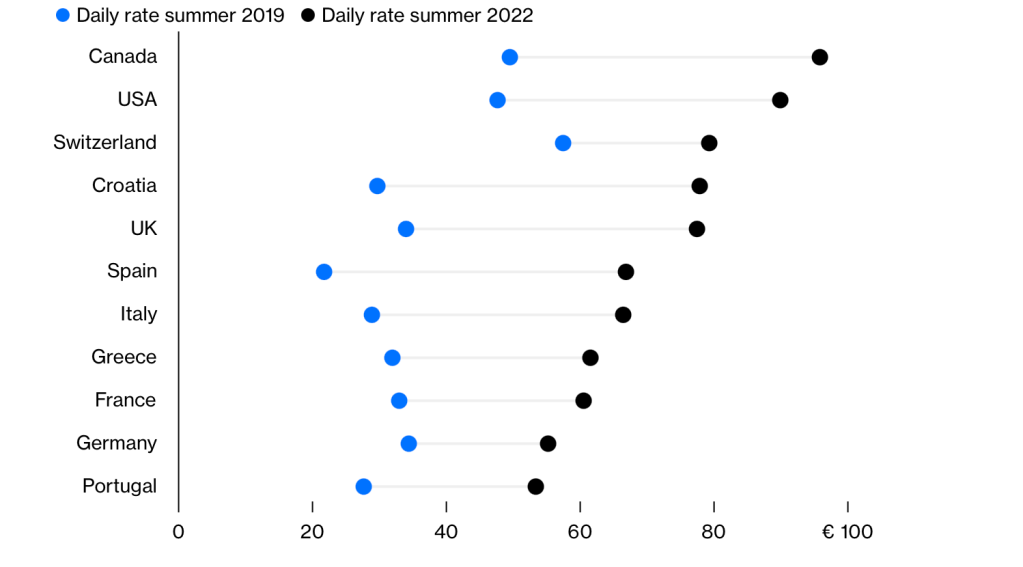
Halfway through 2022, some car rental companies still don’t have enough cars for the huge demand coming from the post-covid recovery.
Not only is there high demand, but the needs of users have changed too. People after Covid have started to adopt more preventive measures, avoiding overly close contacts or queuing in overcrowded places. Car rental front desks at airports, for example, are the perfect picture of what the user of 2022 wants to avoid.
Here is where the alternative option arises.
Keyless rentals are the turning point to slowly heal this situation and start giving users what they want. A seamless, peace of mind, and fast renting experience.
Many car rental services have ended up with big financial losses also because they provide an out-of-date experience. Long and cumbersome waiting times, clogged front desks in high season, and little organization for user needs.
According to XM Institute’s annual net promoter score benchmark study, the car rental industry’s average customer net promoter score is 5 (out of a maximum of 100). Definitely not enviable.
The opportunity for car rental operators must grow on the innovation side, adopting innovative business models and offering a connected and keyless rental model to tackle outdated ones.
Established industry giants, such as Enterprise Rent-A-Car, The Hertz Corporation, Sixt SE, Europcar, and Avis Budget Group have already launched car rental apps in an effort to keep up with the competition and better meet customer needs.
In order to adequately meet the ever-changing needs of the modern consumer, the call for connectivity of car rental fleets and the digitisation of the car rental process are essentials for this quality leap.
Connected cars have greatly helped consolidate the car rental business, enabling service providers to track fleet usage and manage maintenance while also improving customer experience.
The core focus is that to compete in today’s market, car rental operators need to innovate. Innovation in the sense of adopting a contactless and keyless strategy in a car rental business comes with several benefits.
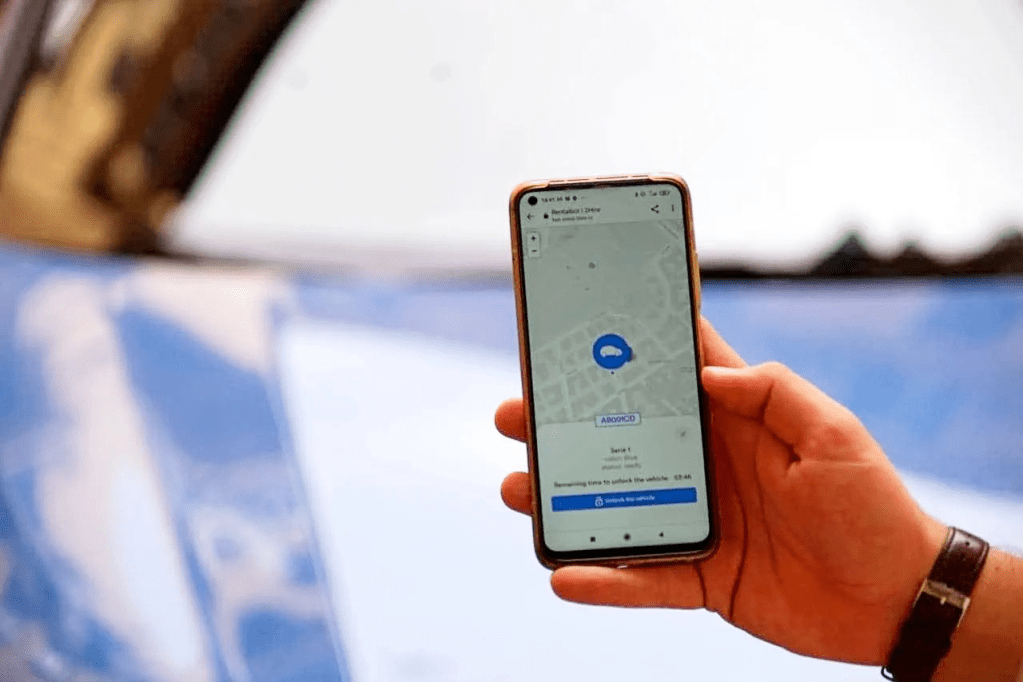
The hard blow of Covid has left scars which need to heal slowly. Tourism and business travel are getting back on track and the car rental industry is directly affected by this.
People’s habits have changed, and to heal these wounds and provide a new user experience, investing in technology and innovation is the way to go.
Sales and Marketing Associate at 2hire
I love running and daydreaming losing count of the distance I’m covering, cooking (and especially eating) and Drake is my spirit guide.
Posted on August 25, 2022 by Benedetta Biggi
15 Sep 2022 | 4 min read
E-Motion is a moped sharing service based in Cosenza.
2hire provides e-Motion its End to End sharing product plus the connectivity needed to integrate their vehicles.
Nowadays, they can count on a fleet of 20+ mopeds Supersoco CUx, but they intend to extend their fleet with more vehicles from Supersoco and NIU.
After a speedy onboarding, E-motion launched its sharing service during the pandemic.
Despite the tricky historical period and the problems due to covid-19, thanks to the presence of the UniCal University, and the dynamic and mobility-oriented context of Cosenza, E-motion achieved excellent results.
Currently, E-motion exceeds 4.8k registered users who rode for about 38k trips. But now let’s move on to the innovators of urban mobility in Cosenza:

Massimiliano: I studied law in parallel with my work as a basketball coach. A completely different background from the one I am now involved in, I must say. I have always been fascinated by new mobility and innovation, so I decided to try my hand at mobility with my brother Valerio.
Valerio: I studied mechanical engineering, and like Massimiliano in parallel I also worked in a basketball team. During my studies I fell in love with the world of motors and recent developments in electric mobility, and now here we are!
Massimiliano: Although Cosenza is a small city, I was keen to solve the problem of traffic jams, gridlocks and lack of public transport. From there, the e-Motion service was born.
Valerio: My goal in launching a sharing service was to cut down on pollution as much as possible. If thousands of citizens start approaching new forms of electric mobility, they can make a real difference from an environmental point of view. Especially in the tragic climate situation we are currently in!
No. In a sense, we underestimate the effort of taking care of a sharing service. It has really changed our lifestyle, especially in terms of service hours. Just to give an example: having a 24/7 service means having to deal with requests and operations until late at night… every day!
Due to the lack of public transport in Cosenza, our rush hour is from 23.30 to 05.00 in the morning. This means waking up in the middle of the night to respond to customers’ requests, not one of the easiest managements without a doubt!
Mainly because of the lay of the land. Cosenza is located in a hilly area and kick scooters would not have been the most suitable and convenient option.
Our goal is to connect the suburbs and the university with the city centre. This means rides of about 5/10 km with many ups and downs, mopeds are perfect for this!
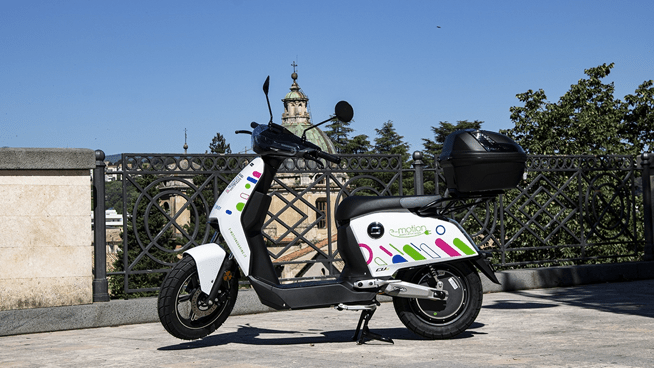
We started thinking about an innovative mobility service in 2019. Over time we contacted numerous providers and changed our project several times, without ever finding the right solution for us. Something that offered the right blend and balance of flexibility and efficiency. Until we stumbled upon 2hire….
2hire, in the person of COO and co-founder Elisabetta, was always willing to discuss, suggest and follow our path. Another point in Elisabetta’s favor is that she never put any pressure on us. And when we chose Supersoco as our vehicles’ supplier, they suggested 2hire as the right technology provider.
It was almost an ideal scenario for us!
We have three main objectives:
❶ To expand our fleet.
❷ With the addition of new vehicles and the expansion of our fleet, we will be able to ensure adequate density to broaden our operational area to more suburban areas.
❸ Finally, we are considering opening new branches, perhaps with a franchise business model. As a side project, we are starting to think about expanding our service with e-bikes!
So…watch out!!
Massimiliano: One evening out of many, the phone rings at 11.30pm.
I pick it up and a voice says: “Hello, I left my vehicle under my house this afternoon with 38% remaining battery. No one took it and now the battery level is 100%. How is this possible?”.
This is just one of the odd questions asked by our customers. There is a lot of cluelessness about electric micromobility, people still don’t really know the dynamics, let alone the benefits. Only a few people know that the battery of a moped can be charged directly from a socket!
Valerio: We were running operations in Rende, in the University area. A group of students came up to us and said lovely words: ‘Thank you for your work. Since the university area is connected with a mobility service, everything is easier and more pleasant for us students’.
It was very touching.
There are about 5,000 students in Rende and after 11.30 p.m. public transport stops, getting around is almost impossible. E-motion is the only way for them to get to the city comfortably and quickly and have fun without stressing about how to commute!
This is our goal: to create a new mobility for our city 🛵💨
Sorry… attorney-client privilege!
Ahahahah, no, all jokes aside. We have hired a Social Media Manager to manage our Instagram page. She is completely autonomous, very creative and so far she is doing a fantastic job! Maybe our profile is so beautiful just because of the autonomy she has in handling it!!!
YES! If it were possible, with fewer mistakes along the way, of course.
It has been, and still is, a long journey but we are satisfied with our work and the achievements of E-motion.
What makes the difference for us is taking note of the mistakes and using them as we go along to improve.
Massimiliano: Well, overall I’m happy with it. It’s a unique experience! Valerio only has one problem… He can’t wake up early in the morning, it’s stronger than him!
Valerio: Okay, that’s true…. But I stay up later in the evening than you! Ahahah
Joking apart, I must admit that we work very well together. We don’t really argue, as we always work closely together, we figured out how to solve problems as a real team.
Massimiliano: I agree. If I could go back I would not change partners. I would still choose to work with my brother!

Customer Success Specialist at 2hire
I think that the most accurate adjective which describes me is: curious. My curiosity brings me to define my primary interest: reading. Read entails a contemplative state of mind.
Posted on August 8, 2022 by Benedetta Biggi
05 Sep 2022 | 3 min read
“The multiple launches of e-bike services reveal that the shared micromobility market is maturing.” – Fluctuo
Cities around the world are seeing a shift in the way people are getting around. With the covid-19 recovery, e-bikes sales in Europe and US reached the highest peak ever recorded. E-bike sharing is becoming more and more popular, it is one of the quickest, green, and most efficient ways to get around town. In this article, we will take a closer look at the e-bike sharing trend growth.
E-bike sharing is a system where e-bikes are made available for short-term use.
These services, which can be either provided by municipalities or by private corporations, require users to return the e-bike to a designated station (station based model), while others allow users to leave the e-bike anywhere within the service area, (free floating model). The e-bikes wave is increasingly spreading around big and small cities since they provide power assistance to the rider, making it easier to pedal over long distances while producing, in its small way, a green impact.
There are many reasons why bike sharing is becoming popular in cities. Firstly, e-bike sharing is a sustainable mode of transportation. E-bikes produce zero emissions, which is good for both the environment and public health.
Additionally, e-bikes services made riding to work and living the city way more comfortable and cheaper rather than owning and maintaining a private vehicle. And also cheaper than other modes of transportation, such as taking a taxi or Uber.
E-bike sharing works as a more flexible form of public transport (and with public transport too), which is perfect for those who don’t have, or don’t want, a car.
These benefits have been compounded by the social distancing needs of the pandemic. Biking is a great way to get around while still maintaining a safe distance from others.
The global e-bike sharing market was valued at $3.43 billion in 2019, but its recent rise in popularity means it is projected to reach $6.98 billion by 2027, registering a CAGR of 14.0% from 2020 to 2027.
Italian glimpse 👀🇮🇹🚲
E-bike sharing has experienced a boom in Italy.
E-bike sharing is the most popular sharing mobility service in Italy, around 2.5 million Italians used an e-bike sharing service in 2021, and together with scooters, it is the service that has shown the most marked upturn once the lockdown period ended.
The number of available e-bikes in Italy has tripled since 2015, and currently, 265 municipalities and other local authorities have e-bike sharing schemes active, the overall number of shared bikes in Italy is 39,500.
What is clear is that bike sharing is riding the wave to get around cities, with the number of e-bike sharing schemes and available e-bikes continuing to pop up around.

This is partly due to the fact that electric bikes make cycling easier and more accessible for a wider range of people, including those who do not need to travel long distances, but still want to make the most of the convenience and swiftness of such a service.
The coverage in Italy goes from the top to the heel, from Milan to Venice, from Rome to Naples, and Sicily. It’s easier to say that in every region you visit, there is sure to be an e-bike at your disposal!
A gaze at Europe 🇪🇺
Europe alone hosts 41% of all bike sharing services.
Several European operators have launched e-bike sharing services to jump into 2022 with a head start and more than 13,000 new free floating e-bikes have hit the streets of Europe just in the last six months.
In 2020, the market of e-bikes in Europe had an estimated value of $8.01 billion. The projection for 2026 is $16.58 billion.
Clearly, the benefits of such vehicles have played a major role in the popularity of e-bikes sharing around. The acknowledged benefits are:
With the rapid rise in market value, more and more e-bike sharing schemes are likely to spring up in the coming years. This is good news for those of us who want to see more sustainable, emission-free transportation options made available to the public, not only in big city centers, but also suburban areas with lack of efficient transportation.
E-bike sharing comes with: inclusivity in enabling connection between city centers and surrounding areas and relieving traffic jams while facilitating transport for citizens.
With this data and facts at hand, we can say that e-bike sharing is here to stay, and its spread shows no signs of weakening 🚀
Sales and Marketing Associate at 2hire
I love running and daydreaming losing count of the distance I’m covering, cooking (and especially eating) and Drake is my spirit guide.
Posted on July 27, 2022 by Benedetta Biggi
14 Jul 2022 | 4 min read
In the big city, getting around is very often a cause of stress. Traffic jams, scarce parking, and long walks from public transport stop to your final destination can make even the simplest journey a true ordeal.
But what if there was an easier way?
Shared mobility offers you smart urban transportation that is tailored to your needs. Whether you need a ride for a few blocks or want to use a shared bike for your whole commute, sharing operators have got you covered!
Shared mobility is the most modern way of getting around cities using non-owned vehicles. You can choose from a variety of modes of transport, including cars, bikes, scooters, mopeds and more!
Shared mobility services are operated by mobility providers that can offer a single-vehicle or multi-vehicle fleet at your disposal, with a free-floating or a station-based type of service. To use such services, you simply need to download the operator’s app and create an account. Once you’ve found the vehicle you want to use, you can unlock it with your phone and away you go!
There are many benefits to using shared mobility services. Firstly, they can save you time and money. Commuters can avoid the hassle of owning and parking a car, and business travelers can save on expensive taxi fares.
Secondly, shared mobility services are more environmentally friendly than traditional modes of transport. They help to reduce traffic congestion and pollution in cities, and can even help you to be more active!
And finally, they offer you the flexibility to choose the right means of transport for your needs at any given moment. Whether you need a car to reach a restaurant far from your area, or an e-bike to cycle to work, there is always a shared mobility option ready to solve your problems.

There is a range of shared mobility vehicles available, including electric bicycles, cars, scooters, mopeds, and quadricycles. You can find shared mobility services in cities all over the world, so there’s sure to be something to suit your needs.
The most common and popular vehicles include:
Car ownership is not for everyone. It can be expensive and time-consuming, especially if you live in an urban area. Car sharing allows you to use a car when you need it, without the hassle of ownership.
For example, the Enjoy fleet of Fiat 500 Hybrid cars and Fiat Doblò vans available to drive in Turin, Italy, can be rented by the minute, hour, or day. This allows you to use a car for short trips around the city.
The company has also expanded its fleet with XEV YOYO electric quadricycles to allow for a greener, more sustainable form of transport.
Shared bicycles are a great way to get around cities. They’re usually cheaper and definitely faster than public buses, for example, and you don’t have to stress out about finding a parking spot since most of the time they are free floating.
Bike-sharing schemes are popping up all over the world. According to the latest Fluctuo European Shared Mobility Index, free floating bike trips are up 143% from Q1 2021.
Some highlights from the european landscape:
– Rome: RideMovi launched a fleet of 2,000 e-bikes
– London: Dott & Human Forest launched e-bikes in Hammersmith & Fulham
– Netherlands: GoSharing expanded in several dutch cities with e-bikes.
Another popular form of shared mobility for your free floating or station based service is the scooter. Their dynamicity is ideal for those who don’t want to hassle with parking in city centers!
There are several scooter-sharing businesses available, such as Bird, Lime, and Spin. Elerent is one of them. Starting from many cities around Italy, it has recently entered the foreign market with a new, scooter sharing solution around Greece!
Mopeds are going pretty well too. Just in the last 12 months, a total of +12,000 shared mopeds have been put on streets worldwide.
One of the latest examples is GO Sharing, which made 500 Supersoco CUX mopeds available in the Italian capital with a free floating model around the city. This is the first step toward a bigger scenario, since they affirmed they want to triple the sharing fleet in Rome to 1,500 e-mopeds by the end of the year.

Shared mobility is spreading like wildfire. With innovation and new technology, shared mobility is becoming more and more convenient, smart, and popular all around.
The latest data from the National Observatory on Sharing Mobility states that just in Italy there are 5,600,000 subscriptions to shared mobility services and 158 active sharing services. Today, 49 cities offer shared mobility solutions to their citizens: three times as many as in 2015.
All these options popping up are giving citizens the opportunity to indulge in the way they move around the city. Freely.
Sales and Marketing Associate at 2hire
I love running and daydreaming losing count of the distance I’m covering, cooking (and especially eating) and Drake is my spirit guide.
Posted on June 24, 2022 by Benedetta Biggi
30 June 2022 | 3 min read
The Italian Government has announced a new financial policy that will support the development of bikes lanes in Italy. This is a major step forward for urban mobility, as it will make it easier for people to get around cities without having to rely on cars.
Cycling is a perfect solution for both climate change and environmental objectives, and this new policy will help promote its use. E-bikes are becoming increasingly popular, and with good reason. They are a more sustainable way to get around cities, and they also help reduce traffic congestion.
In this article, we will take a look at the new financial policy, how it will help promote cycling and e-bike usage in Italy, and how the wider European Union is facilitating this kind of project to promote sustainable urban mobility.
The National Recovery and Resilience Plan (PNRR) is the Italian section of the Recovery and Resilience Facility, which is part of the European Union’s overall response to the COVID-19 pandemic.
The PNRR has set aside €30 billion for sustainable mobility projects, with a particular focus on e-mobility, public transport, and active travel such as walking and cycling.
From that fund, €200 million has been dedicated to the construction of urban cycle paths and €400 million to the construction of tourist cycle paths. The aim is to create a network of cycle paths totaling at least 565 km, which would be more than double the current length.
The funds will be used to construct new cycle paths and improve existing ones.
The construction of new cycle lanes will take into account the needs of all users, including people with disabilities.
One of the primary aims of the program is to connect universities with nearby train stations and to promote the use of bikes as a means of commuting.
The construction of new cycle paths is not the only objective of the program. In fact, a large part of the funds will be dedicated to the improvement of existing infrastructure. This will include the widening and resurfacing of existing bikes lanes, as well as the installation of new signage and lighting.
The increased focus on green mobility is part of a wider effort to improve the quality of life in urban areas. By promoting the use of bikes, the program will help to reduce traffic congestion and pollution, while also improving public health.
In addition, the program is expected to create new jobs in the construction and tourism sectors. With more people cycling, there will therefore be a need for new businesses to provide services such as bike sharing services.
The program is also an important step in meeting Italy’s commitments under the Paris Agreement on climate change. By investing in cycling infrastructure, the country can help to reduce its emissions of greenhouse gasses and make a positive contribution to the fight against climate change.
Shared bikes programs have been shown to be an effective way of reducing congestion, and pollution, improving air quality in urban areas, as well as providing a transportation option that is accessible and affordable for everyone.
Further investment in cycling paths and lanes is therefore a key element in the development of smooth and green urban mobility, which is essential for the future of our cities.
A Cool Example – Snapshot of the Milan Bikes Lanes project for 2035
The project foresees the coordinated and planned implementation of 24 cycling lanes throughout the territory of the Metropolitan City. This ambitious project will aim to make bikes the main means of transport for 20% of total trips.
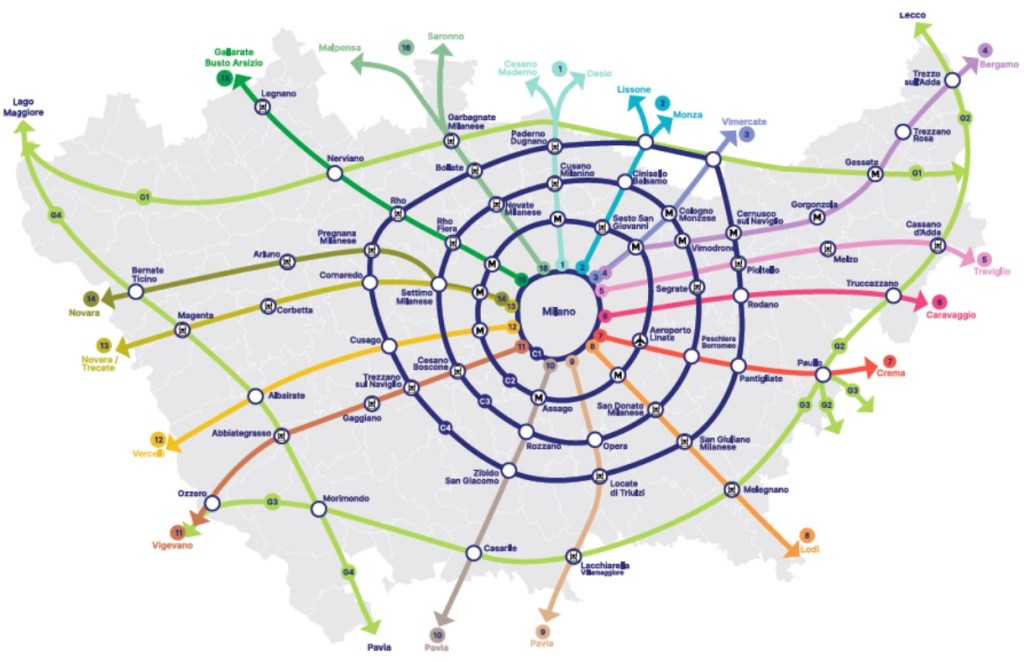
While the environmental benefits of increased cycling are clear, it is important to note that the socio-economic benefits are just as great.
A recent study from the Cycling Embassy of Denmark found out that every euro invested in cycling infrastructure generated up to six times more in health and societal benefits than it cost. The study also found that, on average, each person who bikes regularly saves society around 600 euros per year.
With these benefits in mind, it is clear that investing in cycling infrastructure is a smart move for any city or country looking to create a sustainable and prosperous socio-economic effect.
Just think about the 150 million from the EU Next Generation for the construction of cycle paths in urban and metropolitan areas to connect train stations to universities. This is one of the most considerable measures on urban cycling in Italy in addition to the EUR 4.2 million already allocated by the Ministry of Infrastructure and Sustainable Mobility for the first six pilot station-university cycle connection projects in the cities of Rome, Milan, Bari, Palermo, Pisa and Padua.
If we look at this initiative with an analytical lens:
Hence the opportunity not only to improve the urban infrastructure but to enable thousands of students to reach their university campus in an easy, sustainable, and healthy way.
The new EU financial policy is a response to the unprecedented health and economic challenges caused by COVID-19. It will contribute toward making Europe a pioneer in responsible and sustainable transformation so that it can meet the ambitious goals of the European Green Deal.
One of the key objectives of the new financial policy is to support the transition to a climate-neutral economy. This means investing in renewable energy, green infrastructure, and sustainable transport.
Cycling is a perfect solution for all of these concerns, as it is a low-carbon form of transport that also has health and social benefits.
It is encouraging to see that the Italian government has recognized this and is investing in cycling and e-bike infrastructure. Hopefully, this will encourage both entrepreneurs to launch e-bike sharing services, and citizens to cycle, leading to less congestion and pollution in cities.
Sales and Marketing Associate at 2hire
I love running and daydreaming losing count of the distance I’m covering, cooking (and especially eating) and Drake is my spirit guide.
Posted on June 22, 2022 by Benedetta Biggi
13 May 2022 | 5 min read
And here we are again! While in the previous episode we illustrated the potentialities and the features of electric kick-scooters and quadricycles, today we talk about two other types of vehicles that are among the most sought-after in micromobility: mopeds and e-bikes.
One of the widest range of vehicles that you can use at its most for micromobility purposes is mopeds. Mopeds offer a great alternative to bigger and bulkier vehicles because they are small, compact, and easy to ride.
The best part? As for scooters, there are plenty of options available for finding the right moped for your sharing service. Some of our best-recommended models are:
The NIU NQi GT/ NQi GTS mopeds are built for high performance and speed. Some of the features that make these mopeds stand out for micromobility include:
Improved 4th Gen. NIU Energy Lithium Battery
The NQi GT / GTS is equipped with a high-performance dual lithium-ion battery system. The extended range battery pack version gets instantaneous acceleration from a standstill. Creating a whole new speed and riding experience for a city life moped.
The right choice for your sharing business
These models can be easily and immediately connected via the 2hire box. Through a quick <10 minutes installation these mopeds will turn into the perfect fit for your sharing & delivery service!
Safety and Reliability
The products are built with durable materials and state-of-the-art technology in mind for safety’s sake.
The right moped for people looking for a more compact and agile micromobility solution.
Fast Charging
The Supersoco CUX has a fast-charging battery that can be fully recharged in just three and a half hours. The perfect scooter for those who need to recharge their vehicle on the go quickly!
Speed and Travel range
The CUX reaches speeds of up to 45 km/h, perfect for urban roads. The VMoto model has a rechargeable lithium-ion battery that can last for up to 75 km on a single charge, such as an impressive durability.
Multi-Function Push Button Panel
The pushbutton panel on the CUX makes it easy to change settings and control the scooter without having to take both hands off the handlebars and ensuring safety and reliability.
Moped connectivity
The Supersoco models can also be turned into connected in a snap. The 2hire box makes connectivity possible in a few steps, helping you boost your micromobility sharing service faster than ever.

The Sunra Robo-S is an excellent 125cc option for an eco-friendly micromobility service.
Instrument Panel
The Robo-S has a digital instrument panel that provides information about the battery level, speed, and distance traveled. It also includes an eco-mode to help conserve energy while riding.
Sporty Full-LED Lights and
The scooter features a stylish full-LED headlight and taillight that provides excellent visibility while riding.
Digitalization
The 2hire box makes the control of the moped’s data and interactions reliable and in real-time, allowing the operator to have complete control over the vehicle, at all times.
Double SUNRA 72V and 20Ah Removable Batteries
Sunra Robo-S comes with two removable 72V and 20Ah batteries that provide a long range of travel. The batteries are located under the footrest for easy access.
Askoll ES2 is one of the core micromobility solutions made for the city, the two-seater scooter reaches a speed of 45km/h, ideal for compactness and agility.
Made in Italy product
The chassis design ensures the best protection against impact damage due to its high-quality materials, 100% made in Italy.
Rapid integration with telematics solutions
The company can integrate with the most suitable telematics solution via its CAN-BUS protocol, meaning 2hire is on hand to provide the ideal connectivity to your sharing service!

The Segway E-Moped is designed for safe, reliable, and long travel sharing. Here are the features that make the e90L so great in micromobility:
Speed and Capacity
This two-passenger capacity moped reaches speeds up to 45 km/h, is perfect for city streets or highways, and has a maximum power of 1500 watts, ensuring people get where they need to go quickly and safely.
E-Lock and Helmet Detection
E-lock and helmet detection to ensure the scooter can’t be started without a key.
API connection
The e90L has built-in IoT technology to connect wirelessly with the Cloud, with the connection via the universal API layer provided by 2hire, the potential of the connected fleet can be exploited to the full.
Smart Dashboard
The Smart Dashboard on the Segway moped provides information about a ride and its safety; all displayed through a beautiful, customizable glow.

E-bikes are the other top-of-the-range micromobility vehicles we are illustrating today. These bicycles have an integrated electric motor that can power the bike or help with pedaling. 2hire top recommendations on this topic are:
OKAI EB100 is one of the most advanced e-bikes designed for sharing. The EB100 is a high-torque, heavy-duty electric bike that can handle any daily traffic challenge with ease.
With 500w max power and 250W rated levels (on the motor), as well as 47Nm net torque from its dual battery system, this e-bike will make it easy to commute while helping out those who need help.
Supercharged Quality Batteries for Everyday Usage
The EB100 has a range of 60 km on one charge and a maximum speed of 25 km/h, which is perfect for those who need their e-bike in tip-top shape.
It also sports high-quality batteries made with 39 Samsung cell cultures (50e), giving it 48 volts 15 Ah capacity. With swappable tech, it’s to cut down operational expenses while still getting reliable performance every time.
Built-In IOT
The built-in IoT is a game-changer for e-scooters and bikes. In-house engineers designed the patented 4th generation module to ensure clean integration of electronics inside frames. The integration between OKAI’s IoT and 2hire’s technology allows any operator to launch its micromobility sharing service smoothly and quickly.
Security
This bike features GSM and BLE 4.1 for lock/unlock. It has an anti-theft feature that alerts if someone tampers or moves the bike.
And it also features Topple Alert, which detects when the bike topples over – allowing for instant retrieval of stolen goods.
Lightweight and Portable
Designed to be lightweight, compact, and easy to use by people on the move – this e-bike is great for daily use both indoors as well outdoor areas.
Vaimoo is an e-bike that guarantees the strength and durability of components to provide a pleasant and comfortable driving experience.
Ultimate Flexibility and Control
The integration between the theft protection feature on the Vaimoo e-bike and its ability to park anywhere, thanks to a virtual frame, will allow riders to leave it anywhere close to designated stations or outside their drop zone at an additional charge.
Easy Integration
Vaimoo’s technology allows for easy integration with existing systems. With the 2hire software integration, every bike can be connected, controlled, and checked remotely, making it controllable flexibly.
Eco-Friendly
The VAIMOO e-bike is an environmentally conscious micromobility product that features an aluminum frame and recycled parts.
Rechargeable Longer-lasting Batteries
With a 36V 11.6 Ah or 14Ah Li-ion bike that’s rechargeable from the station, this e-bike is perfect for cycling around town!
Fifteen is an accurate option for your micromobility sharing project. Some of its top features include:
Energy-Saving
Fifteen’s electric bike with pedal assist is the perfect solution for long journeys. With up to 65 km of range, this sleek and stylish device can do multiple rides before needing a charge.
Extra Fast
The bike has no gears but can go up to 25 km/h. It is easy for new riders because the software ensures that pedal-assist kicks in right when it’s needed, seamlessly supporting them in all conditions – even those toughest inclines!
Shimano Disc Brakes for Safety
The ebike has powerful yet smooth front disc brakes that offer strong, reliable stopping power. Combined with the rear V-brake, this system provides quick and efficient stopping in any weather conditions.
Easy-Detach, Rechargeable Battery Pack
The Fifteen electric bike features a rechargeable battery pack that is easily removed and charged when necessary – or replaced with another unit for a longer range.
Ready for sharing
Fifteen ebikes can easily integrate with 2hire technology, the efficient option to empower your sharing service and have full control over your bike fleet!
Segway eBikes are lightweight and easy to operate. They’re perfect for sharing purposes. Some key features include:
Some numbers
Segway’s electric bikes can reach speeds up to 32 km/h and travel ranges of over 80 km on a single charge! This makes it perfect for longer trips or sharing with others.
Low Operational Costs
Ninebot E-Bike’s built-in batteries compatibility with the Max Pro and Plus scooters significantly lowers operational costs.
IoT
This bike can be remotely controlled and monitored by its operator thanks to the integration with 2hire. The turning point to get complete control over all your bikes.
One-Size-Fits-All
The “one-size-fits-all” bike frame is a perfect option for anyone who wants to get on the road without worrying about their height. This model comes complete with an adjustable saddle, making it suitable for almost everyone, whether 5’1″ or 6’2”.
Although choosing the right micromobility vehicle for a sharing service can be harsh, choosing the provider to rely on has never been easier!
The flexibility of 2hire’s technology allows it to adapt to any kind of vehicle, integrating with the major manufacturers of electric vehicles.
Still not convinced?
Drop us a message, let’s have a chat and we will help you launch and scale your sharing business from A to Z in a blink of an eye.
Sales and Marketing Associate at 2hire
I love running and daydreaming losing count of the distance I’m covering, cooking (and especially eating) and Drake is my spirit guide.
Posted on May 13, 2022 by Benedetta Biggi
30 Mar 2022 | 3 min read
Birò is the world’s smallest electric vehicle, and an Italian first. The vehicle is achieving enormous success in its home country and around Europe. That’s because its features are definitely unique.
Birò combines the safety of a car and the advantages of a moped. Riding a Birò is also cheaper than driving an automobile, and definitely easier to park. At the same time, it is safer than a motorbike: it is the smart 4 wheels solution to weathering. It manages to be eco-friendly, and futuristic at once.
Birò represents an all-Italian success story. The electric vehicle was created in 2008 by Estrima, which carries out R&D, design, production and distribution of electric vehicles under the Birò brand, and between 2010 and 2011 it became the most registered electric vehicle in Italy. Further, due to the fact that it is a covered vehicle, it has already crossed the national borders to establish itself in cities such as Amsterdam and London, quickly gaining the interest of several companies, professionals, and travellers from different cities.
Birò is an innovative idea to give everyone the freedom to move around their cities. The city is its natural habitat where the benefits of a Birò can be experienced by everyone, such as the protection from the weather, the rapidity of movement in traffic jams, and the safety during day and night driving. It also guarantees the same advantages as when driving an electric moped such as the minimum cost per kilometre and easy parking.
As for a moped, Birò also allows you to get around the city centre in an extremely easy way. When riding the vehicle, you can access all restricted traffic zones free of charge.
The company is embarking on a strategy of further expansion. The goal is to enlarge Estrima’s sales network in a further 23 European cities by 2025, expanding its presence by opening new Birò Stores and establishing a network of local partners.
Indeed, a new Birò Store has just been inaugurated in the heart of Le Marais in Paris, where an important network of sales partners will be set up throughout France. Furthermore, the recent joint participation with 2hire at Autonomy Paris , one of the biggest international mobility events, has been an excellent opportunity to openly showcase about the new era of connected Biròs.

The convention was also an opportunity to open up about the partnership with 2hire as official technology provider. In fact, since 2021 every Birò that is produced is natively integrated from the factory with a 2hire board.
The start of this collaboration marked the beginning of a new chapter, in which the connectivity of 2hire and the flexibility of Birò combined to create a 2.0 mobility product.
There are different kinds of Birò vehicles, but all of them share some advantages:
This means drivers don’t need to have a space like a garage to charge their vehicle, nor do they need to look for electric charging stations (that can anyway being used as well). They can simply unplug the battery and charge it at home, in the office, wherever they want. It is extremely moderate in size and easy to transport, but not inefficient. The battery allows the minicar to travel up to 55 km on a single charge, thanks to the small design and light-weight of the car itself too.
One of the points that make us at 2hire proud is that the Birò O2 model is the first 100% electric four-wheeled vehicle made from 80% recycled plastic.
“Less plastic on the planet, and more clean air in our cities”, as the company declared.
Having a Birò O2, it is a support to the #ChangeClimateChange Legambiente’s campaign. Both Estrima and Legambiente believe in the importance of making the world a greener place and actively strive together to fulfil their mission.
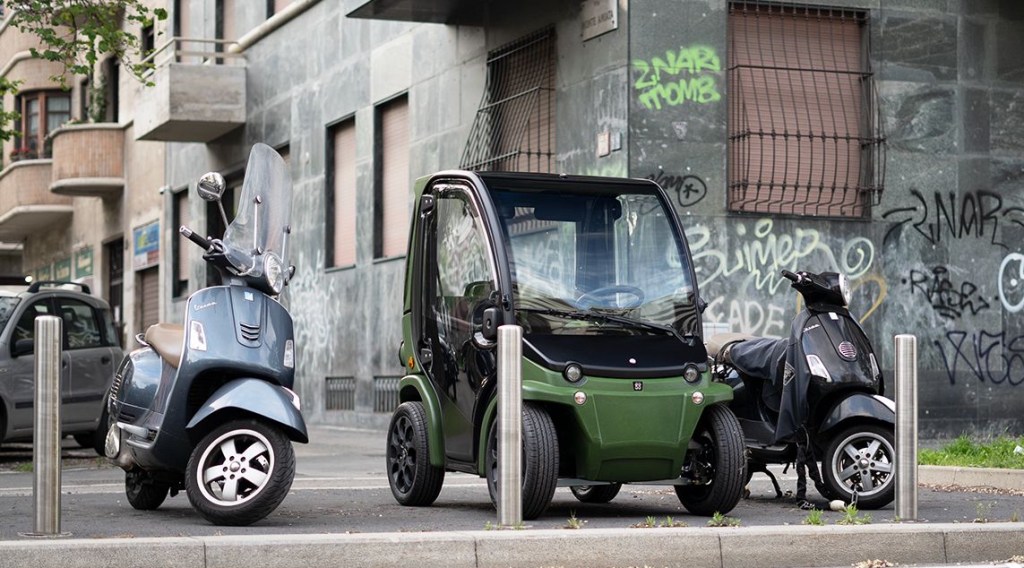
The flexibility and modularity of Birò has made it possible to build different solutions around this vehicle.
In September 2021, Estrima presented the smartphone app Birò Share at the mobility event Citytech in Milan. The car is equipped with full remote management, geolocalisation, and service management via the technology entirely developed by 2hire.
A family, business, and community car-sharing service is offered to users and owners of Birò, who are able to share the vehicle with up to three people and manage the sharing simply by typing into their mobile phones.
But that’s not all: Birò doesn’t need a starter key anymore. Through the sharing solution provided by 2hire, the Birò Share app makes it possible to directly manage interactions with the vehicle, keylessly!
A further new entry in Estrima’s world has been the possibility of developing an end-to-end sharing solution thanks to the flexibility of 2hire’s technology, one of the latest projects on which the two companies have worked closely together.
This project has seen Estrima develop the brand new Birò Share as a sharing service, which will initially launch in a few Italian municipalities, with the goal of branching out afterwards.
The Birò Share project includes:
This new project within the world of Birò does not only involve the digitisation of vehicles, but the digitisation of the entire business.


Sales and Marketing Associate at 2hire
I love running and daydreaming losing count of the distance I’m covering, cooking (and especially eating) and Drake is my spirit guide.
Posted on March 25, 2022 by Benedetta Biggi
15 Feb 2022 | 4 min read
No one wants to be stuck in traffic when there are other options. The solution may be as simple as sharing. Plus, in a world of environmental and economic uncertainty, it’s no surprise that the idea of sharing and micromobility is quickly becoming more popular.
The trend of shared transportation has increased tremendously in recent years, owning to various factors, such as rapid urbanisation, increase in environmental issues, limited resources of energy, and economic concerns, which are expected to further boost the global shared mobility market over the forecast period.
Only in Italy, more than 5.5M users benefit from sharing services. In Italy, sharing started in the major cities (Milan, Rome, Florence, Turin) and is now proving to be a widely appreciated service suitable for smaller municipalities too.
In 2021 GreenMo Rent, a partner of Vaimoo, operated more than 30,000 electric sharing vehicles in seven European countries. That shows how the industry is growing fast, making a perfect investment opportunity.
With that said, e-vehicles owners and operators need to know the best sharing vehicles to buy or invest in. But with so many options to choose from, it can be hard to decide which one is the best.
We are here to help, let’s give a look at some of the most astonishing micromobility vehicles in the scene!

Kickscooters are a great example of micromobility vehicles to get around town without worrying about traffic. They are also perfect for short distances, so they make the ideal addition to any sharing fleet. Kicks have quickly become a popular mode of transportation in Europe. They are small, easy to use, and can be parked almost anywhere.
Kickscooters can be found in most major cities and work best for dense areas with people and traffic. And while they may not be the best option for long-distance travel, they are perfect for getting around town quickly and easily. Two of the most popular shared scooter available are:
The top features of the OKAI ES400 scooter are:
IoT
The IoT in every OKAI scooter and e-bike is one of the latest, most advanced technologies to date. OKAI’s in-house engineers designed the 4th generation IoT module. That ensures worry-free rides because the vehicle will never fall out of alignment or break down. With IP67 ratings against water & dust ingress, the e-scooter will be protected from all angles.
Swappable Battery, 55 Km Range, and 55 km/h speed
The battery compartment of this device features two locking mechanisms to prevent theft and an indicator screen that shows how much power remains.
The built-in handle makes removing the batteries easy while also providing peace of mind knowing exactly where they are at all times!
The top speed of this device is 55km/h, with a range of more than 50 km. This scooter has everything that you need for fun and efficient journeys.
Solid frame
OKAI is built with an aluminium frame crafted through some of the latest production methods. These include hydro-forming, drop forging, and extrusion, to name just a few!
Things that make the Segway MAX Plus scooter stand out are definitely:
Safety and Efficiency
With a wide variety of features, this scooter has everything you need. From the dual brakes and suspension systems to the easy-to-use kickstands that will keep your feet planted on any surface at all times. The high-performance design makes it a premium model on any terrain.
Easy and Effective Operations
The innovative design features an easy-to-use battery compartment cover for swappable batteries that opens at any angle and retracts automatically.
Power and Travel range
This Segway model operates at 350 watts. It is perfect for those who want a reliable, powerful scooter that they can use for commuting or pleasure riding.
The travel range is of over 50 km on a single battery charge and an additional top speed of 25 km/h.
In-built IOT
The built-in IoT integration with the dashboard allows Max Plus’s abnormal situation alarms and comprehensive data collection to handle a single, secure device. Its API protocol is such that it is one of the market leaders and the most widely used scooter among different sharing services.
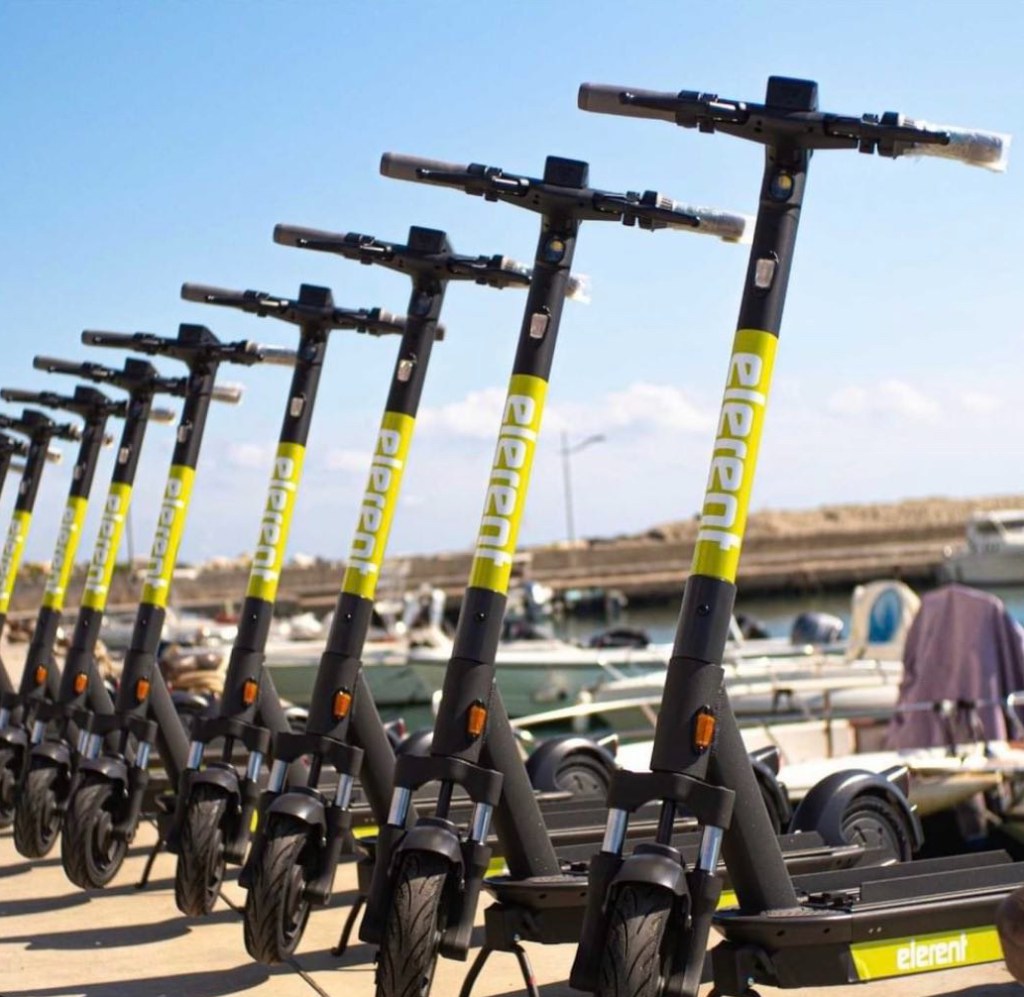
Quadricycles’ small size and nimble handling make them perfect for darting around town.
Estrima vehicle is the perfect solution for those who need a small, easy-to-handle vehicle for running errands around town. These vehicles are the first ones to be natively integrated with 2hire, which makes the choice of such a micromobility vehicle ideal for launching your own sharing service or to easily share with the family!
The size
Birò Big might be the smallest 100% four-wheeler in existence. But the electric vehicle has over 300 litres of space and a spacious trunk that can store up to 41 litres of luggage.
100 Km of Autonomy
With a max speed of 45 km/h and an autonomy of 100 km, the Maxi lithium is perfect for several trips around town.

There are so many different types of micromobility vehicles on the market today that it might be difficult to orient and understand which is the best choice. Whether it’s a light and versatile kick scooter or a larger quadricycle, there’s something for every kind of sharing business.
The constant in all of this?
2hire is there, ready to be your technology partner, regardless of which vehicle you choose!
Stay tuned for Episode 2… The coolest vehicles don’t stop here!

Customer Success Specialist at 2hire
I think that the most accurate adjective which describes me is: curious. My curiosity brings me to define my primary interest: reading. Read entails a contemplative state of mind.
Posted on February 22, 2022 by Benedetta Biggi
26 Jan 2022 | 5 min read
“Shared mobility is considered an emblem of a shared economy, linked both with sustainable travel behavior and sustainable urban infrastructure from the social, economic, and environmental perspectives.”
As of mid-2021, Europe’s shared mobility industry is breaking new ground. After months of movement restrictions, pandemic lockdowns, and long winter, the number of monthly trips has comfortably surpassed their 2020 levels.
With advancements in tech, more people are abandoning the vehicle ownership craze in favor of sharing services. The suite of opportunities revolving around sharing businesses is huge, some examples are:
In this article, you’ll learn five practical steps on how to launch a sharing service within the shortest time.

Scaling the sharing industry can be a frustrating experience without the right tools. You need a reliable platform through which to manage your sharing business. The good news is that there are tech providers that can help you manage your fleet through trustworthy software applications. At 2hire, we work everyday to make a difference in a unique way, and that’s what sets us apart from the rest.
Wunder mobility launched its service as a vehicle-sharing software provider in 2013. The platform has over 50k active vehicles at the moment. It also has active users in more than 900 cities. Wunder had close to 22 million shared rides by the year 2020.
Atom is a Latvian technology provider, they are one of the latest operators who entered the market, but with satisfactory results.
Their sharing platform empowers entrepreneurs intending to expand the vehicle sharing service provision. Entrepreneurs keen on achieving multi-vehicle integration can trust the capacity inherent in Atom to achieve scalability.
Joyride is a leading bike-sharing management system. The successful micromobility platform launched its services in the year 2014. Joyride has managed to combine payment gateway options, IoT connectivity, and backend management operations in the few years it has been in operation.
The easiest way to scale the sharing sector is with the provider that’s most suited to you.
2hire is among the leading technology companies in the market today. With 2hire, you can quickly scale your scooter, moped, e-bike, or car-sharing services.
2hire offers a fully featured, scalable, and multi-vehicle end-to-end sharing platform. It is suitable for both small and large fleets, for customers located in a single city, and for those who aim to offer a service in multiple locations.
By offering 360° mobility services, 2hire has the power to be a trusted partner to all other sharing providers, as one of our greatest capabilities is to connect any kind of vehicle. Therefore, using any sharing management software, 2hire can be the ideal communicative solution between the platform and the vehicles.
This ultimate sharing solution provides:
Compared to other players in the market, we have top-rated value delivery standards. You can read more about our products and services on the 2hire website.

Due diligence is mandatory when sourcing a sharing tech company for partnership. After the process of market research comes the hard part. You must now narrow down your options to one provider. Your product choice should satisfy all the prerequisites of a reliable service provider. The best software provider for your sharing venture should assure you of exemplary convenience.
A reputable software provider should bridge the best vehicle manufacturers with potential customers with minimum bottlenecks. The main objective of a reliable sharing technology is to:
Every entrepreneur focuses on the need for scalability. The best sharing solution should be one that assures you of scalability as your business grows. You don’t want to end up in a situation where you need to source another solution once the venture grows. The best software provider is one you can grow with over time. It’s essential to ask in advance the provider’s plan for scalability.
Check out 2hire sharing website section and contact us!
When satisfied with the preliminary data, your next step is to consider a demo.
A software demo forms a core part of any developer’s sales and marketing journey. The primary goal is to help potential users quickly understand the software’s main features. You also get to understand the benefits and usefulness of the specific product. When settling for the best sharing software provider, a demo should be at the center of your decision-making process. The demo ensures that you understand the software’s functionality before committing.

Every great onboarding process should be collaborative.
On the one hand, the client must:
On the other hand, the technology provider must:
The software service provider should tailor the onboarding process to suit your needs. It’s also essential to have an onboarding process that incorporates remote working. Every customer’s situation is different and unique, and the onboarding process should therefore be dynamic yet flexible enough. This helps to accommodate such realities. Training should be among the primary considerations during the service setup process, and at the end of this training phase, the client will become a sharing expert!

The software, just like vehicles, requires a test run. You need to undertake a comprehensive assessment of the sharing app before committing. Testing should be both from an end-user point of view and an admin point of view.
Congratulations! You are about to launch one of the most promising sharing services.
It would be best if you considered making the services you offer public. Social media is an excellent place to start the process of publicizing your services, hand in hand with this, local presence makes a difference. Some old-fashioned initiatives such as leafleting, or partnerships with local businesses are important too.
It would be best to decide the combination of product offerings you want to have. The final step is to get vehicles on the streets.
By relying on your technology provider, you’ll be ready to start an adventurous journey with loads of returns!

Starting a sharing service company is a rewarding adventure. Apart from the prospects of growth attributable to the gradual return to post-Covid recovery, there’s also a favorable rise in sharing trends.
The market trend is also reaching smaller towns and not only large cities. Even collateral business such as sharing on university campuses, affiliations with hotels and corporations are becoming more and more popular.
Our services are a notch above the rest. 2hire is a customer-centric company, which is rooted on:
People don’t buy things, they buy solutions to problems.
We are the solution to your problem: finding the best technology provider for your mobility service.
Customer Success Specialist at 2hire
I think that the most accurate adjective which describes me is: curious. My curiosity brings me to define my primary interest: reading. Read entails a contemplative state of mind.
Posted on January 26, 2022 by Benedetta Biggi
01 Sep 2021 | 6 min read
“Happiness is only real when shared”. Many scientific analyses reveal the existence of a positive correlation between social relationships and biological markers of longevity. Studies of behavioral and psychological mechanisms have shown that lack of social connections increases the odds of death by at least 50% (1). On the other hand, an efficient mobility system in a city is directly proportional to the ability to participate in society. If the mobility system is effective and pleasant, it results easier to maintain our connections.
In simple terms, human beings are social animals. We need to connect with people to be healthy, and we can rely on a variety of digital innovative technologies to make our mobility easy-breezy.
Many of us are not even aware of why and how digital mobility can improve our daily life. So, here is the deal: you are about to find this out.

Nowadays, in our hyper-technological world, face-to-face meetings are fundamental. Indeed, many of us emigrate to the big cities to work and study. Commonly, our friends and loved ones live far from us. We can maintain our long-distance relationships quite simply thanks to new technologies such as social networks and video calls.
But chatting on WhatsApp will never be enough.
People spend so much time typing on our phones, and we are all constantly in such a rush that sitting up in a bar with a friend is a true blessing.
Moreover, the current Covid-19 emergency has given a strong acceleration towards the adoption of smart working. Considering we work much more from our houses, and therefore we spend days entirely at home, meeting up in person with our affections is essential.
Humans need more than Zoom calls for building strong relationships.
In addition to that, meetings in person are still crucial for doing business. Surely, emails can accelerate the communicative process in a work environment, but face-to-face communication “builds stronger, more meaningful business relationships”, as said by the 80% of business professionals interrogated during a Forbes Insights survey (3).
Nevertheless, we live in a busy world, there’s no space for extra stress.
After a day sitting in front of a computer, we want to reach our friends’ house with a rapid and enjoyable transit system to groove on that salami pizza watching the football match all together.
But here’s the rub: we might as well enjoy that night at our friends’ place, but how to get there is also important.
“Life is a journey, not a destination”, as the American writer Ralph Waldo Emerson once said. And we agree with you Ralph, we rather go watch football at our mates’ comfortably driving a sharing vehicle rather than blindly relying on unknown timetables of public transport systems.
Surely, driving our own car is more enjoyable and relaxing than being on a crowded bus. So, in the case we cannot afford, or simply do not want, to buy a car right now, but we still desire to drive around the city, sharing mobility can be the right trade-off.

The revolution in the mobility market concerns the modernization of traveling by IT advancements. Not only we can pass the costs of vehicle ownership, but we can also reduce traffic jams, carbon dioxide emissions and benefit the environment.
Today, it is estimated that 55% of the global population lives in a city, and the phenomenon is believed to increase exponentially.
Clearly, more people in the cities leads to a rise in congestion. And we all know this is a big issue, anyone can agree on how frustrating it is to be stuck in traffic.
Indeed, there are around one billion vehicles on the roads today, which are estimated to become as many as four billion by 2050 (2).
Our world is changing, and we need to go hand in hand with it. Carbon dioxide emissions are the primary cause of climate change (4). In the EU’s countries, it is estimated that nearly 30% of carbon dioxide emissions come from transport, of which 72% are from road transportation (5).
People sharing the same car leads to fewer cars on the street, which also means healthier air to breathe for us all. So the result is less cars leads to fewer emissions.
It’s that simple: by increasing our use of sharing mobility we become more sustainable to our planet, and we make connectivity an easy game while we enjoy our journey.
However, the future of mobility cannot only rely on sharing vehicles. In order to solve the mobility challenge and tackle city problems, it is necessary that the private and public sectors collaborate and take further actions. We need to progress in the use of the modernization of traveling and its commercialization, through funding and innovative business models as well (6).
As a part of the mobility revolution, it will be increased the use of digital services to deliver mobility solutions. For instance, there is an expected growth in the use of data-driven systems to manage the traffic flow. These innovative systems will work to limit the volume of cars allowed in the city center, while raising the number of buses and taking into consideration factors such as the weather. However, these kinds of systems need to rely on citywide connectivity across mobility (7).
In 2018, a mobile app was panted to find parking spaces via GPS and then show the exact location of the parking lot. To use this app it is necessary to have seamless connectivity across the city in order to save both drivers’ and space providers’ time (8).
Here, we find a key point. Let’s dig a little deeper.
Connections for us humans are critically important, and our means of maintaining them can often be traced back to a system of mobility. On the other hand, it is also the connections themselves that enable mobility. In a reality where the entire city is connected by transport, the mobility system could work efficiently in the prevention of overcrowding and reduction of dead time.

There will not be a new breath of connectivity without the use of digital frontiers of mobility, just as there will be no progress in digital mobility systems without a solid underlying connectivity system.
To satisfy this human’s need and therefore meet up with people, mobility is one of the most powerful tools.
Through digital innovations, mobility is adapting to the new world’s necessities embracing connection worldwide.
Thus, what does all this mean?
If you promised your girlfriend you are going to participate in her family lunch on the other side of the city, you must go with her.
The true meaning of happiness is sharing it with others.
Even so, we recommend you to enjoy the ride to get there thanks to reliable, efficient, and always available mobility services, before having to spend a terrible 8 hours Sunday lunch.


External contributor at 2hire
I love going to live in places where no one knows my name. I prefer nature over cities, books over movies, music over silence.
Posted on November 18, 2021 by Benedetta Biggi