10 May 2023 | 2 min read
È necessario per i rental arrivare ad una esperienza utente digitale e keyless. 2hire si posiziona come leader tecnologico nel fornire una doppia soluzione ai rental per digitalizzare sia il back office che la user journey.

Sole 24 Ore - Sezione NOVA, 5 maggio 2023
La mobilità sta abbracciando sempre più tecnologie digitali per innovarsi. Se nel trasporto pubblico l’accesso ai mezzi sta diventando più immediato e tecnologico, nel privato gli utenti possono utilizzare l’auto come centro di controllo grazie ai veicoli nativamente connessi. Un’evoluzione digitale che spinge anche il mercato del noleggio a muoversi nella stessa direzione. Secondo un recente rapporto Aniasa, nel 2022 una macchina su quattro era a noleggio con 365 mila nuove auto immatricolate. Sebbene i rental abbiano digitalizzato parte del processo di back office, è necessario arrivare ad una esperienza utente digitale e keyless. Un’ esperienza innovativa rispetto alla concezione tradizionale di noleggio, fatto di carta (troppa) e penna e chiavi in mano passando al desk a ritirarle e consegnarle.
Nel panorama della digitalizzazione, 2hire si posiziona come leader tecnologico nel fornire una doppia soluzione ai rental che vogliono innovarsi: sia nella parte di back office che con una user journey innovativa e keyless.
Gli strumenti offerti da 2hire permettono di connettere tutte le auto, offrendo un servizio orientato al cliente, digitale e contactless con gestione operativa interna rinnovata. Le auto vengono dotate di avanzata tecnologia integrata, fornendo dati come livello di batteria/carburante e, su richiesta, posizione GPS ed interazioni come apertura/chiusura porte ed abilitazione accensione/spegnimento motore, rendendo il noleggio completamente digitale sia per il cliente che per il rental, dal ritiro e consegna auto via app al controllo remoto della flotta, eliminando, specie per noleggi business, la necessità di un desk fisico.
2hire risolve i limiti tecnici dei rental attuali diminuendo il tempo operativo per check-in e check-out a meno di 10 minuti, eliminando le file al desk, azzerando i tempi di attesa, dando totale controllo della gestione veicoli ai rental e ottimizzando i costi di erogazione del servizio.


Digital Content and PR Specialist at 2hire
Posted on May 9, 2023 by Benedetta Biggi
10 May 2023 | 2 min read
E-charging is the process of using electric vehicle charging equipment to deliver electricity to the car’s battery. The term on-demand refers to the mode used for recharging the electric vehicle. In this case, it is the company that provides electric charging that goes directly to the user to recharge its car.
In this way, the service makes up for the lack of charging infrastructures, which, in the world of electric cars, has become a major issue.
Among the companies that have identified this need, Reefilla is one of them, a Turin-based startup that provides the alternative service of “charging delivery”.
Reefilla is a young innovative startup that has accurately identified the major problems concerning e-vehicle charging.
Both in terms of the lack of electric columns and in terms of charging time. The charging times range from 5 to 12 hours using normal power charging stations. Through Reefilla your e-vehicle will be charged in less than 30 minutes, with enough energy to travel 120 kilometers.
For these reasons, Reefilla provides a service that predicts when the vehicle is about to run out of charge and intervenes without even being asked.
Reefilla works through a cloud platform and app. The users are constantly monitored so that they never risk being idle, and when it’s about to happen comes Fillee. Fillee is Reefilla’s connected devices used to recharge e-vehicles, similar in function to a power bank.
The process that makes on-demand recharging possible is very simple. An accumulator mounted on a trolley loaded on electric vans that reach those who need energy is connected to the car, the platform recognizes it, and charging starts.
This on-demand service allows owners of connected cars to simply order their recharge without any stress. In fact, those who own a connected car can grant the Reefilla team digital access to the vehicle to recharge it, without having to deal with it further.
Services such as Reefilla are very useful in that they make up for the lack of electricity columns. In addition, the on-demand e-charging is an added benefit for connected car owners, making their lives easier.
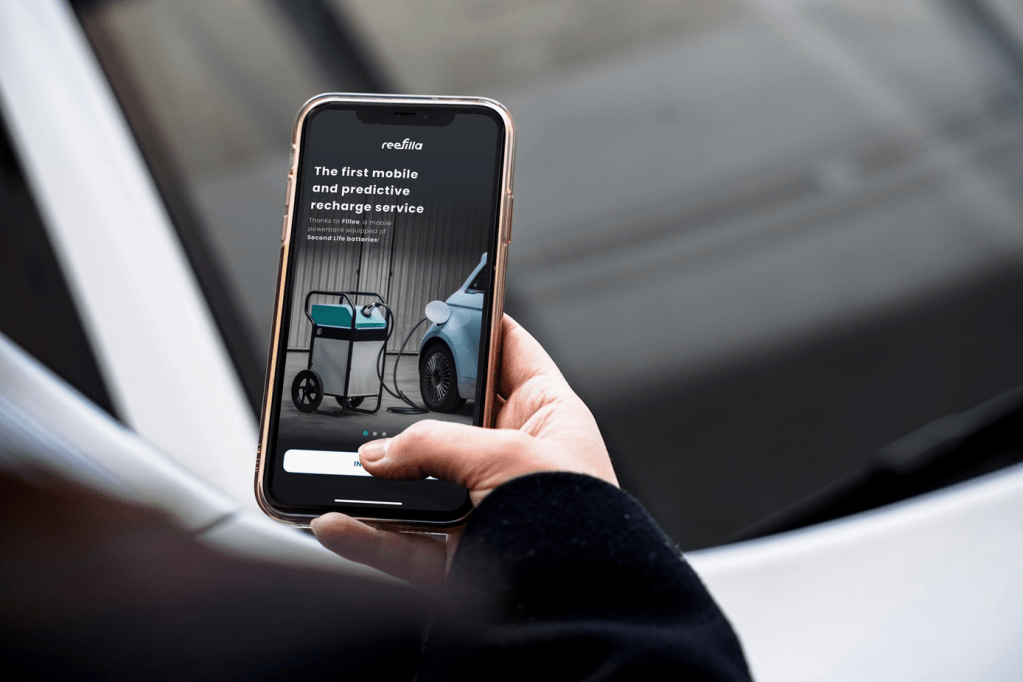
Reefilla provides a revolutionary service for the electric automotive landscape that could really make a difference.
Moreover, it is a modern, innovative service that exploits the potential of technology. It is obviously a service made for connected vehicles: the process of requesting the service is automatic, and to make it happen you need to log into the app and connect it to your car, which should be a connected car.
So, users who have an electric-connected vehicle can take advantage of this new on-demand service.
Digital Content and PR Specialist at 2hire
I love running and daydreaming losing count of the distance I’m covering, cooking (and especially eating) and Drake is my spirit guide.
Posted on May 8, 2023 by Benedetta Biggi
08 May 2023 | 2 min read
The original definition of car care is “keeping a car in good working order”. To date, this maintenance work obviously falls on the car owner, who often helps itself by going to specific car washing places.
Classic car washes involve that you usually have to wait for your turn (making a line often) and have to move specifically to get to the car wash. On-demand car wash solves all these little, but annoying issues right away.
The on-demand car wash allows the user to book a wash for his car, not at a designated physical location, but rather at the place where the car is located and whenever the user wants.
The main difference between these two alternatives of car wash concerns convenience and time-saving.
An on-demand car wash offers a variety of benefits over a classic car wash, offering drivers a more streamlined experience.
Nowadays there are several players worldwide in the on-demand car washing industry. To give you a better understanding of how this new type of car wash works, let’s talk about one of them: Wash Out, car, and motorcycle washing at “home”.
Enjoy a next-generation car washing experience with Washout following a few smooth and stress-free steps to follow:

The advantages are clear: the user doesn’t have to move from where it is just to wash its car as the physical presence of the user is not required.
In the everyday busy life of a person, a car owner has to make several trips between home, work, and school, and carving out a moment to wash the car is not always so easy.
On-demand car wash allows connected car owners to optimize this time and book a car wash in a few clicks to save time and not have to deal with over-planning the daily schedule anymore.
The result is a huge time saving but also greater convenience. The driver will avoid waiting for its turn by standing in line as in classic car washes because the service delivery has already been conveniently scheduled via the app.
Another key benefit is the number of liters of water saved: as many as 160, the average for each individual wash. Indeed, cleaning is done dry, with specific products that prevent scratches. Those used by Wash Out for car washing are environmentally friendly products that do not require outside water to be used: “Our goal is to provide a service with full respect for sustainability”. The washing is waterless, the products are environmentally friendly, and do not require external water to be used. In fact, they are detergents that vaporize upon use and lift dirt causing it to come off the surface of the vehicle.
The on-demand car wash falls among those connected services making the driver’s life easier and stress-free.
Compared to a classic car wash, an on-demand car wash turns out to be much smoother, saves the user much more time, and it’s more sustainable.
Access such a modern boundary-pushing service and having a connected car makes all the difference! For example, if you want to wash your car inside and do not have a connected car, you will need to be physically present during the car wash to allow inside access to your car. Conversely, if you have a connected car, you can grant access to the operator wherever you are via your smartphone.
Enjoy the latest car experiences on demand with a connected car!
Digital Content and PR Specialist at 2hire
I love running and daydreaming losing count of the distance I’m covering, cooking (and especially eating) and Drake is my spirit guide.
Posted on May 4, 2023 by Benedetta Biggi
05 May 2023 | 3 min read
Connected services around cars are digital services provided to owners and users of connected cars.
These services include fuel depletion alerts, vehicle status monitoring, on-demand car care services, vehicle usage information and much more.
Although the automotive market is moving towards offering services around connected cars to improve the user experience, there are still few players in the connected services market. This means that there is a need for more awareness about these services and how they benefit the end-user. However, there is also a large opportunity for growth in a market that is only recently developing.
In order to consolidate its presence in the market for services around connected cars, an operator has to take into account some key drivers for the evolution of its service:
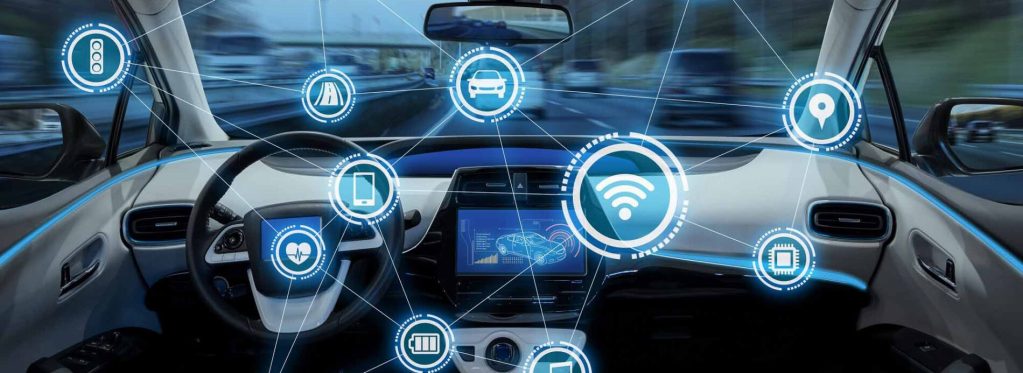
One of the main pain points for an operator is the integration with the API languages of the different carmakers. Each car manufacturer uses its own communication protocol between the car and the external system, which means that each language must be individually integrated into the service provided by the operator. Moreover, each carmaker presents specific behaviors that have to be taken into account if a service provider wants to ensure users a uniform experience across all available models.This requires considerable time and resources which, if spent on integration, would inevitably be lost in the management and operational growth of the service itself.
The growth of the user base of the operator service is a crucial aspect of the on-demand services market. Since these services are relatively new, it takes a lot of effort to develop an appropriate user-experience.
To increase user numbers, it is necessary to broaden the user base of one’s applications, create awareness about the service proposed, and generate trust in the benefits it brings. Therefore, the applications of on-demand service operators must be extremely intuitive and user-friendly to foster a pleasant and effective user experience. This requires time investment and expertise to develop innovative applications that will entice connected car owners to use them.
To optimize operations, each operator providing on-demand services for connected cars must focus on its core business, which is to provide its service. Operators cannot be expected to deal with the integration of various carmaker API languages at the same time as providing on-demand EV charging or on-demand car care services.The integration of each language requires the deployment of technical resources and time, which are not easily enough to cover each of these aspects. Therefore, operators must rely on specialized third parties to integrate the various car models into their service quickly and cost-effectively.
In such an early days market, being an operator providing on-demand services for connected cars requires careful and targeted management of development activities, operations and the proposal of a quality user experience. This helps the operator to focus all energies on the best service it can provide by accessing smooth integration with all carmakers through third party technology enablers.
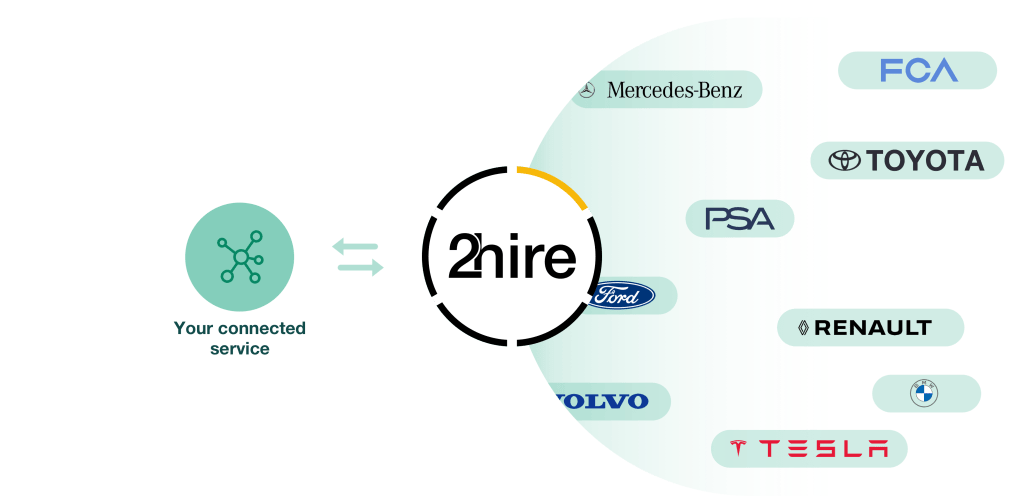
It provides a single API layer that standardizes the languages used by connected cars, ensuring seamless communication and interoperability between vehicles and connected services. 2hire is the best choice to access the largest number of connected cars without having to integrate with each carmaker individually. Moreover, 2hire has gained extensive experience in the design and development of innovative and reliable operational solutions through its collaboration with leading operators in the EV charging, on-demand car wash, and In-car delivery market. If you are an operator and want to improve your connected service, 2hire can be your quick win in external technological prowess.
Digital Content and PR Specialist at 2hire
I love running and daydreaming losing count of the distance I’m covering, cooking (and especially eating) and Drake is my spirit guide.
Posted on April 21, 2023 by Benedetta Biggi
17 Apr 2023 | 2 min read
The term “connected services” refers to services delivered by a technologically-powered mechanism that features entertainment, communication, navigation, and maintenance.
There are several types of connected services according to their functionalities, such as the on-demand e-charging to charge your electric car wherever you are. Or the so-called “On-demand Car-wash” service that allows you to have your car washed, where it is parked, without the need to drive extra miles to get to the car wash.
On-demand car wash and on-demand e-charging are just some of the services around cars available to date.
Some of the more ahead-of-the-curve OEMs have already integrated connected services to their cars.
Car makers are catching on to the power of this type of services implemented to connected cars and for this reason, they’ve embraced them to their fleets.
Starting from Stellantis, which provides this kind of services through innovative technologies, and some car makers have embraced this opportunity, improving the user’s driving experience. Brands that benefit from technologies made available by Stellantis are Jeep, Alfa Romeo, and Fiat.
Focusing on one of the several functionalities, “My Alert” is about prevention and support. With “Anti-theft Notification”, the driver will receive a notification if the vehicle detects a suspected theft attempt, such as unauthorized towing. This includes moving the vehicle or break-in attempts if the anti-theft alarm is present.
Stolen Vehicle Assistance: this service provides assistance in case of theft. The user can call the contact center for assistance directly by pressing the “Call” button on the mobile app, and once the theft is confirmed with a report to authorities, security features, including vehicle tracking, will be activated.
Another key player in the automotive industry, Lamborghini, decided to incorporate connected services in some of its vehicles.
Among the various features available from them, Lamborghini provides:

The many functionalities of connected services could greatly help the drivers who use them, finding their lives simplified. Nevertheless, the main roadblock to exploiting this type of services remains driving a connected car:
To ensure a 360-degree driving experience, connectivity has become increasingly crucial!
Digital Content and PR Specialist at 2hire
I love running and daydreaming losing count of the distance I’m covering, cooking (and especially eating) and Drake is my spirit guide.
Posted on April 17, 2023 by Benedetta Biggi
7 Apr 2023 | 4 min read
Peer to peer car sharing services typically operate through an online platform/mobile app that connects car owners with renters.
But connectivity doesn’t stop there, not only owners (known as “hosts” in the P2P car sharing slang) and renters (known as “guests”) are connected, but owners’ cars are (or should be!) connected too.
It’s all about vehicle connectivity, which makes owned cars, originally often used at less than 10% of their potential, real business clusters for an individual.
The P2P car sharing concept as a new mobility trend is growing fast, especially as a result of the effects of the pandemic in which the priority for travel has veered towards more immediate processes to avoid contact.
Today we want to break down how keyless technology is a source of numerous advantages not only for rental companies and their customers but also for private vehicle owners.

Placing your car on a P2P car sharing platform and exploiting it with keyless technology gives it a threefold life:
With the advent of keyless technology and remote car access, it is possible for a host to build a parallel business without needing a physical presence near the vehicle. Keyless technology is the way to go in this sense.
This means that the host can rent out their cars to people who need it even when they are not physically present at the location. This allows for greater flexibility and convenience, as hosts can rent out their car from anywhere, at any time. Additionally, this type of business model can lead to reduced overhead costs and increased scalability since the host does not need to maintain a physical storefront or rental location. Overall, the keyless technology of private vehicles has opened up new opportunities for hosts in the peer to peer car sharing industry, allowing them to build a more flexible and scalable business model.
Control is an important factor when it comes to peer to peer car sharing platforms. Since hosts are essentially renting out their personal vehicles to strangers, it’s common to have concerns about safety and security, especially when it comes to a keyless way of renting.
However, many peer to peer car sharing platforms have implemented safety measures to help alleviate these concerns. For example, they conduct background checks on guests, require them to provide a valid driver’s license and offer insurance coverage for the rental period. Additionally, the keyless technology unlocked all the control features that only connected cars can give to a host. An added layer of security since the host can control and monitor the vehicle’s location in real-time while also having a 360 degrees overview of the vehicle status.
Overall, while there may be initial concerns about the safety of renting out personal vehicles, P2P car sharing platforms and technological solutions have created the perfect balance to surf the wave in the most controlled and smooth way.
By renting out private connected cars, a host can generate additional income and potentially offset the costs of owning multiple cars. Additionally, owning multiple cars could make it easier to rent out one or more vehicles while still having a car available for personal use.
From small city cars to larger SUVs and even luxury vehicles, there is a wide range of options for both personal use and rental, here technology serves as a trump card to have an eye on all the cars’ status and maintenance. This can make it easier for vehicle owners to justify owning multiple cars, as hosts can use them for different purposes and still generate income by renting them out when they’re not needed.
Being a host can be viewed as a business venture too.
Hosts can either lease a car for use in a peer to peer car sharing platform with several advantages, particularly if the car is rented out frequently and is, for the guest, an appealing rental due to the digital, immediate, and contactless format. Or can buy cheap cars, taking care of them and keeping them ideal for a P2P car sharing activity.
There are two possible scenarios of hosts:
– Those who use Peer to Peer car sharing as a source of economic profit to offset the cost of a premium car for which a leasing solution is the go-to choice.
– Those who use Peer to Peer car sharing as a tool for entrepreneurial growth for scaling their business, with several cars technologically managed and always on the road. Here car purchase might be the most suitable option.
Both options have pros and cons. It is up to the direction the owner wants to take for his/her host path to decide which one to choose.
In both cases, it can be a worthwhile investment for those looking to earn additional income, especially if they are willing to treat it as a small business and carefully manage their fleet of connected cars.

Keyless technology has transformed personal vehicles into connected assets that can be controlled digitally, giving car owners the opportunity to generate additional income while offsetting the costs of owning multiple cars.
With keyless technology and remote car access, hosts can build a parallel business without needing a physical presence near the vehicle, leading to reduced overhead costs and increased scalability.
Keyless technology of private vehicles is definitely opening up new opportunities for hosts in the P2P car sharing industry, allowing them to build a more flexible and scalable business model while making new revenue streams.
Digital Content and PR Specialist at 2hire
I love running and daydreaming losing count of the distance I’m covering, cooking (and especially eating) and Drake is my spirit guide.
Posted on March 30, 2023 by Benedetta Biggi
30 Mar 2023 | 2 min read
Peer to peer car sharing is growing in popularity! It provides several benefits to the hosts. Not by chance pre-packed peer to peer platforms allow hosts to easily manage a greater amount of vehicles, leveraging keyless solutions. Moreover, P2P car sharing companies provide valuable visibility to their hosts, facilitating customers’ reach-out process. Surely the platform has a cost, which corresponds to a percentage (a fee ranging from 30 to 40%) of each host’s earnings.
Trevor B. is a great example of how a peer to peer platform can help you become an entrepreneur. He benefits from Getaround, one of the key players in the P2P car sharing market.
Trevor began with a single vehicle, a Nissan Versa, that provided him with some much-needed passive income at a critical time. By sharing it, Trevor was able to completely cover charges of the Versa and started getting extra income with it.
Then he listed two more cars on Getaround: a highly fuel-efficient hybrid vehicle and a Jeep Cherokee. Thanks to the bookings he received, all his vehicles were paid off within a short period. So any bookings that cars received were 100% profits for him.
“When I’m not using them, they’re paying for themselves and then some!”
Trevor is valuable proof of how people can become entrepreneurs through the usage of an intuitive peer to peer platform.
Thanks to this platform hosts can cover the entire leasing cost of their vehicles and sometimes make profits from extras.
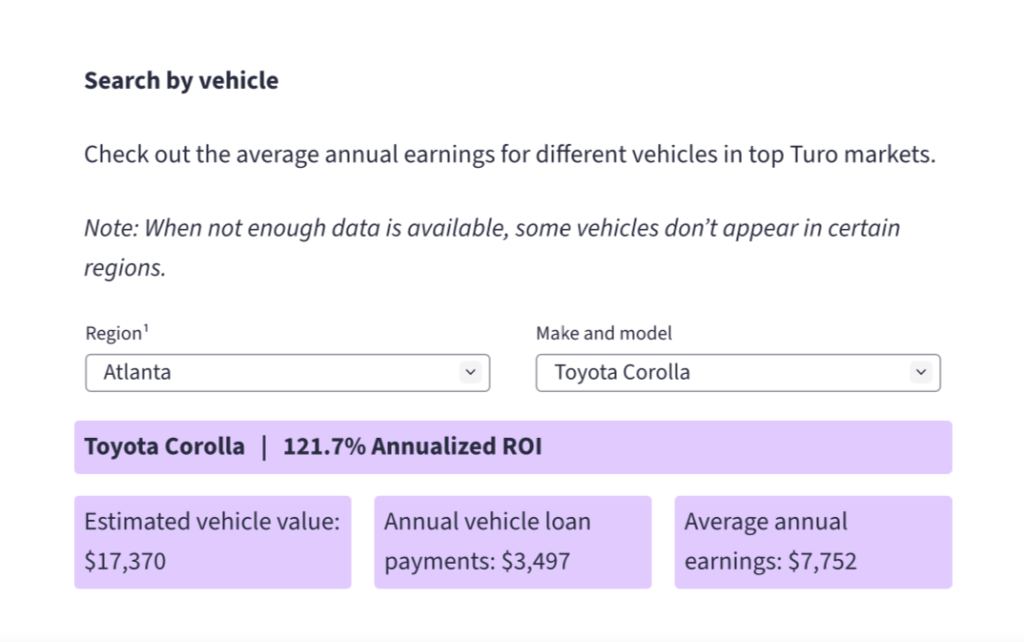
The average price to lease a city car as Toyota Corolla is about € 300 per month, while the minimum daily pricing for renting a city car is about €30.
Numbers speak: you must rent a car for about 10 days to cover the monthly lease payment! This will be possible when peer to peer car sharing companies are spread evenly in all countries, making the car sharing process easier for the hosts.
Digital Content and PR Specialist at 2hire
I love running and daydreaming losing count of the distance I’m covering, cooking (and especially eating) and Drake is my spirit guide.
Posted on March 23, 2023 by Benedetta Biggi
28 Mar 2023 | 2 min read
Peer to peer car sharing is a growing automotive trend that is catching on year after year. Its success is due to the several benefits it brings to both hosts and guests.
The best advantage on the host side lies in the possibility of making it a real business opportunity, ensuring potentially growing economic revenues.
This and other benefits have resulted in more and more people deciding to start their own business as a peer-to-peer host from scratch, such as Kristen.

Kristen H.: from top customer service agents at the post office to power host with 9 cars and more than 800 trips on Turo’s platform.
Kristen is just one of the numerous people who decide to turn her life upside down, leaving a full-time job and starting a business on her own through Turo, one of the P2P car sharing companies.
“I felt like I was missing their childhood,” she said. When the pandemic hit, childcare was hard to come by. She already had four cars, so she decided to try hosting on a peer to peer car sharing platform. Four months in, she quit her job at the post office to host on Turo full-time.
“ […] I always wanted to be an example of what would happen if you do Turo at the highest level.”
Kristen is a great example of how being a peer to peer host allows people to create a lateral or core business from scratch not requiring basic wealth.
Peer to peer car sharing offers numerous benefits for both hosts and guests, ranging from economic revenue to convenience and affordability. Kristen’s success story highlights how the platform can provide a unique opportunity for individuals to start a business from scratch and achieve financial independence: “Power Hosting” becomes easier with a solid platform that supports managing fleets and gives greater visibility to referring hosts.
So, as long as there’ll be demand, peer to peer car sharing will be an ever-expanding market. Just take a glance at the last predictions made by Prescient & Strategic Intelligence: the peer to peer car sharing market is projected to reach $7,225.2 million in 2030, with a growth rate of 17.6% during 2022–2030.
Digital Content and PR Specialist at 2hire
I love running and daydreaming losing count of the distance I’m covering, cooking (and especially eating) and Drake is my spirit guide.
Posted on March 23, 2023 by Benedetta Biggi
27 Mar 2023 | 4 min read
Managing a dev team can be a complex task, especially when there are multiple teams working on different projects. In such scenarios, using Agile and Scrum methodologies can help streamline the development process and ensure everyone is on the same page. I would like to discuss with you today how our company 2hire, and specifically the Phoenix development team, manages our workload and collaborates using Agile and Scrum methodologies.
It is no secret that managing dev work is hard, with lots of unknown and unexpected issues coming up when you least need them. Many great people tried to figure out the best way to schedule dev work, keep track of the progress, and react immediately to the unforeseen. Finally, it is the early 2000s when the Agile Manifesto is actually released. Agile is a software development methodology that focuses on delivering value to the customer through iterative and incremental development. It emphasizes collaboration, flexibility, and rapid response to change. Scrum is a particular Agile framework that provides a structured approach to software development. It involves a set of ceremonies that help teams organize and manage their work. As it sets a guideline to implement Agile, it is not uncommon to find many different versions or variations of Scrum, and we are no exception.

The Phoenix team is one of several dev teams in 2hire. Like most dev teams we are structured as: Team Leader, Team Product Manager, Developers, and Product Owner. The Team Leader oversees the development process, while the Team Product Manager communicates with stakeholders. The developers work on completing the stories, and the Product Owner prioritizes the product backlog. At this moment, we can count 5 developers, 1 Team Leader, 1 Product Manager and 1 Product Owner, making up a team of 8 members.
We follow most of the Scrum ceremonies but we are not very strict to apply every single rule. As an example, we work in a one-week “Sprint”. In Scrum, a Sprint is a fixed period of time during which the team works to deliver a potentially releasable increment of product functionality. It involves several other fixed meetings to define the stories and tasks from the Backlog to be completed during the Sprint (Sprint Planning) and finally to present the results (Sprint Review). We as a team are not too focused on strictly following the Sprint definition, we use it more as a tool to keep track of the work in progress.
Instead of a Sprint Planning meeting, we hold our Refinement meetings on Mondays: this is a 1 hour meeting in which we discuss new stories to be added from the Backlog to the To-Do list. The stories are presented to the team and prioritized based on their importance and urgency. Then, the team decides the commitment for the week, which includes both hard and soft commitments: we are not compelled to a strict pledge of completing all the tasks within the week, rather it is more of a challenge we pose to ourselves as a team to meet our desired goal. We set in hard commitment all the stories we feel confident about, and use the soft commitment for the stories that may have some unknown issues or blockers.
In Scrum, a “story” is a high-level requirement for a feature or functionality that is being developed. User stories are written on index cards or in a digital tool and added to a Backlog, which is a prioritized list of all the features and requirements for the product. Typically, during Sprint planning meetings, the team selects a subset of stories from the Backlog to work on during the upcoming Sprint.
In our case, we define stories by giving a background or general description of the requirement, and then we describe in detail the Acceptance Criteria (AC), which are a set of conditions that must be met to consider the story complete. We are mostly flexible while working on a story, so whenever we find some AC cannot be met or must be changed for any reason, we steadily talk about it during our daily standups and take action.8
Every day of the week, we hold a quick daily standup meeting (from 15 to 30 minutes at most) to check the progress on the stories and coordinate our work. During the meeting, we discuss any blockers or issues we are facing, as well as offer help to team members who need it. This ensures that everyone is aware of what is going on and that we are all working towards the same goal.
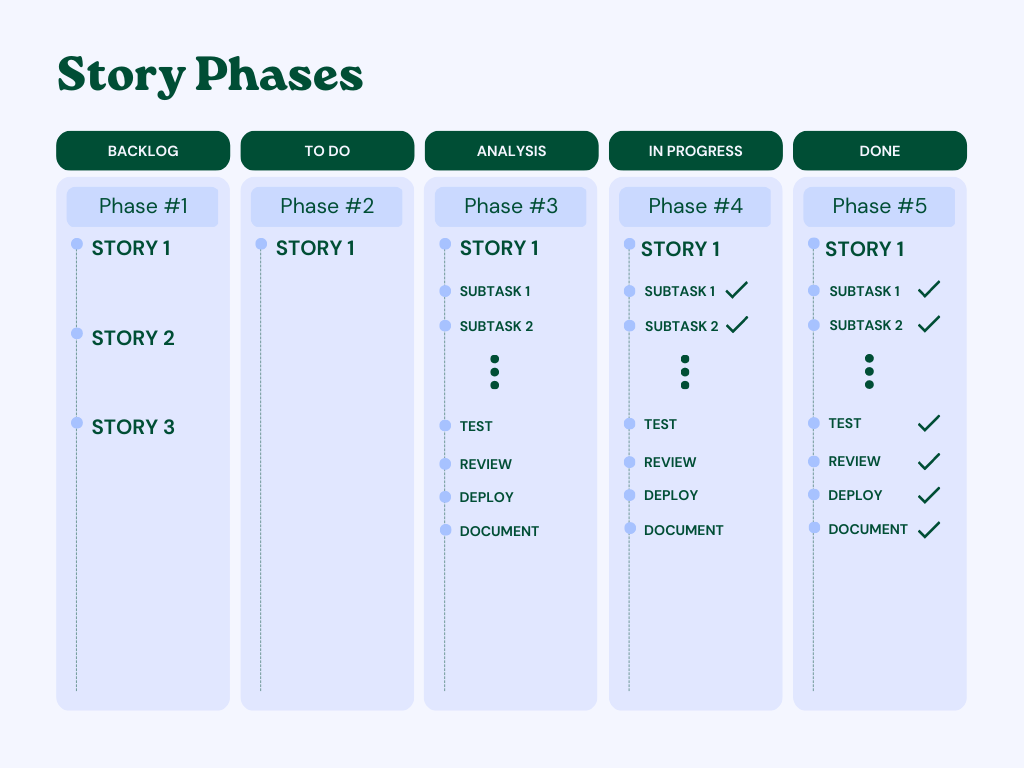
Each story in our “Sprint” goes through several phases. First, during the Refinement meeting, it is added from the Backlog to the To-Do column of our Kanban board. Then, we move it to the Analysis column and start analyzing it, planning subtasks, and identifying possible blockers. Next, we move it to the In-Progress column, where we work on it and update the subtasks as we go.
Once all the subtasks are done, we go through a few additional but mandatory steps, such as tests, review, deployment, monitoring, and documentation. The only exception is for Spike stories, which are stories involving only study cases, investigations or analysis that would skip the test, review and deployment steps. Before concluding the story, we always spend some time contributing to the test coverage of our app. Most of the time we will add significant test cases to our end to end test suites, but on other occasions we may find it useful to add unit tests. It is important to always pay attention to any edge cases, as well as including regression tests to prevent future bugs. The review is usually done by a team member who did not work on the story. This ensures that the code is of high quality and meets our standards, as well as double checking all the requirements. The deployment is the process of moving all the changes to production. We also monitor the changes to ensure everything is working as expected. Finally, we document all our stories in our company Notion account: we write a new document for every story, reporting the story description, how we implemented it, any error or problem we encountered and often concluding with next steps to follow up, which may lead to new stories to be added in the Backlog.
In a typical Scrum fashion, every two weeks we hold Demo meetings to present all the stories completed over the two-week period. This 1-hour meeting has the same purpose as the classic Sprint Review meeting, even though we cannot always present our work to stakeholders. Instead, we take the chance to share important information between team members, to make sure we are all informed about every new feature so that anyone can take over working on different projects or epics. Moreover, it often becomes the right occasion to discuss together the proposed next steps for the stories, even drafting new follow up stories entirely.
I would like to spend a few more words on what I find the most interesting approach we put up in our team, which is also what makes the whole system work. In addition to working on stories individually, the Phoenix team often works in pairs to speed up the development process and reduce the likelihood of errors. This helps us to achieve our commitments more efficiently and effectively. Moreover, we have developed the concept of being “collaboratively selfish“, where we strongly encourage team members to ask for help directly when they need it. Even when we think we may disturb others or be a burden, we think it is better to call out to someone rather than keep trying alone. This attitude helps us work together as a team and avoid unnecessary delays or bottlenecks. It also helps us to maintain a positive work environment where everyone feels supported and valued. We understand that sometimes we may be too focused on our own tasks, but it’s important to take time out to help team members as needed. This collaborative approach ensures that everyone is working towards the same goal and helps us to achieve better outcomes. By working collaboratively and promoting this “collaboratively selfish” culture, we can continue to achieve our goals and deliver high-quality work.
The Phoenix dev team worked hard to find the right balance to manage our work efficiently, creating our own framework to handle all the workload and the unexpected. Our daily standups, story phases, and mandatory steps ensure that our work is of high quality and meets our standards. The demos allow us to get feedback and share among us the knowledge we mature while working on the stories. But, most importantly, we found a way to collaborate that puts first the wellness and the success of the whole team, without leaving anyone behind.


Senior Engineer at 2hire
Computer engineer with a passion for art. When not coding, you may find me painting, reading, binge-watching tv shows, or, most probably, sleeping.
Posted on March 16, 2023 by Benedetta Biggi
16 Mar 2023 | 4 min read
Contactless rental is not only a wise choice for the car rental operator, but also for the customer. When we speak about contactless rental we mean a software solution to digitize and automate a car rental business. A digital rental model enables time-saving, operational costs optimization, and efficient fleet management for a premium car rental experience.
The car rental market is becoming more competitive and is quickly sliding into the world of fleet digitization. Car rental companies must grab the opportunity here since the 25-45 years old age group represents 75% of the rental market and are more willing to pay a plus price for a digital and immediate experience.
In the article on the advantages for the car rental operator, we set out the carousel of reasons (benefits, rather than reasons) why a car rental business should go digital. But we do not want to stop there, today we showcase another vital side: the user experience.
Today’s user seeks immediacy and convenience in booking and picking up their rental car. Choosing a contactless rental gathers all these needs and generates 2.0 benefits that a traditional car rental could never provide. Let’s see them together!

Choosing a contactless car rental over a traditional one can offer significant time savings. With contactless car rentals, car keys are often directly inside the connected car, making them ready to be picked up with just a few clicks from the renter’s phone. This not only eliminates the need to wait in line at a rental desk but also drastically cuts off time to complete paperwork in order to pick up the keys. Additionally, the choice of a contactless rental can greatly reduce the amount of paperwork required, including ID, driver’s license, and contract signatures.
With the convenience of technology, renters can save valuable time and streamline their user car rental process, allowing them to get on the road quickly and easily.
With a contactless rental, contactless vehicle access can be done in a much more distributed manner across the territory. The end user will be able to use the GPS location to go to the car or even have it delivered near him/her.
The ability to rent a vehicle 24/7 is a significant advantage for the end user when it comes to choosing a contactless car rental with connected vehicles. Unlike traditional car rental companies, which typically operate on fixed business hours, a connected fleet allows for digital management of operations. It provides users with access to their car rental vehicle at any time of the day or night 365 days a year. With digital management, car rental companies allow remote control of their vehicles. Furthermore digital car rental companies allow users to access their booked cars without the need for physical interactions with other people or at the front office. Thanks to a contactless rental model digital pick up and drop off is made possible. The 24/7/365 access allows for unlocking and locking of the vehicle. The retrieval and return of the keys is also managed digitally.
This not only provides greater flexibility and convenience for the end user but also streamlines the car rental process, reducing wait times and minimizing the potential for errors or delays.
When it comes to renting a car, one of the most tedious tasks is keeping track of the mileage. From remembering the initial mileage at pick-up to ensuring that you don’t exceed the allotted kilometers, it can be a hassle to keep track of it all. However, with more and more connected cars in rental fleets, this task is becoming a thing of the past.
For the end user, this means that the car is equipped with an odometer feature and GPS tracking. These components automatically record the car’s trip and distance traveled. In this way there’s no need for the user to manually enter the kilometers at pick-up and drop-off. Surely the chances of errors or disputes over mileage is extremely reduced.
In addition to the time savings, another advantage of choosing a contactless car rental is that the specific car model and features are often guaranteed.
When renting a traditional car, it is possible that the desired make or model may not be available, leading to disappointment or the need to make last-minute adjustments. With contactless car rentals, once you book a connected rental car, you will receive a direct reservation to that specific vehicle that includes contactless rental. This ensures that you will no longer have to worry about any unforeseen timing issues due to vehicle availability. Additionally, you simply have to go straight to the car without going through a front office, the place where more often the unexpected car change occurs.
With the use and availability of safety features such as GPS tracking, DTC (Diagnostic Trouble Code for car issues identification), service alerts for car maintenance, odometer, and many more, car rental companies can have a better understanding of the condition and usage of their vehicles. This can lead to more accurate maintenance and repair schedules, ultimately resulting in a better car rental experience for the end user.
Opting for a contactless car rental can provide clients with significant advantages, particularly when it comes to car insurance based on driving behavior. With the availability of connected cars in contactless rentals, driving behavior can be tracked and analyzed in real-time. This advantage allows for customized insurance premiums that accurately reflect the individual driver’s risk profile. By driving safely and responsibly, clients can demonstrate a low-risk driving pattern and potentially qualify for lower insurance rates. This also promotes safer driving habits and helps reduce the overall risk of accidents on the road.
A carmaker example of this driving behavior-based insurance is Tesla. Tesla, based on user driving behavior, offers clients different insurance plans. If you are a “careful” driver you pay less than a more “witty” driver.
Many insurance companies are starting to use black boxes to do this kind of analysis on their customers to tailor their offers based on different driving profiles. By choosing a connected car with these specific features, clients can enjoy a more environmentally-friendly and cost-effective driving experience.
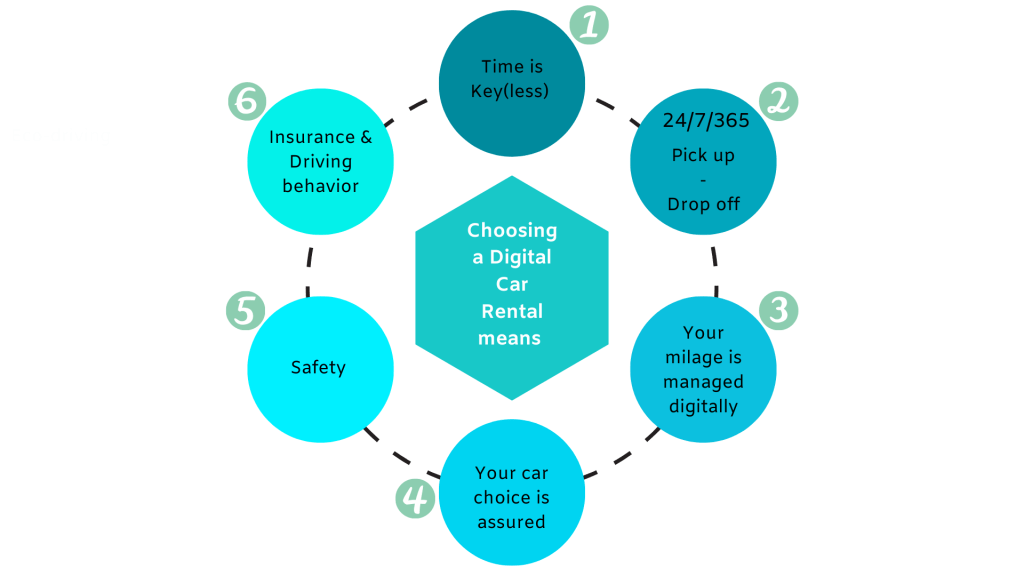
Based on the topics covered in the first two articles, by leveraging cutting-edge technologies, the car rental operators on one side are poised to remain at the forefront of innovation and continue to meet the evolving needs of their customers in the years to come. On the other side, choosing a contactless rental for the customer is the go-to for having the desired amenities only a click away. Whether you’re a frequent traveler, a busy professional, or just looking for a better way to rent a car, a contactless rental is the go-to!
Stay tuned for the next episode where we will talk about…
Digital Content and PR Specialist at 2hire
I love running and daydreaming losing count of the distance I’m covering, cooking (and especially eating) and Drake is my spirit guide.
Posted on March 6, 2023 by Benedetta Biggi
09 Mar 2023 | 3 min read
The world of mobility is changing rapidly, with two trends walking on two different but parallel tracks:
When it comes to car rentals, their strength lies in the wide choice of models available and their global presence.
Moreover, Car Rentals have taken notice of the importance of staying up-to-date with the latest automotive trends. To date more and more car rentals are implementing features that make the car rental process completely digital.
As keyless technology it’s spreading, Car Rentals demonstrate their adaptability but also their intention to meet the new needs of consumers that have arisen after the Covid-19 pandemic.
Fewer people want to take public transport, so car rentals have become safer and more reliable, increasing demand. Just because of this, car rentals and more specifically keyless rentals have found an additional market share in which they meet perfectly consumer needs.
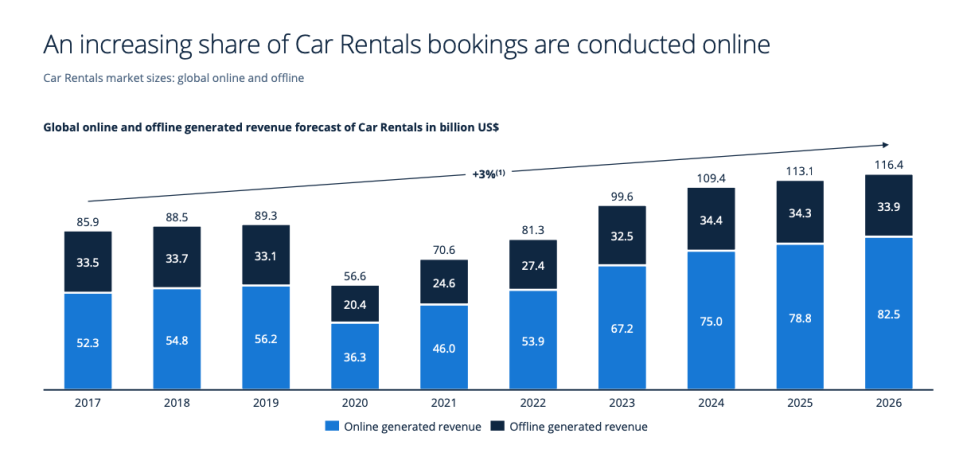
A recent study by Research and Markets outlines the current and future growth of the car rental market: The Europe Car Rental Market was valued at 10.5$ billion in 2021 and it is expected to grow at a CAGR of 13.1% to reach a value of 20.1$ billion by 2027.

The graphic shows how the Car Rental growth is spreading all over the world although to varying degrees. These data demonstrate the increasing knowledge around the world related to the potential of car rentals.
Peer to peer car sharing is an exciting new branch in the mobility market. It represents a new source of income for many individuals, providing people with the opportunity to become small entrepreneurs.
P2P car sharing allows Hosts to create concrete businesses aside, giving a new lease of life to little-used cars and reducing waste.
One of the strengths of P2P car sharing is the cheaper option compared to classic car sharing, making it an attractive choice for budget-conscious individuals.
Although P2P car sharing has fewer models available and doesn’t have as wide a reach as Car Rentals, it is gaining popularity at an incredible rate.
More and more people are discovering the benefits of this innovative new trend, making it a serious competitor in the mobility market.
The P2P car sharing wave is hitting the entire world. As Research and Markets reports: The P2P car sharing market was valued at $1598,3 million in 2021 and it’s expected to reach $7225,2 million by 2030, with a CAGR of 17,6%.
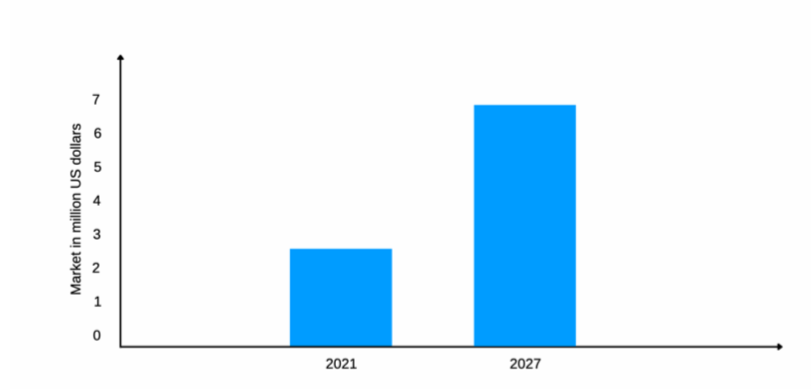
As the picture shows us: P2P car sharing is among those services that will experience strong growth, already visible between now and 2030. The major factors propelling the demand for such transport services surely include convenience both for hosts and guests.
Several advantages make car rentals and peer to peer car sharing two clearly pushing trends. Even if one service is surely well established and the other is in big growth in their market. What they have in common is the way they invest time and resources in digitizing as a strength and competitive advantage in the marketplace.
Digital Content and PR Specialist at 2hire
I love running and daydreaming losing count of the distance I’m covering, cooking (and especially eating) and Drake is my spirit guide.
Posted on March 6, 2023 by Benedetta Biggi
07 Mar 2023 | 4 min read
In our first opening chapter about Adapter we showcased the capabilities of the software solution that 2hire is offering, and we launched an initial lure into the world of standardization of all the different OEMs in the market to enable connected services providers to communicate indistinguishably with all these OEMs. Today we thought we would put a spotlight on Adapter’s technology stack and dive a bit deeper into how Adapter’s architecture actually works.
Adapter is the layer that enables communication between vehicles and end users. This cloud-based technology handles interactions from thousands of users engaging with thousands of connected cars all over the world. But how exactly does Adapter work? Let’s take a closer look at its components and mechanisms in a light-hearted way!
You might think that Adapter is just one piece of software, but it is actually a cluster of microservices working together to expose a unified and compact interface. There are around 20 different services that contribute to the Adapter architecture, and they’re growing very fast.
Let’s go over the microservices composing Adapter:
The ALB is a very common component in many of the services we use every day on the internet. Its responsibility is to distribute request loads over multiple replicas serving your application.
It’s crucial to ensure that the system can handle the high volume of incoming requests, particularly during peak times, by balancing the load evenly among the replicas. This not only improves the overall performance of the system but also provides a failover mechanism in case one of the instances goes down.
The API Gateway is the second component in the pipeline for communication between users and vehicles. It acts as the gatekeeper for incoming requests from the end-user. It’s responsible for checking the authentication of each request, verifying the user’s identity, and forwarding it to the correct sub-service within the Adapter. The API Gateway also performs other security-related functions, such as rate limiting and request throttling, to ensure the overall security of the system.
This macro-category (yes, Adapter in Adapter) is the heart of the Adapter service and refers to all the services that enable specific vehicle integrations. Right now there are around 15 different services under this category, including integrations with original car manufacturers such as Stellantis, Ford, Toyota, third-party providers such as E-GAP, Reefilla, WashOut, as well as the most important integration which is our proprietary 2hire box. The Adapter services form the core of the Adapter architecture: each service handles the communication with specific vehicles, processing the incoming commands or signals and forwarding them to the correct destination.
Like our 2hire box, even other integrations require a direct connection with the vehicle rather than through provided API services. The Gateway service handles direct communication with the vehicles, managing every aspect of it, from protocol connections to encoding and parsing messages.
The Webhook Publisher service closes the loop by forwarding all information from the vehicle to the end-user. The forwarded data is usually received and handled either by third-party services or our own Sharing service, which processes the data to make it available to the end user through their app.
To understand how the different services within Adapter interact with each other, let’s take a closer look at the two communication flows: from the User to the Vehicle, and from the Vehicle to the User.

When a User interacts with a Vehicle through their app of choice, the message is sent over to the cloud and routed to the Application Load Balancer (ALB). The ALB distributes the user-generated message load to the correct service replica. From there, the message is processed by the Api Gateway. This service acts as a checkpoint, verifying the authenticity of the message and directing it to the appropriate Adapter sub-service.
The selected Adapter then processes the command and forwards it either to the Provider API, if the message is meant for a third-party service, or to our proprietary Gateway service, if the message is meant for a vehicle powered by the 2hboard or another directly connected vehicle.
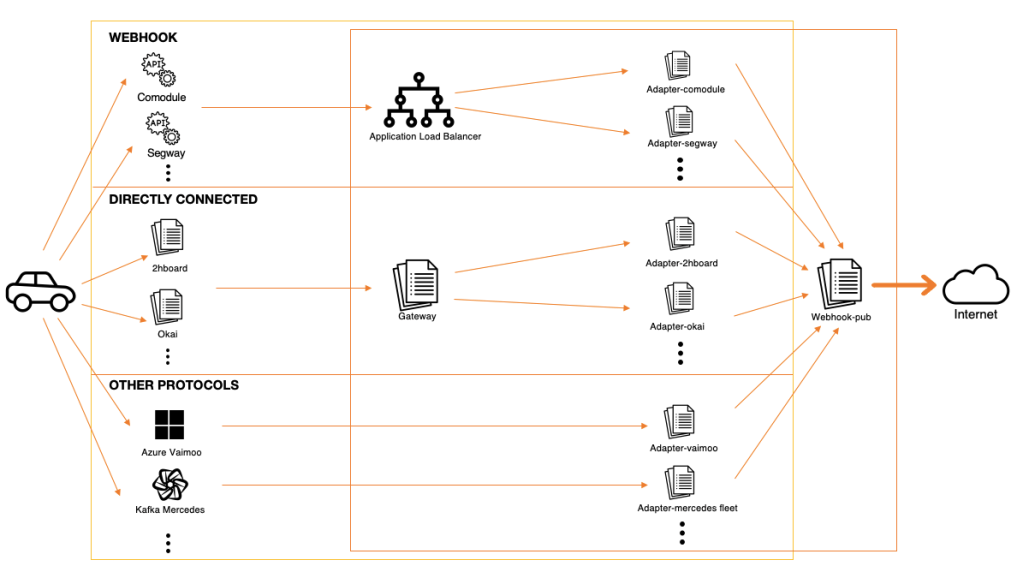
On the other end, depending on the connectivity provider, the vehicle data is either received through directly connected webhooks that pass through the ALB, or through the Gateway service that handles the communication specification. The parsed messages are then sent to the corresponding Adapter Service, which performs any necessary processing. This could include exposing command responses and received signals, such as generic signals for common usage or specific signals for the vehicle family or group.
Finally, to forward the vehicle data to the end-user, the Adapter services utilize the Webhook Publisher service.
This software gathers the vehicle data and makes it available to the end-users by sending it to any service or application that has subscribed to the Adapter webhook service.
Adapter is a complex piece of technology that handles the communication between vehicles and end-users. It’s composed of multiple microservices working together to provide a seamless experience for the users. Each service plays a unique role in the overall architecture, ensuring the secure and efficient delivery of information between the vehicle and the client. Adapter’s robust and flexible architecture enables it to accommodate the ever-evolving needs of the connected vehicle industry, making it a critical component in the future of transportation.
Senior Engineer at 2hire
Computer engineer with a passion for art. When not coding, you may find me painting, reading, binge-watching tv shows, or, most probably, sleeping.
Posted on February 21, 2023 by Benedetta Biggi
23 Feb 2023 | 4 min read
Car rental innovation is keyless.
Now more than ever, with the spreading of connected cars and connected fleets, this is getting real.
After the heavy losses caused by Covid, the chip shortage, and the related decrease in available vehicles in fleets, an inevitable rise in prices emerged.
Users’ needs have also changed. More and more requests for car rentals (despite rising prices) made them a convenient and safer alternative to public transportation in close contact with other people. The outdated classic car rental systems have been morphing to slowly heal this situation and start giving users what they want. A seamless, peace of mind, and fast renting experience.
Contactless rentals can dismantle this old management and make innovation the real focus of car rentals. Having a connected fleet gives access to an extended merry-go-round of benefits for the fleet manager and the entire car rental company.
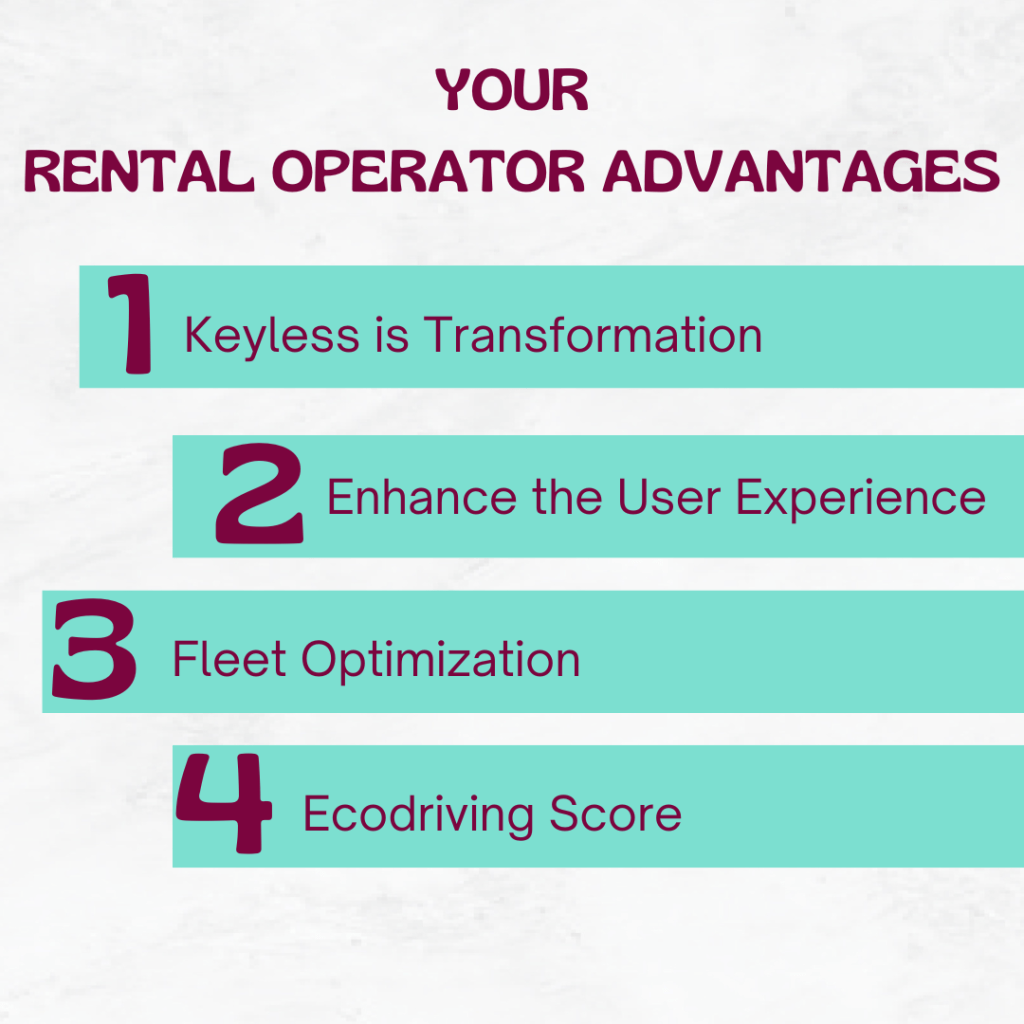
The first thing that comes to mind when talking about connected cars in a contactless rental fleet is the ability to interact with vehicles, lock and unlock them, without the need for keys. No need to hand over the keys to the user, you just have them placed directly inside the car that will be opened digitally.
What does it mean in terms of benefits?
Firstly, significant time savings for both parties (operator and customer). The customer no longer has to go through the front office to sign documents and retrieve the vehicle keys (which will already be inside the vehicle, ready to be opened digitally), and the operator does not have to invest extra manpower, money, and energy running a service point dedicated to this step. The step itself is eliminated and incorporated by the keyless technology process, which will make it possible to actively manage your contactless rental business 24/7.
Thereafter, a better quality of service, faster, more straightforward, and more flexible. Not to mention the financial savings on service personnel and the possibility of expanded fleet deployment across the territory.
With the rise of the on-demand economy, people are looking for quick, easy, and hassle-free solutions to their car rental needs. Contactless rentals meet this demand by providing a convenient and streamlined process for renting and returning cars.
One of the key benefits is the ability to rent and return cars on the go. This is especially appealing to today’s young worker, who is used to a 24/7 connected life and is looking for a service at the same pace. By using a mobile or web app, customers can quickly and easily find and rent the car they need, 24/7, 365 days a year.
Fleet management shouldn’t be complicated, slow, or muddling. Optimizing your connected fleet means having access to a range of valuable data to optimize your operations. In support of this, some of the most valuable data available are real-time ones such as GPS localization (a trump card also useful in case of fraudulent driver behavior, to have constant control over the position of the vehicle), fuel level or battery level, odometer, and maintenance status. All relevant data for efficient and ready-to-go management.
Fleet managers adopting a technological solution for their fleet of cars can keep a constant watchful eye over how their vehicles are being used in the field while focusing on their myriad of other responsibilities.
Better maintenance is an essential aspect too when it comes to real-time data on the condition of vehicles. In this sense, fleet managers can schedule maintenance more effectively, reducing the likelihood of breakdowns and prolonging the life of the vehicles. Time-consuming inventory management is one of the biggest pain points in this regard. Many operators spend so much time and energy registering vehicles returned to the fleet, checking their odometer and battery/fuel level to officially close the previous car rental and prepare the vehicle for the next one. Technological optimization of a rental aims precisely at maximizing the car rental’s operational efficiency by making the fleet controlled, safe, and productive to the utmost.
It is possible to intensify rental vehicle usage with an economically attractive program of incentives. This can exert influence upon the behavior of drivers and shape their preferences also with the change of driving style to a more economic or ecological one.
The eco-driving score makes it possible to analyze the driving behavior of the car user and offer economic incentives with dynamic pricing based on user behavior. Research company OVE Consulting estimates that eco-driving can create cost savings of up to 25%.
A good driving style where drivers are maintaining a steady speed to limit unnecessary fuel loss whilst keeping a safe distance between their and other vehicles to avoid harsh braking is key.
Implementing connected solutions within a car rental fleet, like GPS tracking among other features, can give companies visibility of how their staff is driving, enabling them to spot issues and support drivers.
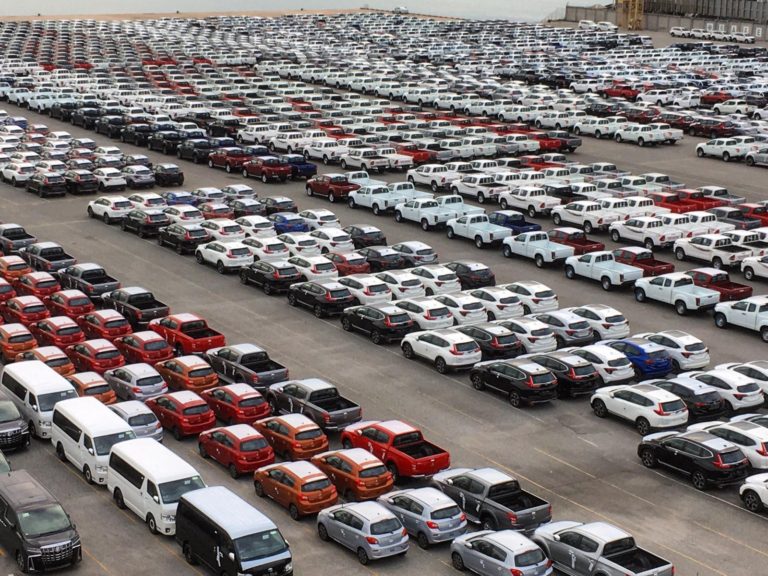
As consumers live an increasingly on-demand lifestyle, car rental companies need to invest in technology to provide more personalized service. It’s evident how technology marks a pivotal role in car rental business optimization, simply having cars available for your users will not be enough to stay ahead of the curve.
By transforming the car rental business into a software-based model, operators will ensure themselves a place on the road to the future among the most ahead-of-the-curve players.
Digital Content and PR Specialist at 2hire
I love running and daydreaming losing count of the distance I’m covering, cooking (and especially eating) and Drake is my spirit guide.
Posted on February 21, 2023 by Benedetta Biggi
21 Feb 2023 | 3 min read
Peer to car sharing has revolutionized the traditional car rental industry by connecting car owners with those in need of a vehicle for a short period of time. Instead of depending on a centralized rental company, P2P car sharing allows individuals to rent out their personal vehicles to others, providing a more convenient, cost-effective, and environmentally friendly alternative.
In this article, we will explore five of the most popular P2P car sharing companies!
Firstly, Turo is the largest P2P car sharing marketplace with the biggest community.
Based in San Francisco, it provides a platform for car owners to rent their vehicles. The service is available in over 7,500 cities across the US, Canada, France, and the UK. Additionally, the company offers more than 1,300 different makes and models.
Turo’s biggest strength lies in its huge community, and it places significant importance on its employees. Not by chance Turo’s president won the Gold The Stevie Awards for Great Employers in 2022.
Another key player in the peer to peer car sharing sector is GetAround.
The start-up launched “GetAround Connect”. It is a connected-car compatible service that allows renters to instantly book a car without waiting for approval from the owner. The service is extremely intuitive and user-friendly and renders the entire rental process much smoother.
Evidently , the company is constantly evolving, it reached several milestones at the end of 2022, such as :
GoMore operates in several countries including Denmark, Sweden, Norway, and Germany.
The peer-to-peer company provides:
Snappcar is a peer to peer car sharing platform which operates in several countries, including the Netherlands, Germany, and the UK. The company is keeping up with the times offering updated services, such as keyless technology solutions for several types of cars.
The group is becoming increasingly present and this is demonstrated by the achievements of important results in the past 10 years:
Lastly, Hiyacar operates with over 100,000 members throughout the UK. The company offers quality service with peer to peer car sharing insurance and multiple layers of digital driver verification like facial recognition and liveness detection.
The first to offer QuickStart Keyless technology, Hiyacar’s easy and safe way to share cars, alongside best-in-class member support.
Moreover, Hiyacar is the first peer to peer car sharing platform to offer a fully accredited car club (COMO UK) using owned cars from Toyota and other manufacturers.
The company believes very strongly in what it does and plans to continue to grow, not by chance Hiyacar’s vision claims: “To be present on every street in the UK and change the way people use cars forever”.
Summing up:
P2P car sharing companies like Turo, GoMore, GetAround, SnappCar, and HiyaCar disrupted the traditional car rental industry by providing a more convenient, cost-effective, and environmentally friendly alternative. Thanks to keyless solutions P2P car sharing is catching on and riding the fast lane of a new perception of mobility!

Digital Content and PR Specialist at 2hire
I love running and daydreaming losing count of the distance I’m covering, cooking (and especially eating) and Drake is my spirit guide.
Posted on February 15, 2023 by Benedetta Biggi
11 Feb 2023 | 3 min read
Keyless Rental is a new technology that enables users to rent a vehicle, pay for it, and lock/unlock the vehicle through their smartphones without physical interaction. This technology is revolutionizing the car rental industry and is rapidly growing with an expected user base of 63.4 million by 2027.
Although the market is not yet saturated, big and medium fleet-size operators are shifting towards contactless rentals for easier fleet management and to keep up with the times.
Here you can find the five coolest contactless car rentals in the international scenario: SIXT, Hertz, Ada Location, Green Motion, and Ufo Drive.
SIXT is a German company founded in 1912 that operates across 105 countries worldwide. The company has more than 2,200 car rental stations and a fleet of over 220,000 vehicles. The company recorded its best quarter in 2021, with a 21.4% increase in revenue and a 94.8% increase in profits compared to the pre-Covid year 2019.
Sixt shows its commitment to the digitalization of the car rental process through the introduction of the SIXT APP.
The app makes the pick-up much faster thanks to the keyless car rental entry. Moreover, it gives the possibility to choose a vehicle 30 minutes before the rental starts.
SIXT Fastlane is another service provided by the company that further speeds up the car rental process. Choose the vehicle via the app, go to the car, open it via the app, and just enjoy the ride.
Hertz, founded in 1918, is one of the largest car rental companies in the world.
The company has always been innovative and has launched Hertz 24/7, a service that simplifies the car rental process: no keys, paperwork, or hassle.
Users can :
The vehicle is then returned by leaving the keys inside the vehicle.
Founded in 1986, Ada Location is a French car rental company with over 1100 rental agencies spread throughout the country
Ada Location provides a fully digital car rental experience through the Ada application.
Users can unlock the car and finalize the car rental contract with the departure inventory through Bluetooth communication with the vehicle. Through the app, customers start the engine of the car. The drop off of the vehicle can happen at flexible hours, with no need to pass through any front office.
Green Motion, established in 2007 in the UK, is an eco-friendly car rental company that offers a range of hybrid and electric vehicles for rent.
The company has embraced technology to offer a keyless rental process using a virtual key that allows users to unlock and start the car without physical interaction.
Green Motion provides various features and services to make the rental experience smooth and convenient, such as : 24/7 customer support, flexible car rental options, and the ability to rent a car at multiple locations across the world.
Ufo Drive is a car rental company based in San Francisco that aims to provide the world’s fastest and easiest car rental experience while reducing paperwork, queues, fuel, and emissions for its users.
The service is available 24/7 in several city and airport locations across 8 European countries and has already saved 487,000 liters of fuel.
The keyless rental process allows users to book through a mobile app and access the car immediately through keyless technology. Another core of Ufo Drive’s business is its commitment to the environment, Aidan McLean – Ufo Drive’s founder – told TechCrunch:
“One of our biggest concerns, when we started UFODrive, was making people comfortable using an EV and minimizing or removing anxiety throughout the car rental — not just at pick-up.”

The keyless rental industry is certainly making waves within the vehicle car rental industry itself. With added features like keyless pick-up and drop-off, GPS tracking, and comprehensive insurance. Keyless rentals are proving to be much more than your average car rental service.
Keyless technology will certainly play a major role in the way we interact with cars in the future, and these car rental companies are proof this wave is becoming stronger.
Digital Content and PR Specialist at 2hire
I love running and daydreaming losing count of the distance I’m covering, cooking (and especially eating) and Drake is my spirit guide.
Posted on February 7, 2023 by Benedetta Biggi
10 Feb 2022 | 3 min read
The automotive industry is constantly evolving, with new technologies and trends emerging yearly.
The increasing pace of innovation in the automotive sector gives life to “software-defined vehicles”.
“Software-defined vehicle” (SDVs) is a term that describes a vehicle whose features and functions are primarily enabled through software, a result of the ongoing transformation of the automobile from a product that is mainly hardware-based to a software-centric electronic device on wheels.
The major SDV’s benefits are the “over-the-air updates”, namely the possibility to receive software updates remotely, allowing manufacturers to quickly and easily fix bugs, improve car performance, and add new features without the need for a physical visit to a dealership.
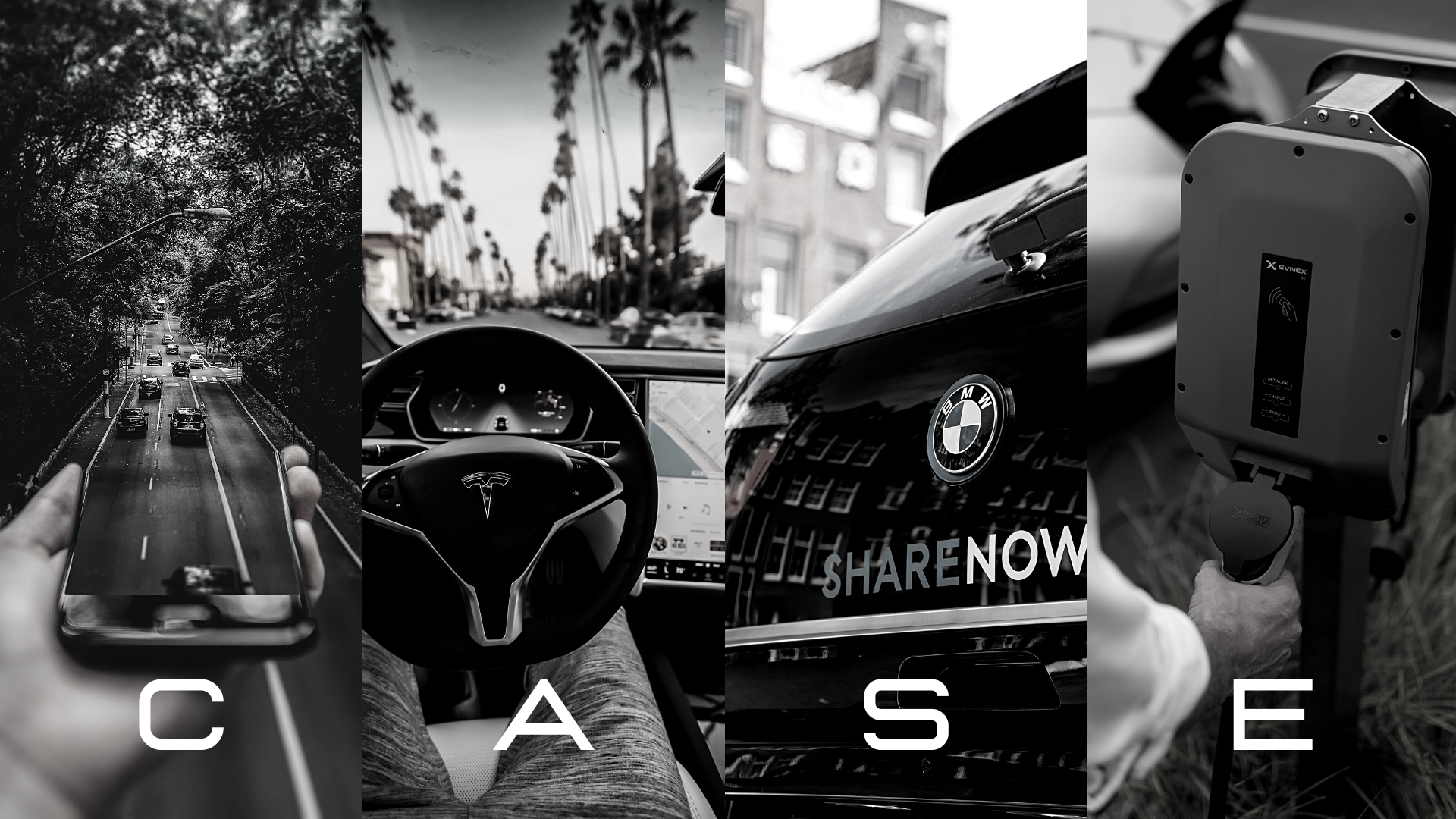
If we had to choose one word to summarize 2023 trends in the automotive industry, we would choose CASE, which stands for Connected, Autonomous, Shared mobility, and Electrified.
Let’s dive the terms deeper:
It is evident how industry players are accelerating the speed of automotive technology innovation as they develop new concepts of Connected, Autonomous, Shared, and Electrified Mobility.
“After Covid-19, we believe companies will start to localize some of their production. Factories will need to be more digitalized and automated […]. The Industrial Internet of Things, 5G, and industrial software are all key enablers of the transformation to smart manufacturing.”
– Alexander Stiehle, Analyst, UBS
The COVID-19 pandemic had, at the same time, both negative and positive impact on the automotive industry.
Starting from the negative speed bump for sales, due to the increasing prices, lower vehicle production, and less dealer inventory.
The semiconductor shortages: a global shortage of chips, considering their key use in a wide range of automotive applications. Additionally, other shortages with similar effects on the automotive industry have been the mini controllers, sensors and display panels ones.
Despite the downward effects, the pandemic also had a positive outcome, boosting the pace of innovation in the automotive industry.
The studies report an increased demand for contactless and self-service technologies, a considerable focus on the development of keyless technology, e-vehicle charging, and self-driving cars.
Last but not least, the explosion of streamlined operations, virtual services and sales, and higher profits.
The experience of driving has been, for the most part, linked to the vehicle’s drivetrain, engine, and how it puts power on the road.
However, in more recent years aesthetic features and infotainment have taken hold in the scenario. From aesthetic features such as more and bigger screens to the integration of infotainment involving voice controls, streaming audio, video, and gaming.
These are just a few of the several elements that through the implementation of IoT and connectivity make the diver’s experience fully intuitive and totally immersive.
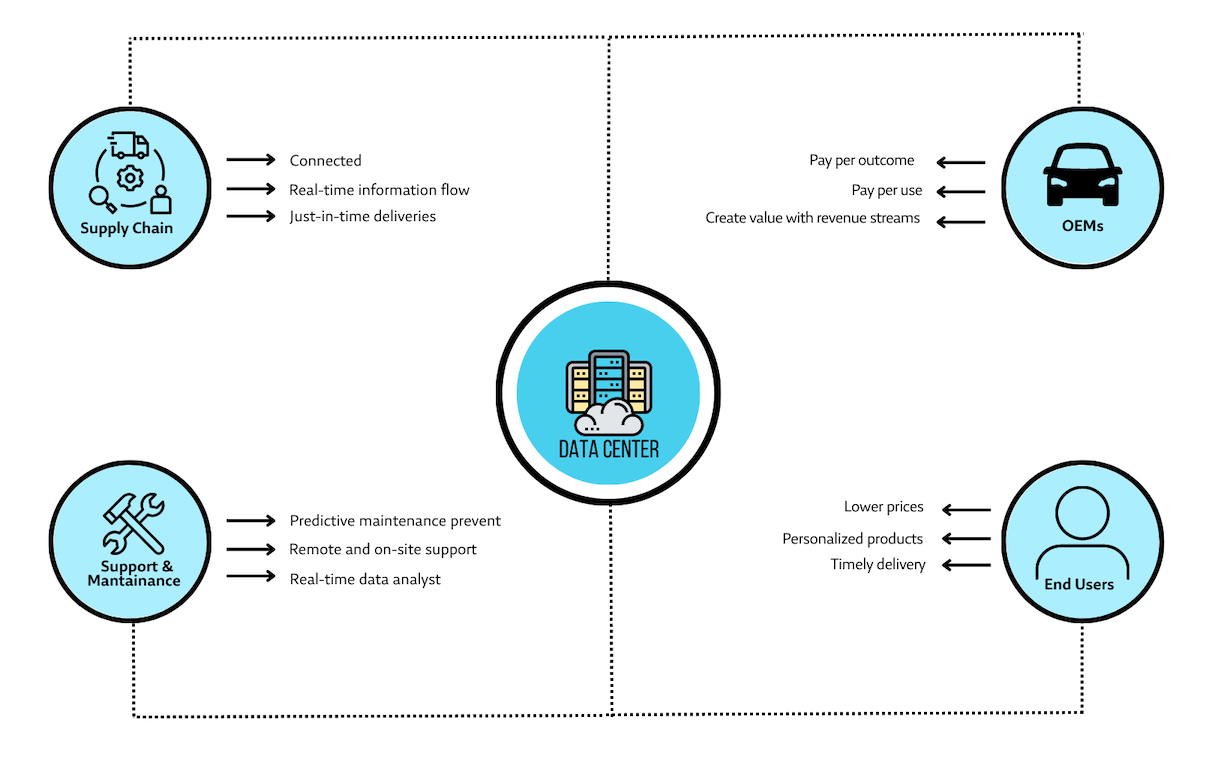
With the adoption of industry 4.0, we are witnessing the fourth industrial revolution, and enabling entire ecosystems of devices to connect, communicate, diagnose, and solve problems. By receiving the data from these products, manufacturers can enhance the user experience and further improve the products.
Tesla is a great example of this: its owners are always sharing feedback with the manufacturer who then deploys over-the-air updates to the vehicles.
The sheer amount of data collected by cars on the road may also open up new revenue streams: data generated through sensors are sold to other manufacturers to help them to improve their design and production process. This new usage of data creates a market for after-sales add-on products!
Sales and Marketing Associate at 2hire
I love running and daydreaming losing count of the distance I’m covering, cooking (and especially eating) and Drake is my spirit guide.
Posted on January 20, 2023 by Benedetta Biggi
8 Feb 2023 | 4 min read
In the previous episodes 1 and 2 on connected cars, we showcased car connectivity both as a huge market growth opportunity and as an ecosystem of 2.0 services around connected cars aimed at raising the user experience beyond the classic boundaries of simply owning a car.
The mobility world has undergone a significant transformation since the advent of connectivity. Before connectivity, cars were primarily mechanical devices that required manual operation.
With the introduction of connectivity, cars have become more advanced featuring a host of electronic systems and innovative features that enhance the driving experience and the exploitation of cutting-edge digital services.
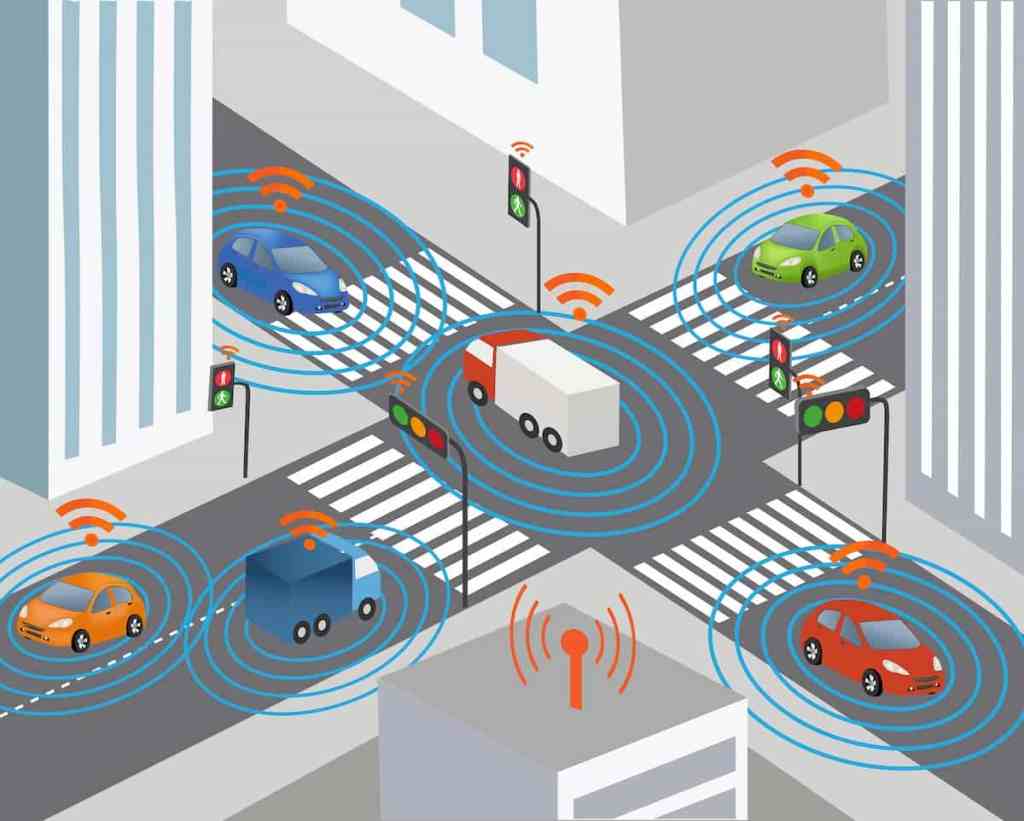
Users of connected vehicles will constantly connect to the internet and their devices. This will lead to several changes in the way we use cars including the ability to remotely start a vehicle, check its status, and even embrace new premium services for cars directly from the smartphone.
The car becomes the operational center of the user’s daily life, it becomes a 360-degree digital experience that unlocks infinite possibilities.
Connected services around cars, the existing ones but also those which will take a more concrete shape when demand and needs arise, will unlock countless possibilities, in turn, realizing and confirming what has been said so far.
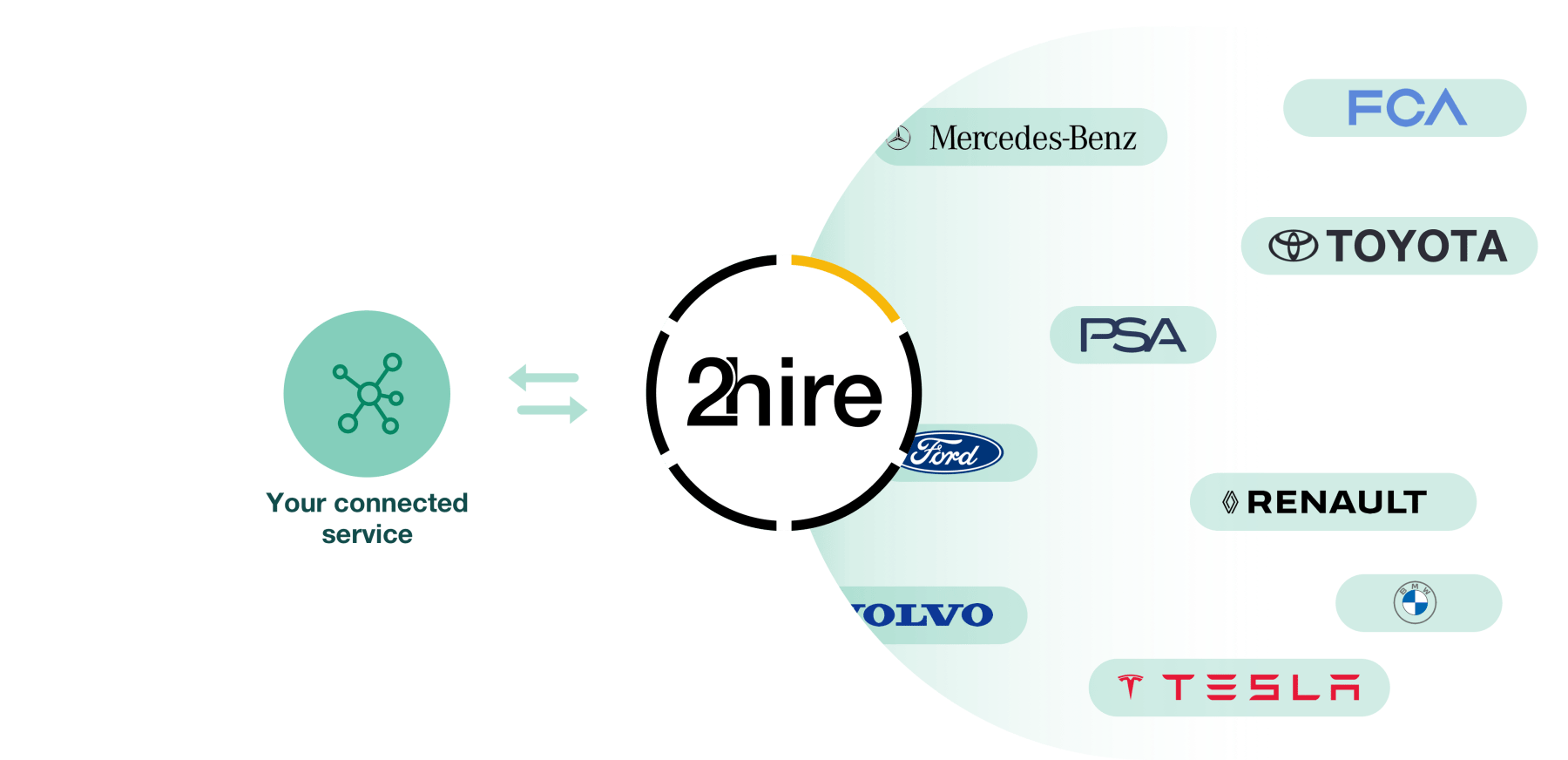
On the one hand, we have all the OEMs: Stellantis, Toyota, Renault, Ford, and Mercedes are just a few of the major car manufacturers on the market. There are as many car manufacturers as languages that each of these vehicles speaks. And since each OEM uses its own proprietary communication protocol, then each service should be able to integrate each of these languages. A significant outlay of time, energy, and resources.
On the other hand, we have those working with vehicles: connected services around vehicles, Car Rental companies, Car sharing, and P2P car sharing companies. Each service focuses on providing the best solution and aims at optimizing the user experience. These services will have to be able to communicate with all the above-mentioned communication protocols, to provide a flexible and smooth service and to make the value of the premium service they offer worthwhile.
These two groups cannot communicate indistinctly, unless each of the service provider groups chooses to work with one and only one OEM group, which is very unlikely, or else commits endless time/resources to interface with each OEM’s communication protocol.
The best solution in between these entities? Adapter, 2hire universal layer.
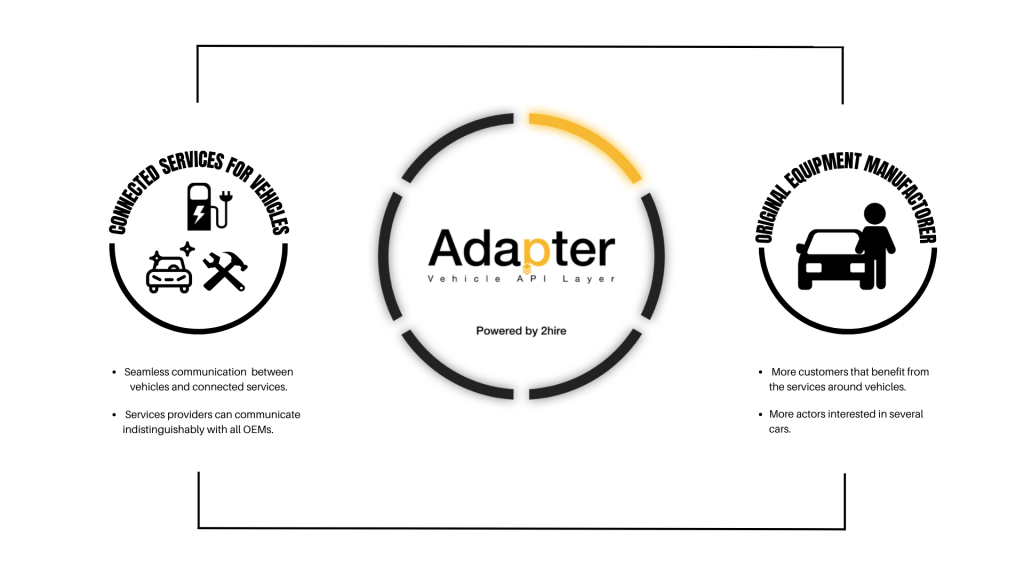
When a standardized solution (which encapsulates all OEMs) is offered, then the single OEM will be able to sell to a much larger basin of potential customers, and services (car rental, P2P car sharing, fleets, etc) will be able to manage cars digitally, regardless of make and model, solving the challenge with one software integration.
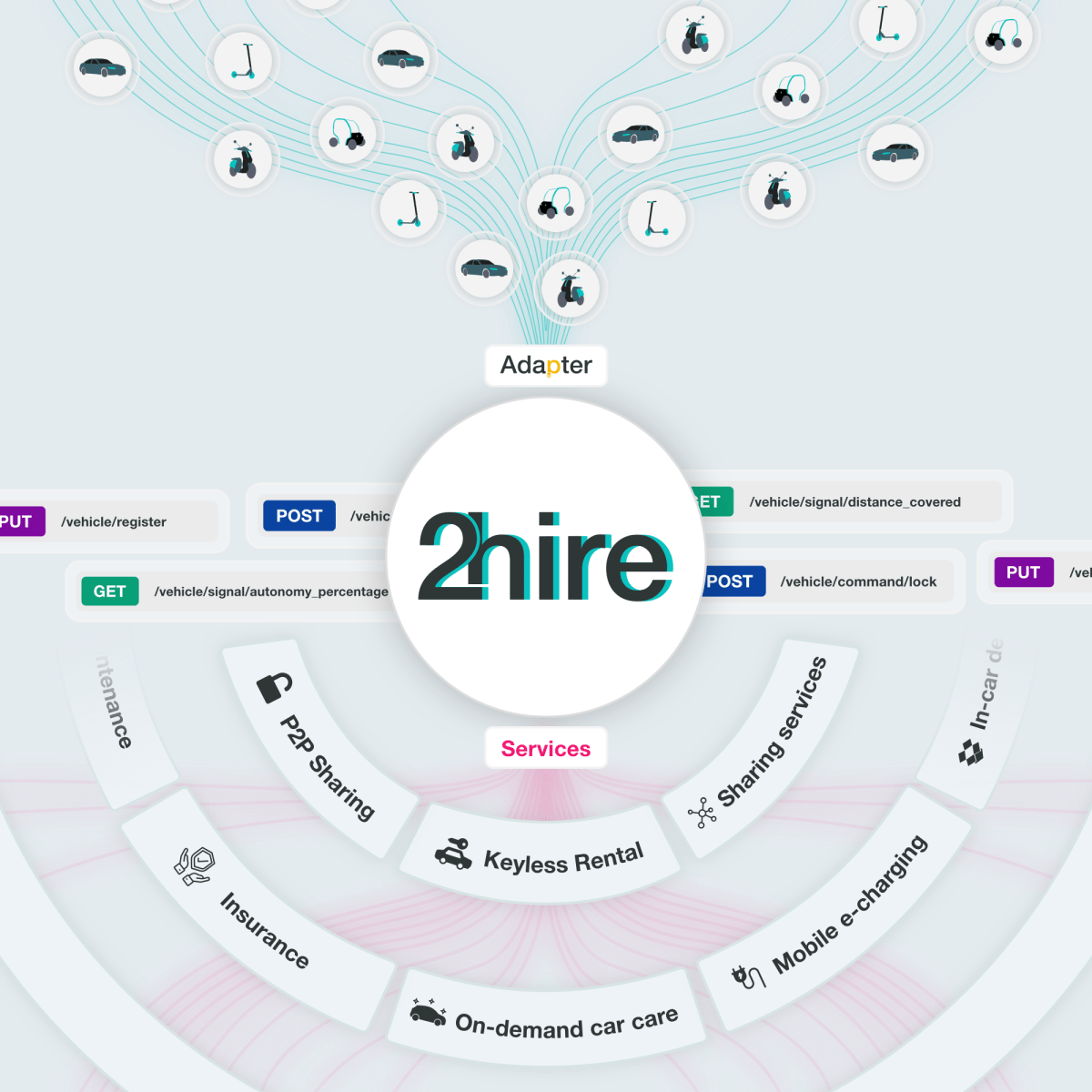
2hire created Adapter, which is the single standardized access point to all the major OEMs’ vehicles. Adapter makes it possible, through a single API layer, to harness the embedded connectivity of cars, from the integration of countless vehicle Makes and Models to interact with, to the creation of an ecosystem of services around connected vehicles.
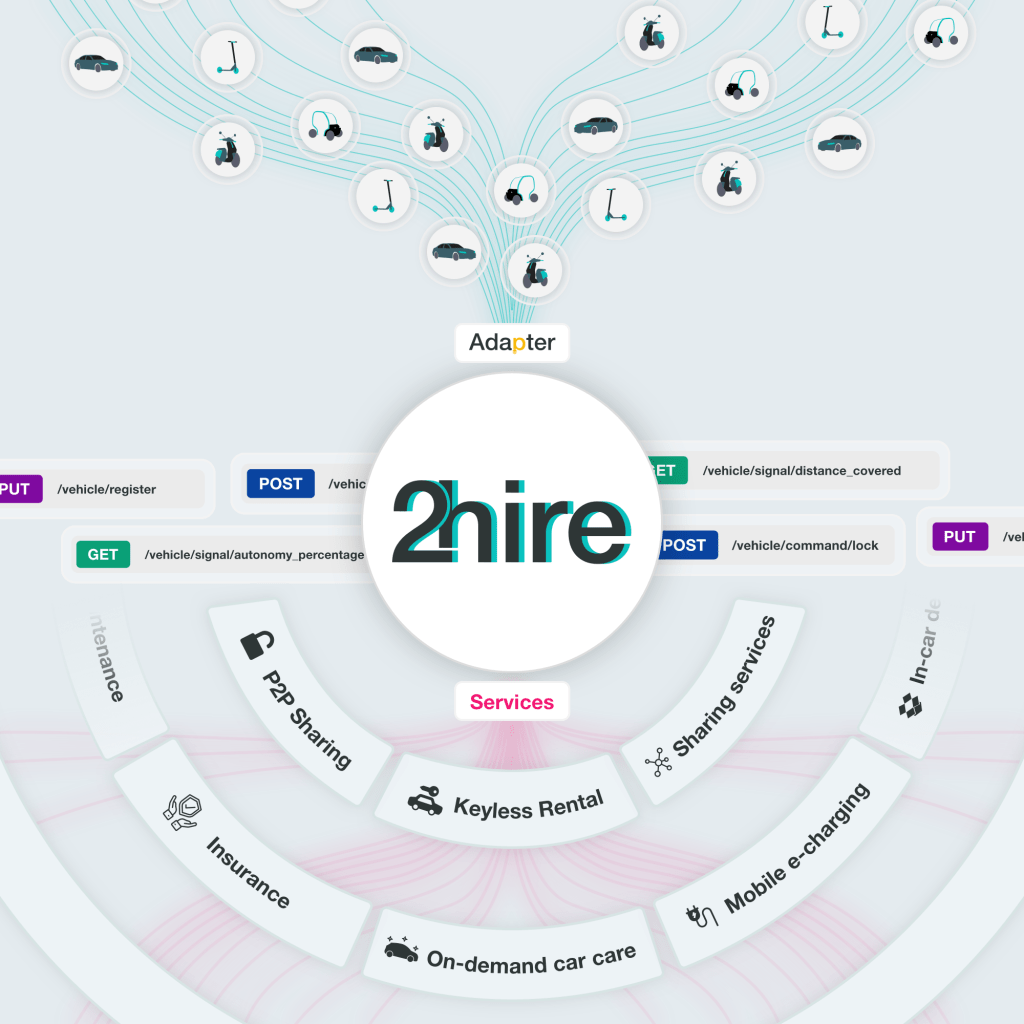
Standardizing car languages to a universal one is crucial for the connected car market to thrive. With every make and model using its language, communication with cars becomes difficult and can lead to issues such as lack of interoperability and increased complexity.
A universal language is what is needed to connect cars with services, no longer having connected cars and connected vehicles, but connected mobility!
Digital Content and PR Specialist at 2hire
I love running and daydreaming losing count of the distance I’m covering, cooking (and especially eating) and Drake is my spirit guide.
Posted on January 17, 2023 by Benedetta Biggi
30 Jan 2023 | 4 min read
“OEMs are intensifying their work around vehicle connectivity either by acquiring, creating or looking for companies to improve vehicle software or directly by intensifying the production of natively connected vehicles.”
Connectivity brings with it a hub of additional values, disentangling the concept of the car as a mere means of transport, leading it to become a cluster of services.
Connected services are part of the all-around connectivity. OEMs want to create a digital ecosystem that not only allows the seamless exchange of data and information between vehicles but also provides new tailor-made services for their customers.
While services used to be strictly vehicle-related, today OEMs put the vehicle one step further by providing 2.0 services that take the user experience beyond the classic boundaries of simply owning a car!
It is evident how connected vehicles are making more and more concrete and real opportunities that were not even conceivable before.
The use cases for the implementation of services around connected vehicles are manifold and split between mobility services that make the driver’s life safer (i.e. ADAS services such as lane assistance or brake assistance) and those that make it more comfortable (i.e. on-demand wash/e-charging/in-car delivery). For users, both branches are becoming paramount.
Connected data is increasingly valuable in the current value chain of the connected car ecosystem market. Car manufacturers are focusing their efforts more and more on implementing digital strategies, and collecting and studying data to gain insight into the wants and needs of end users. The scope of all this? To build and propose an ecosystem of connected services to cater to these wants and needs.
The Global Automotive Consumer Study 2023 by Deloitte points out that 78% of consumers who own a petrol/diesel car want to switch to electric. Electric cars are surfing the wave of the new connected mobility and with them, some disrupting connected services too. With more and more EVs out there, the shift of focus toward software and connected services is around the corner. The software move brings EV owners to discover a world of valuable services revolving around their connected cars.
Smart charging means you can intelligently manage how your EV charges by connecting it to the grid. When an EV is ‘smart charging’, the charger is ‘communicating’ with your car, the charging operator and the utility company through data connections. While Smart EV Routing comprehend apps and services that provide the best route from A to B, including charging stops at the best stations for the user route
Within the spectrum of these services, we observe the strong role of on-demand connected services.
On-demand e-charging, which allows users to charge their electric cars at any time by making a request directly from their smartphone, conveniently and hassle-free. Once the charging service has been booked, the operator only has to accept the request, locate the car, and go to the spot where it can be recharged contact-free. Some services already well-established in the market are Sparkcharge, E-GAP, and Reefilla.
On-demand car care, which means to take care of your car without having to go to a specific spot. The service is coming to you, you just need to book via smartphone and your car parked will be washed and ready to shine!
On this spectrum, some services already active in the market are Spiffy and Washout.
In-car delivery, which means to make your connected car the order collection station. Therefore, you can collect packages even when you are not at home or in the office. A perfect example is the service launched by Škoda, called Car Access, introducing a new function within the Škoda app that allows customers to get their parcels delivered straight to the trunk. The service is currently active in the Czech Republic with selected e-commerce and courier delivery partners with plans to be expanded soon in other international markets.
An outlook of real game changers in the current market considering the still weak volumes of urban infrastructures available.
Within the spectrum of these services, we also observe the strong role of on-demand connected services such as on-demand e-charging, one of the most innovative ones in the digital and connected ecosystem.
A user with a connected vehicle has access to such an integrated service, enabling the operator to even open the charging flap of the vehicle digitally, keyless, and in total safety, and then close the vehicle and leave it fully charged and ready to go!
Some services already well-established in the market are Sparkcharge, E-GAP, and Reefilla, real game changers in the current market considering the still weak volumes of charging infrastructures available.

Data is at the center of everything. As we previously claimed: data = value which leads to a stronger position in the market.
Data can also be leveraged to create partnerships with service providers (i.e. traffic information, e-charging, in-car delivery companies, etc).
An example of service implementation is Stellantis. One of the world’s leading OEM groups has now launched an independent Business Unit called Mobilisights to harness data from all Stellantis group brands to deliver new user experiences.
It shares this data securely with third parties so that users can decide with whom and for what they want to share their data in full disclosure.
Besides the benefits and increased safety, another point highlighted in the article was the connected car as a side source of income. The ways are many: it can be with Peer to Peer Car Sharing and the harnessing of the car to the fullest or by selling the data of one’s commute for the development of consumer-oriented services.
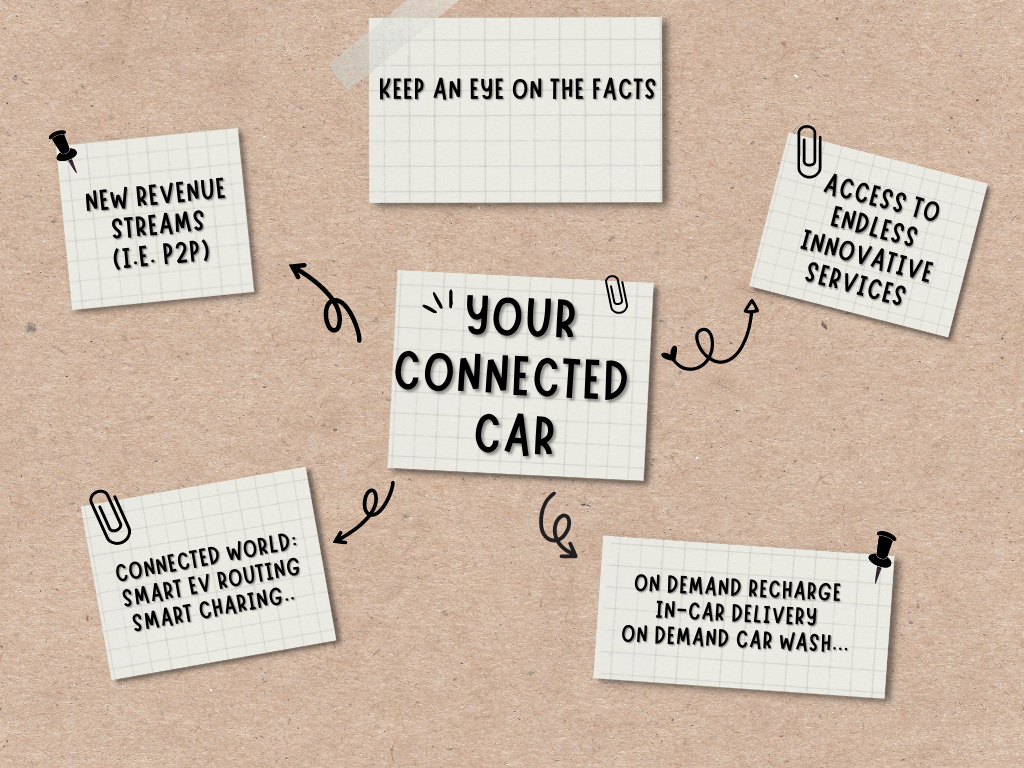
The use cases around connected vehicles and services are ever-expanding, to create a cluster of connected services that make the car a real operative center for users!
That’s only the start of something bigger, stay tuned to learn more about the connected revolution!
Digital Content and PR Specialist at 2hire
I love running and daydreaming losing count of the distance I’m covering, cooking (and especially eating) and Drake is my spirit guide.
Posted on January 12, 2023 by Benedetta Biggi
20 Jan 2023 | 3 min read
Connected services are the revolution in the automotive industry!
Classic car owners go to problems to meet their needs, due to a lack of time and resources. Fortunately, connected services solve this problem and give owners of connected vehicles several benefits.
Connected vehicles and connected services combo makes the driver’s life pretty much easier!.
Connected services are services delivered by a technologically-powered mechanism that offer the user a broad range of entertainment, communication, navigation, and maintenance functionalities.
For the last few years, car manufacturers and service providers have introduced more complex functionalities within the connected cars ecosystem, such as roadside assistance, e-charging or remote diagnostics, thereby improving customer services.
Connected services render the driver experience better by providing the latest cutting-edge services around connected cars.
For instance: the on-demand e-charging for E-vehicles, such as E-GAP or Reefilla is a type of connected service that fully meets the necessity of more electricity columns, which is one of the biggest advantages of on-demand e-charging.
We can collect the connected services advantages into three main groups:
A demonstration of the extremely positive impact of connected services consists of the constant predicted growth of cars endowed with connected services.
A Research by Maximisemarketresearch reports: “The Global In-vehicle Connected Services Market size is projected to reach US$ 85.25 Bn. by the end of 2027, at a CAGR of 16.1%.”
The following image reports the number of subscribers to auto-embedded telematics services worldwide in 2020, with a forecast for 2021 through 2026.

On-demand car washes don’t take place in a classic car wash building, but rather at the customer’s convenience, wherever and whenever they want.
Starting with the on-demand car wash and providing a real use case: Spiffy.
Spiffy is a car wash company, whose accessing services is effortless: book an appointment through an app, and the company comes to you with all they need and your car sparkles like a diamond!
Why should people choose an on-demand car wash instead of the standard one?
Surely, this kind of connected service allows you to save tons of time. You don’t have to worry, use a split moment in between to run to the car wash, the service comes to you at any time, without worrying about being there personally.
Different story but same feeling: What about when you have to receive a parcel, but you’re not at home? Here’s where it is delivered into your car!
We’re talking about the In-car delivery service around connected cars.
The mechanism of in-car delivery is extremely intuitive: delivery service providers gain access to the user car’s trunk to deliver a postal item (mostly e-commerce items) through a specific software that allows them to interact with the car during the delivery moment.
The receiver of the parcel will then receive a message with delivery confirmation.
This connected service saves time and offers an even greater flexibility compared to conventional home deliveries.
“Known as the ‘Airbnb of cars”, P2P Car Sharing sees private individuals (in jargon known as “Hosts”) as car providers, their owned cars being shared for users on P2P car sharing platforms.”
P2P car sharing is surely a connected service: The Host uses a specific fleet management platform for managing its activities and providing customized services to its clients.
This connected service provides many advantages, just focusing on the possibility to generate a further source of income for owners of one or more unused cars.
Without P2P car sharing they could not earn extra money, and they also could not provide a high tech and innovative experience for users of this kind of service.
Connected services are taking hold thanks to their potential in creating value through additional revenue streams, operating cost reduction, and improvements to safety and security.
OEMs tend to capitalize on all these types of value creation, putting their customer’s needs first. Meanwhile, they are acutely aware that the lifetime revenue for a given product will expand greatly by offering services beyond the point of sale.
Curious about how to boost your service around connected cars?
➡ Send an email at info@2hire.io to discover it!
 Benedetta Biggi
Digital Content and PR Specialist
I love running and daydreaming losing count of the distance I’m covering, cooking (and especially eating) and Drake is my spirit guide.
Posted on January 10, 2023 by Benedetta Biggi
21 Dec 2022 | 3 min read
“Intelligent Vehicles”, this is how Stellantis, the leading global automaker and mobility provider, defines connected cars.
Also Ford describes connected cars as “vehicles equipped with a modem and the ability to communicate and share information about the maintenance status, potential malfunctions and operational conditions”.
So, it’s intuitive that connected cars are connected to Internet.
Yet the connected car technology is far more than that: thanks to mobile data networks vehicles can have bi-directional communication with each other, but also with mobile devices and infrastructures.
Also, connected cars are able to generate data: OEMs, suppliers, insurers, mobility providers, fleet owners and many other parties that can benefit heavily from this vehicle data.
The connected car data represents actually an opportunity to monetize the data through different business models. The vehicle data is useful to elevate the consumer experience, offer new services or improve the vehicle’s performance.
Here are some of the applications of car data:
Becoming aware of the advantages that connected cars provide, Statista esteems that in 2020, around 48% of all new cars shipped that year had in-build connectivity. It is projected that by 2030, this share will double. In 2030, 96% of all new cars shipped worldwide are expected to be connected cars.

The Cadillacs hosted the earliest version of connected cars technology thanks to a dealer-installed device called “On star”, a connected car tech platform. It was firstly introduced by General Motors in 1996, and was one of the industry’s first built-in-telematics systems.
However, the most striking changes occurred at high speeds: BMW in 1980 integrated the on-board computer for Formula 1.
The innovative tool was able to transmit car data onto the box by ensuring connection between cars and the environment. This successful technology transfer made them the pioneers of the connected car series.
“Cars, trucks, buses, and other vehicles will be able to “talk” to each other with in-vehicle or aftermarket devices that continuously share important safety and mobility information with each other. Connected vehicles can also use wireless communication to “talk” to traffic signals, work zones, toll booths, school zones, and other types of infrastructure.” – The US Department of Trasportation
The acronyms V2V, V2U, V2I and V2X identify the several applications of connectivity.
Starting from the Vehicle to Vehicle communication: its functionalities include Turn Assist, which warns drivers not to turn in front of oncoming traffic, and Intersection Movement Assist, which warns drivers not to enter an intersection because the probability of colliding with another vehicle is high. When combined, Turn Assist and Intersection Movement Assist prevent up to 600,000 crashes per year, according to the US Department of Transport.
Vehicle to User communication allows sharing owners to monitor their fleets, but also let his customers have access to specific vehicles and leave them whenever they want.
Vehicle to Infrastructures sensors are able to capture infrastructure data and provide travelers alerts about such things as construction zones, parking availability, traffic, and road conditions. Traffic management supervision systems adjust traffic signal phases and timing, aswell as speed limits based on vehicle data in order to optimize fuel economy and traffic flow.
Vehicle to X, stays for “vehicle to everything”: it express the variety of interfaces which connected cars are able to communicate with, such as other vehicles, pedestrians and transport infrastructures. Using this technology, cars can detect other vehicles’ intentions, warn pedestrians before crossing the road, and learn and react to problems ahead.
C-V2X, or cellular “vehicle-to-everything technology”, has been a key announcement at CES 2019, with companies describing how it will reduce traffic congestion and reduce road deaths and injuries.
V2X communication underlines the improvements of technology which leads to a huge benefit growth both for people and for the environment, not surprisingly according to a recent report from Statista:
The market for vehicle-to-everything (V2X) technologies in vehicles is expected to grow to around six billion U.S. dollars by 2025.
Due to their ancillary functionalities, connected vehicles will certainly dominate the automotive sector in the coming years. However, they can communicate with all types of entities. Users will be able to extract the information and data they are most interested in, and will have a much greater mastery of their vehicles than in the past.
Sales and Marketing Associate at 2hire
I love running and daydreaming losing count of the distance I’m covering, cooking (and especially eating) and Drake is my spirit guide.
Posted on December 21, 2022 by Benedetta Biggi
16 Jan 2023 | 4 min read
When the pandemic landed in our lives, it changed many things. This is a well-known fact.
What you (maybe) don’t know is what has changed in the automotive market since the pandemic. Here are a couple of cornerstones for you:
The cost increase came in when the car’s quality upgrade started. That’s something that has been simmering in the pot for some time and is now peaking since the dawn of the Internet of Things.
How? With connected cars.
According to the carmaker Hyundai Motor Group: “The simple-looking term (connected car) actually refers to a wide range of technologies and services. Cars are now connected to wireless networks and have become ‘mobile computers’. They are not just a means of transportation anymore, but rather a gateway to leading a super-connected intelligent lifestyle.
Data at hand, the globally connected car market has grown exponentially in recent years. The value of this market in 2021 was over $23.6 billion. By 2026 however, according to a report by MarketsandMarkets it is expected to grow to over $56 billion. That is staggering growth, highlighting how many more vehicle manufacturers are adopting connectivity in their models.
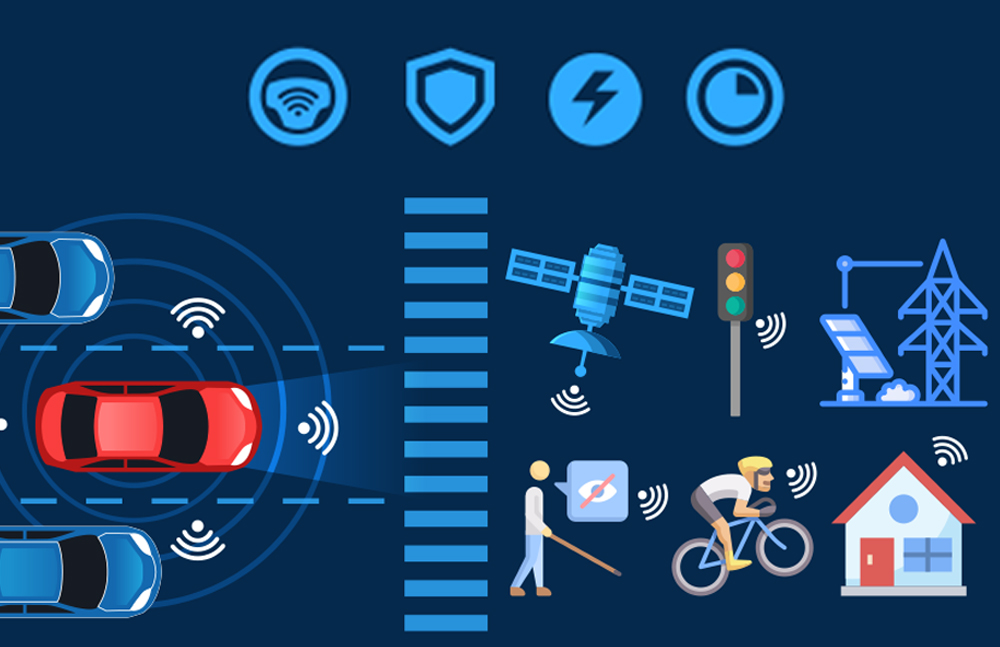
It is the basin that embodies the entire communication system of the car. Connected cars add a whole big compound of comfort when it comes to the state of the art digital experiences.
According to Siemens, V2X refers to an intelligent transport system where all vehicles and infrastructure systems are interconnected with each other.
Advanced connectivity will provide higher quality traffic knowledge across the entire road network, leading to further relevant innovations such as building new services around connectivity, cutting accident numbers, minimizing emissions, and optimizing traffic.
💡 V2X encloses several use cases. Today we’re speaking about V2V and V2U.
Vehicle communication (V2V) exploits the ability to wirelessly exchange information on the speed and position of surrounding vehicles and holds great promise for avoiding accidents, easing traffic congestion, and improving the surrounding environment.
There is only one way in which V2V can fully work: vehicles must all be connected and be able to speak a universal language with each other.
The term refers to vehicle communication with the occupants and driver. It’s all about infotainment and a fully personalized travel experience.
The user experience is the focus of interest of OEMs who are no longer aiming at the quantity of production but the quality of production. The creation of a vehicle designed to be a home, an office, a foothold, no longer a mere means of transport but an extension of the human experience.
Car connectivity is the burning pivot that fuels this digital experience 🔥🚙📶

In this connected world, when it comes to mobility, everything that is an innovative experience revolves around connected vehicles. But as of now, although the connected car ecosystem market predicts that by 2030, 95% of new cars will be connected.
OEMs are intensifying their work around vehicle connectivity either by acquiring, creating or looking for companies to improve vehicle software (e.g. Volkswagen’s software company, Cariad, with the aim of building a unified technology and software platform for all Volkswagen brands) or directly by intensifying the production of natively connected cars.
On the other hand, all the non-connected cars already on the market can become so via aftermarket devices.
We speak of connected cars when they are born with embedded connectivity provided by car manufacturers.
Non-connected cars, in turn, can become so aftermarket, through the installation of an IoT device that gives access to an infinite carousel of benefits.
It acts as an Internet of Things hub that sends data to a cloud service, where it can be processed and made accessible to the vehicle owner or fleet manager.
The evolution of the car is definitely evident. It has gone from being considered a simple fabrication to carry people from A to B, to now where it is still like that, but sends data that can be used in a multitude of ways and can lead to a more progressive view of the car.
The future still holds much in store around the connectivity of vehicles, which will soon become true service clusters.

Digital Content and PR Specialist at 2hire
I love running and daydreaming losing count of the distance I’m covering, cooking (and especially eating) and Drake is my spirit guide.
Posted on December 6, 2022 by Benedetta Biggi

Rome, Italy, 6 December 2022.
2hire, leading technology company in digital mobility solutions, provides the French sharing operator e-DOG with its End-to-End solution to manage its moped sharing service in a smooth, streamlined and high-tech way.
For 2hire, working with such a tech-driven operator is an excellent opportunity to exploit its technology to the utmost potential.
The launch of the free-floating service in Bordeaux is the start of a path that sees on the one hand an optimized and digitized management of the French sharing, and on the other hand the provision of a complete technological solution, allowing e-DOG to have full control of the fleet in a seamless and straightforward way.
“I am thrilled that 2hire is the technology provider of the e-DOG sharing service.
I believe that our collaboration with these first 100 mopeds is only the beginning of a fast-growing journey. The goal is to make urban mobility accessible, easy, and immediate for all users.
Can’t wait to see how this project will evolve further on! ”
“We are incredibly thankful for all the cooperation and the work done with 2hire as our digital technology provider and we wish to carry on in the future with them in order to provide the best user design and experience application to all our customers.
Our vision is to provide urban mobility accessible, easy, and immediate for all users and 2hire digital solution is a key partner to achieve it. ”
2hire enables mobility operators and service providers to harness the built-in technology of connected vehicles, digitize the user experience, and provide the newest value-added services around.
Adapter is 2hire standardized API layer that makes it all possible. Adapter is the ultimate layer to communicate with all vehicles and build digital services around them.
Since 2017, 2hire has connected more than 15k vehicles in 16 countries worldwide. 2hire collaborates with leading vehicle manufacturers and mobility operators to exploit the full potential of connected vehicles and bring up innovative services around vehicles’ connectivity.

We are 100% Bordeaux: e-DOG is a company born in Bordeaux from the desire to offer a tailor-made and local service. Our service is 100% local and we are proud of it.
Ethics: e-DOG belongs to its employees who make daily decisions and put people back at the center and at the heart of our business concerns.
Environmentally friendly: e-DOG is committed to working with short supply chains in partnership with circular economy players and using materials and ecological products that respect people and their environment.
Posted on December 5, 2022 by Benedetta Biggi
15 Nov 2022 | 5 min read
“Most privately owned vehicles sit idle more than 90% of the time” – P2P Car sharing Market Analysis by Robert C. Hampshire and Craig Gaites
The solution to monetise all this time? Peer to Peer car sharing.
In one year, a private car sits idle 328.5 days. Yes, we know, this made you blink.
Let’s take a step back and explain what Peer to Peer Car Sharing (P2P) is.
Known as the ‘AirBnB of cars’, P2P Car Sharing sees private individuals (in jargon known as “Hosts”) as car providers, their owned cars being shared for users on P2P car sharing companies. So, when a user signs up to the platform, he/she searches for an available car at a convenient place and date, and books it from a private party in exchange for money, which is controlled and tracked through the P2P car sharing platform.
For the guest, co-protagonist of this market, P2P car sharing is an alternative to the more traditional car rental, which implies considerable cost savings. As reported in the previous article on Car Rentals and the episode on the microchip crisis, the rental market is experiencing a drastic downturn in the availability of cars. This is causing rental prices to rise exponentially, while P2P car sharing is gaining ground.
Just as some rentals do, peer to peer car sharing also allows the guest to choose the car model. While only some rentals do it for a higher rate (conventionally they guarantee the category/segment and not the specific model), for P2P car sharing it is a granted option.
Each car shared removes between 4.6 and 20 private cars on the road. In addition to the removal of unused private cars, P2P car sharing wants to provide a scalable carsharing solution that addresses both the high costs of private vehicle ownership and the reduction of greenhouse gas emissions.
👉🏾 Turo (US, Canada, and UK) – The world largest P2P car sharing marketplace widely spread around US and Canada (500k cars approx.) and a good presence also in the UK, mostly around London (7k cars listed). In the EU scenario, they also recently acquired the French P2P car sharing platform Ouicar which counts approximately 30.000 vehicles listed on the platform.
👉🏾 Getaround (US, EU, and UK) – European P2P car sharing company counting around 20k vehicles listed in the platform and more than 5M users.
👉🏾 GoMore (Denmark) – The Danish P2P car sharing is currently present in 6 markets around Europe: Denmark, Sweden, Finalndia, Spain (Amovens), Austria, and Switzerland.
👉🏾 Snappcar (NL) – Dutch P2P car sharing with currently 12k cars on the platform.
👉🏾 Hiyacar (UK) – A 100k members P2P car sharing company operating throughout UK.
👉🏾Auting (IT) – The P2P car sharing player in the Italian market.
Before the pandemic hit, car sharing mainly covered journeys in the evening and on the weekend for leisure, daily short trips mainly.
After the pandemic, nearly 60% of people started to avoid non mandatory travel and stayed home. People who don’t have a private vehicle, usually opt for alternative mobility means to avoid mass public transportation, and here is where the use and potential of vehicle sharing is exploited to the fullest.
One of PWC recent surveys on 1000 consumers recorded that, in 2019, 72% of people indicated a radical shift towards sharing mobility. With the advent of the global pandemic, the economy suffered a drastic drop, and digital channels kept being more important every day to overcome this descent.
“Consumers in shared mobility are prioritizing health and preventive measures rather than monetary offers”.
Vinod & Sharma stated in a survey on Covid-19 impact on the sharing economy pre and post pandemic that, before the pandemic, the major demand in mobility services was revolving around discounts offerings and cheaper rates.
While after the pandemic, has been noted a radical rise in other parameters such as cleanliness, safety, and propensity for more immediate processes to avoid contacts.
In the survey of 115 people, 88 of them (more than 75%), were more likely to use sharing mobility if their needs are taken care of in the right way. This is the need in which digital innovations must take root to bring about the change that everyone needs. The modern user wants convenience and security rather than the cheapest price for a more uncomfortable condition.
Statista depicts a projection graph on the increase of vehicles in the P2P car sharing platforms from 2015 to 2025. Period encompassing the pre and post-pandemic, noting how, over the next 3 years, forecasts predict about 1M vehicles listed on the various platforms.
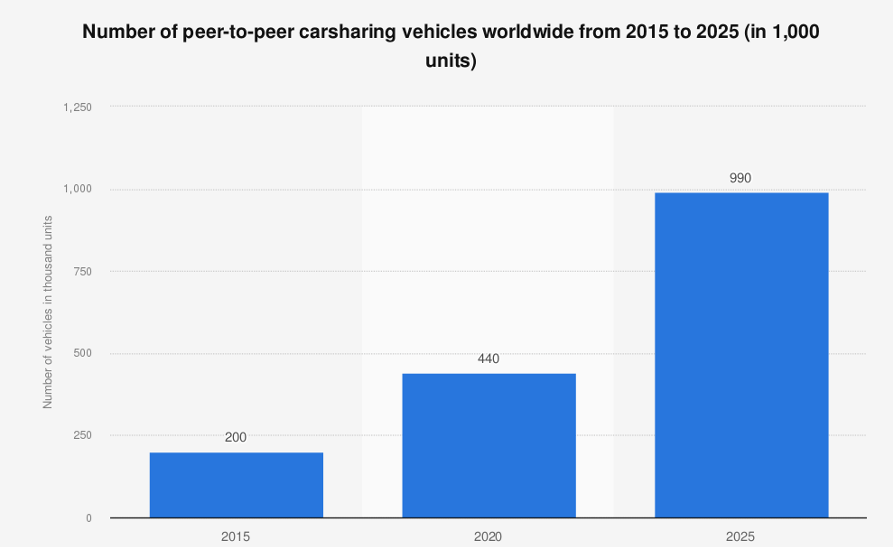
“Turo’s main selling point is convenience.”
The sheer convenience and immediacy of P2P car sharing has grown tremendously during the pandemic. In fact, sales skyrocketed, tripling in the first nine months of 2021 to almost $350M.
Starting from one of the most appealing aspects of P2P car sharing, hence convenience, we can identify some aspects that make the P2P car sharing market so innovative and enticing for the modern user.
1) Switch of experience 🆕🚙
The lack of vehicles available on the market from large rental companies has caused users to veer towards alternative solutions. The component crisis, which is severely hampering the availability of cars, is one of the factors why users have started to explore alternative options to classic car rental.
Hence, the desire to navigate a completely new, innovative rental experience, sparking curiosity in the user’s mind.
2) Good value for money 💰
Both owning and renting a car has become way more costly due to the hard meagre availability of vehicles, soaring prices of fuel, parking, and insurance expenses… (and many more, unfortunately!)
This is where P2P car sharing pops up.
Users can have a car at disposal, quickly, and hassle-free. Renting is the only price they have to take care of when it comes to renting a car on P2P car sharing platforms.
According to Turo, Peer to Peer car sharing clients can save about 30% compared to a traditional car rental.
The Ascent carried out a comparative analysis on car rental prices in LA from 10 to 18 July 2021.
The cheapest option from Enterprise Rent a Car was $785.01 for an average size vehicle, unlimited mileage, and pick up and drop off at LAX airport.
While on the Turo platform, same dates and unlimited mileage, a 2019 Toyota Corolla cost $320, with pick up and drop off in a nearby area of downtown LA.
The saving was indisputable: $450. Not bad, right?
The current challenges in the car market and the crisis that is affecting car rentals are crucial aspects when choosing a rental experience. P2P car sharing sees an opportunity to leverage cheaper prices and the ease of a time-saving and worry-free experience. (This connects us to the third benefit of P2P car sharing that we will discuss: the contactless experience).
3) The contactless experience 🔓
The effects that covid left in society do not only concern economic woes, but also social ones.
We live in a time when people try hard to avoid overcrowded places, means of transport where everyone is crammed in like sardines, or long waiting queues to rent a car.
While car rentals still struggle to adopt it and understand its incredible potential and benefit, Peer to Peer car sharing immediately provided the opportunity for a contactless rental experience.
Just think about Turo, they offer the possibility of keyless and contactless solutions in one host’s fleet of vehicles, at its discretion. Thus, the idea of being able to rent and monetize one’s idle cars 24/7 is no longer a pipe dream, but a possible reality.
The benefit would come from both sides:
For hosts, in managing rentals anywhere, regardless of whether it is relaxing at home in Isle of Dogs or in Paris sipping a coffee looking at the Seine.
For guests, in the speed and peacefulness of the rental. Without worries about long waiting times and overcrowded front desks to collect the car keys, these will be inside the glove box of the vehicle, which will be easily accessed via smartphone.
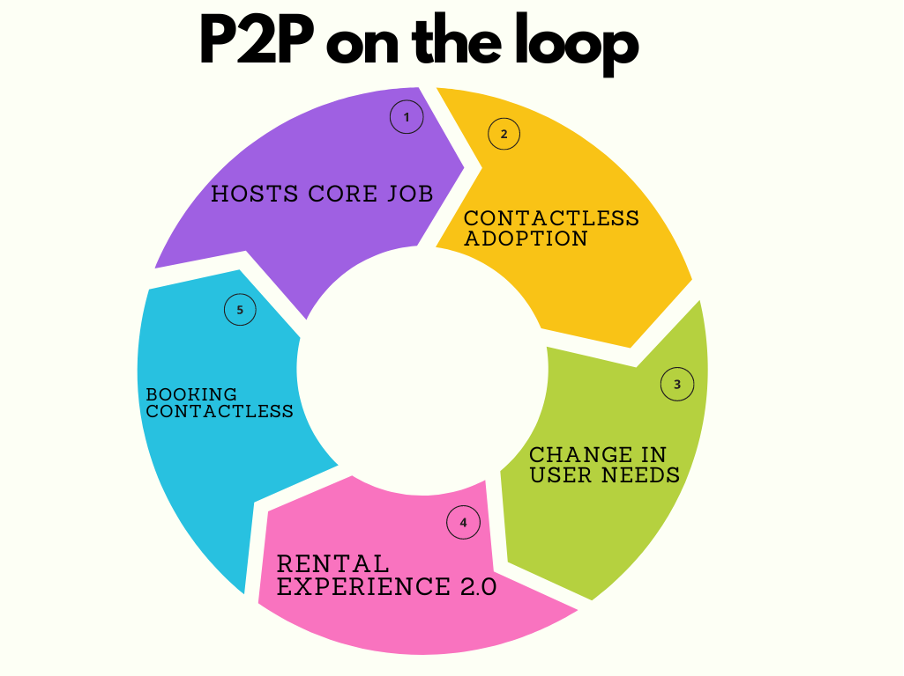
Let’s focus on the Host side for a sec.
Just as the guest seeks the smoothest experience, so the host equally wants to optimize its time in the best possible way. Private cars sit idle for 328.5 days out of 365, hosts’ ultimate goal is to not miss the opportunity to make those stagnant days pay off.
Very often the platform-listed vehicles are a side business for the hosts, who have another regular job in their daily lives, to which they add P2P car sharing.
This is just one of the ideal use cases for the adoption of a keyless solution.
The circular approach swirling around P2P car sharing is disrupting the industry in a way that benefits renters and vehicle owners at the same time.
Peer to peer car sharing is also a way of contributing towards sustainable travel networks, making better use of existing cars, which on average sit idle 96% of the time.
The current benefits and future developments around the Peer to Peer car sharing market are plentiful and proves that it is not a pass-by trend but a market that is here to stay.
Sales and Marketing Associate at 2hire
I love running and daydreaming losing count of the distance I’m covering, cooking (and especially eating) and Drake is my spirit guide.
Posted on September 22, 2022 by Benedetta Biggi
30 Sep 2022 | 4 min read
Hiya everyone!!
I’m Alessandro Gallo and I have been working as a Backend Developer in 2hire since June 2020. I have lived in Rome since 2015 while studying computer engineering.
I started working quite early, in 2017, before graduating with my bachelor’s degree, and was eager to put into practice everything I studied and assimilated during my years of learning, and apply it in a real work context.
My first job was in a consultancy company, I had the idea of gradually tackling a series of different projects. It was certainly an experience that both formed and taught me a lot, but in 3 years I only managed to work for one client in the telco market… Too dull for a professional career that just started.
Even with my previous employment I was used to remote working, I never experienced office life, I did not live the daily activities, spend time with colleagues, or enjoy face-to-face interaction. But then…
I went through a waiting period, typical of any young person looking for a new job. I was jumping from interview to interview in search of something that struck me, that would set off a spark… but nothing caught my attention, and I certainly didn’t want to settle.
Of course, I should specify that it was also early 2020, and as you can imagine, switching jobs during a pandemic is not an easy process!
After about 10 different interviews, a recruiting company called me to propose a fresh new opportunity in a startup (yep, that was 2hire!).
It always fascinated me to participate in the early stages of building a company, to help shape something new is exciting for me. So I gladly agreed to participate in the interview.
The recruiting process went smoothly, the technical interview part was challenging and fun at the same time, which rarely happens to me: usually, I am quite nervous during interviews.
Due to this positive impact on the process carried out by 2hire, it did not take long for my current team leader Angelo Di Pilla to convince me to join the 2hire team.
My first impression of the 2hire values (both the company one and the devs team I am part of) and the experience I gathered from them was very good. I immediately felt an active part of the company, happy to have started this new journey.

I joined in June 2020, hoping that the pandemic situation in Italy would be better so that I could start in the office and bond with the team. The first few days in the office flew by, I was barraged with a thousand pieces of information about the team, the products, and the methodology.
❓Did you know that 2hire has a corporate Wiki❓📚
It is the company encyclopedia, containing details of 2hire’s history, who is part of it, the ecosystem of services it offers, and of course who uses it… our customers!
Let’s just say that to understand what environment you have landed in, the wiki is what you need!
After understanding my surroundings (shout out to the 2hire team for the fireball of information when I was the new kid on the block!) I immediately started helping the technical team develop new features for our technology.
In October 2020, the pandemic worsened again, so I kindly asked to start working from home until I felt safe being with others.
During the first lockdown, I had to stay alone in my house in Rome, that’s when remote working started to be part of my experience in 2hire. I was stuck and could not reach my parents in Foggia, my hometown. That’s why I made the decision to switch to remote working before it was too late again and I risked being stuck once again. It was during the pandemic that I discovered some of the health problems that make me more vulnerable to the after-effects of Covid-19.
Knowing all this, I decided to make remote working both an asset and an opportunity to work even better.
Remote working in 2hire certainly doesn’t mean being alone or not being involved in the company news and the team dynamics… Actually, way far from this!
From day one, we have been using a range of tools to keep in touch: from Discord for team voice chats, which is useful for co-operating on a task, to Zoom for team meetings, retrospectives, and gatherings with the rest of the 2hire team.
Oh, of course, let’s not forget the recent introduction of code-sharing tools, which have exponentially improved our productivity during pair programming sessions📈
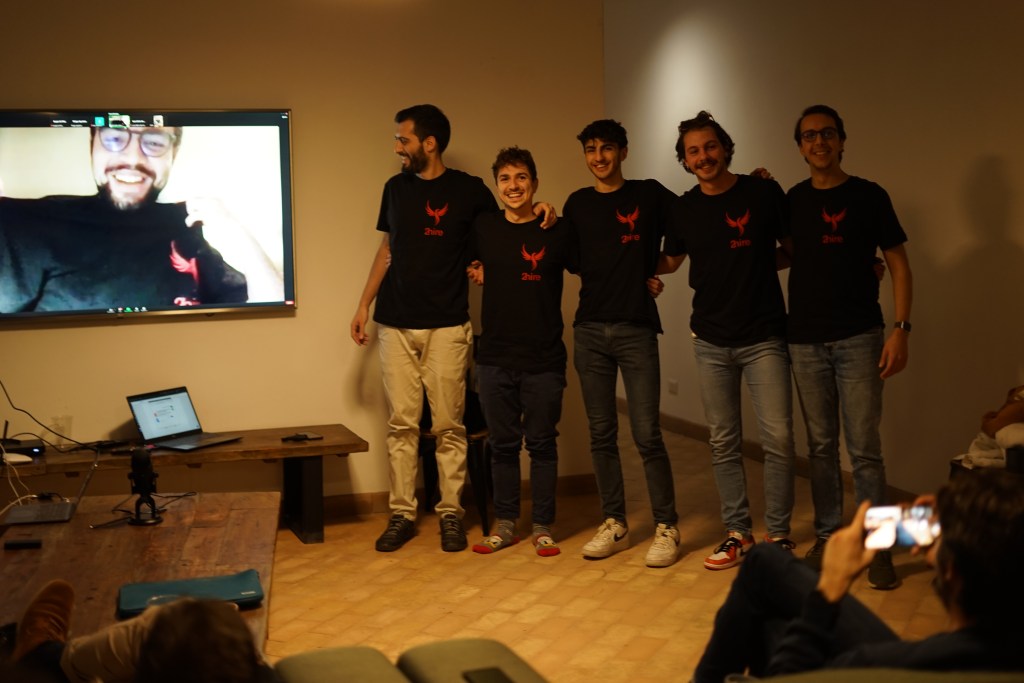
Do you remember the company news I mentioned earlier? 📢
Every Monday morning we can’t miss the traditional meeting with the whole company, where we share the important news of the previous week, the highlights of the current week, and also fun moments where we can chat freely about any topic.
So many little things that make a difference, zeroing in on the feeling of distance from the guys in the office.
I am honestly impressed by how much my productivity improved since I am working fully remotely.
Time optimization is one of the core benefits I noticed when switching to the remote worker’s life. Things like traveling to the office by public transportation made me lose a lot of time during the day. I used to live a bit far away from the 2hire office, so I always had to calculate time efficiently (transport disruptions included), to arrive on time.
📑 Time investment made everything better ✅
When I switched to remote working, I started spending the gained time studying and getting better with the technologies we used to deal with in 2hire.
I was also able to use my spare time better: instead of moving around the city by public transport to reach my apartment, I focused on a side project that I always postponed because of the obvious lack of time and also the necessary knowledge required.
I have always been into mobile apps, they are the reason I first got interested in IT and became a developer.
My other passion is cooking (and eating… of course😋). That’s why I decided to invest my spare time in developing a mobile app called FoodStamps. FoodStamps addresses the problem of food waste at home to inspire people on how to correctly use ingredients, cook recipes without any leftovers, and how to organize purchases to avoid excessive stocks.
I am very grateful for the opportunity I had, I don’t think I would have been able to achieve this without the time optimization by working remotely.
Of course, there are always two sides of a coin. I can’t always be in the office when celebrations take place (but still the Zoom link to be there virtually never fails!), nevertheless, the company retreats make up for some of these shortcomings.
Having the opportunity to spend multiple days together, between workshops and leisure activities, helps you feel constantly part of something beautiful, innovative, and inclusive, and yes, I can say that I found all of this by joining 2hire.


Backend Developer at 2hire
I like playing basketball, video games, and reading about new technologies. I also love to develop personal projects in my free time to acquire new skills in the IT world.
Posted on August 25, 2022 by Benedetta Biggi
1 Sept 2022 | 4 min read
It’s a well known fact that the car rental industry is booming. A prediction is that the market will grow from €50.34 billion in 2020 to €137.21 billion in 2027 at a CAGR of 6.7%!
This growth is due, in part, to the increasing popularity of contactless and keyless technologies. These technologies are making it easier for people to get around, since 82% of customers affirm that the availability of contactless experience from businesses is important and easy to use.
This means that customers will be able to rent cars without exchanging keys before or contact the rental company directly, tapping into the need for convenience and time-saving solutions that is drawing customers to keyless rentals over traditional ownership.
Implementing a contactless and keyless strategy within your car rental business can help you improve customer satisfaction and operational efficiency, digitalisation is the latest innovation to give a boost to your rental business!
A recent study by KPMG found that, just in the US, the number of vehicle miles traveled (VMT) dropped by 64% in 2020, the first time this number has dropped in 30 years. This sudden drop in VMT is driven by a variety of factors, including the COVID-19 pandemic and the resultant change to working from home that many across the globe have gotten used to.
With people working from home and avoiding public transportation, there’s simply less need for cars.
It works out that in EU and UK between 2021 and 2022 car purchase and ownership dropped to a level of 11.7 million, about 25% less than in the previous year and the lowest number since 2001. Also, with the Covid recovery, rentals began to have serious difficulties in supplying vehicles, due to the severe microchip crisis that brought production to a standstill.
Going into 2022, both new and used vehicle price indices were at an all-time high. Coupled with the rising price of gasoline, it’s no wonder people are reconsidering buying and owning a car, and that rental companies had to raise the rental prices because of the trouble in finding vehicles.
Car production is also an issue, with supply lines critically compromised by the impact of the pandemic. Many manufacturers have run into significant difficulties sourcing parts from suppliers for their most profitable models. These supply chain issues, combined with the rocketing cost of freight shipping have only added to the rising cost of car ownership.
The current situation has made it clear that the traditional model of car ownership is gradually becoming untenable. People are increasingly turning to alternative methods of transportation, something that won’t waste too much of their time and will make travel simple, comfortable, and less time consuming as possible, like digitized rental.
As we pointed out at the beginning of this article, the car rental industry is expected to grow rapidly out to 2027. However, in order to take advantage of this growth, the traditional car rental business is not enough.
The first step is to slowly restore the heavy losses incurred since the beginning of 2020. Evidence shows that two thirds of Avis rentals at airports have closed and Europcar has decreased its 2020 revenues by 42%, and these are just a few numbers!
When tourism started to heal in 2021, prices for renting a car skyrocketed. But, why?
💡 The graph below shows the sharp increase in car rental prices in the pre- and post-pandemic summer:
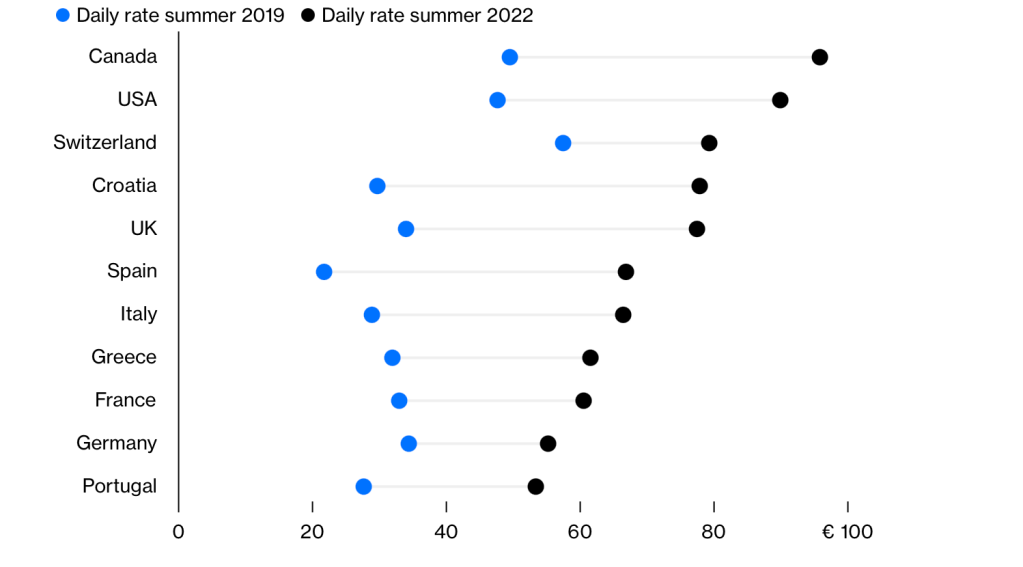
Halfway through 2022, some car rental companies still don’t have enough cars for the huge demand coming from the post-covid recovery.
Not only is there high demand, but the needs of users have changed too. People after Covid have started to adopt more preventive measures, avoiding overly close contacts or queuing in overcrowded places. Car rental front desks at airports, for example, are the perfect picture of what the user of 2022 wants to avoid.
Here is where the alternative option arises.
Keyless rentals are the turning point to slowly heal this situation and start giving users what they want. A seamless, peace of mind, and fast renting experience.
Many car rental services have ended up with big financial losses also because they provide an out-of-date experience. Long and cumbersome waiting times, clogged front desks in high season, and little organization for user needs.
According to XM Institute’s annual net promoter score benchmark study, the car rental industry’s average customer net promoter score is 5 (out of a maximum of 100). Definitely not enviable.
The opportunity for car rental operators must grow on the innovation side, adopting innovative business models and offering a connected and keyless rental model to tackle outdated ones.
Established industry giants, such as Enterprise Rent-A-Car, The Hertz Corporation, Sixt SE, Europcar, and Avis Budget Group have already launched car rental apps in an effort to keep up with the competition and better meet customer needs.
In order to adequately meet the ever-changing needs of the modern consumer, the call for connectivity of car rental fleets and the digitisation of the car rental process are essentials for this quality leap.
Connected cars have greatly helped consolidate the car rental business, enabling service providers to track fleet usage and manage maintenance while also improving customer experience.
The core focus is that to compete in today’s market, car rental operators need to innovate. Innovation in the sense of adopting a contactless and keyless strategy in a car rental business comes with several benefits.
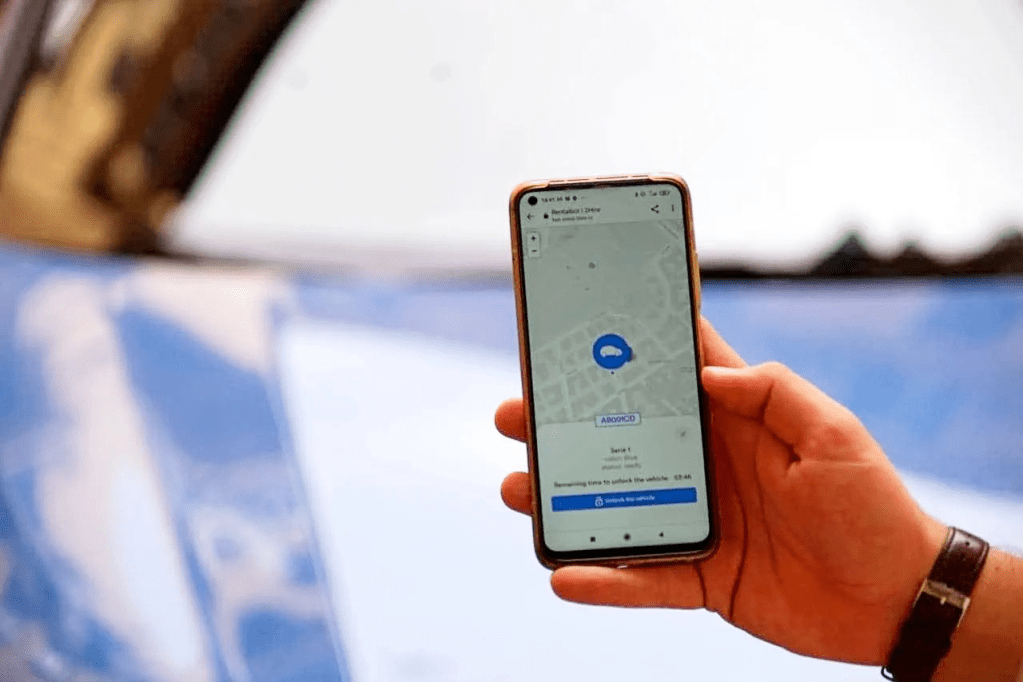
The hard blow of Covid has left scars which need to heal slowly. Tourism and business travel are getting back on track and the car rental industry is directly affected by this.
People’s habits have changed, and to heal these wounds and provide a new user experience, investing in technology and innovation is the way to go.
Sales and Marketing Associate at 2hire
I love running and daydreaming losing count of the distance I’m covering, cooking (and especially eating) and Drake is my spirit guide.
Posted on August 25, 2022 by Benedetta Biggi
26 Aug 2022 | 3 min read
The societal shift after Covid-19 and people’s change of habits made the 9-18 office-based model less and less common, with more people working in far more flexible ways.
This doesn’t mean that we have to give up the social and collaborative aspects of working in an office. Coworking spaces are becoming increasingly popular as a way to bring these benefits into our lives, without having to stick with the regular full-time office job.
This is a new trend that emerged in recent years, revolutionizing the way of thinking about work as a static, sedentary thing. It gives everyone who wants to broaden their horizons and see different contexts the chance to do their job as if they were in an office… except for the fact that in these offices you find different people all the time, from all over the world!
While the primary driver of the rise in the use of coworking space is undoubtedly the Covid-19 pandemic, there are other factors at play.
A study by Deskmag found that the number one reason people use coworking spaces is to meet other like-minded people and work in a social environment. This was closely followed by the need for a more flexible working environment, the desire to escape distractions at home, and the willingness to see different ambients.
The office is the pivot in the life of all workers (full remote excepted). Having a ‘headquarters’ where everything is created and developed is part of the process, but the watertight concept of the office has now vanished.
Coworking spaces offer a happy medium – they provide the flexibility of homeworking with the social interaction of an office environment. And for freelancers or remote workers, they can provide a much-needed sense of community. Not to forget that they also offer the possibility of an international experience. An innovative and well-stocked base with the advantage of being located (almost) anywhere in the world!
Currently, the coworking space market in 2022 is worth $16.17 billion, but this is expected to rapidly spike as the prediction shows the number of coworking spaces increasing from 40,000 by 2024, compared to just 18,000 in 2019. By 2026, the coworking space industry is expected to reach a value of $30.36 billion.
The flexible workspace market will represent 30% of office stock in the U.S alone, catering to more than 5.1 million workers.

There are a few key reasons for the coworking space phenomena:
The coworking market is growing exponentially, with new players entering the market all the time. Some of the key players in the coworking space market include:
Coworking spaces are re-imagining work by providing an alternative to the traditional full-time office. Coworking spaces offer a more flexible and collaborative environment that can be tailored to fit everyone’s needs, making the working environment positive and productive, wherever an employee is.
Coworking spaces are here to stay, and they’re only going to become more popular as the workplace paradigm continues to evolve.

At 2hire innovation is at the root of everything we do.
We don’t just go for a no if something is out of our comfort zone. We have opened 2hire doors and have a multi-located team that can work and is productive everywhere.
Luiss Enlabs, the accelerator we joined during our early stages, has also been the first coworking experience for us in this sense.
Since our acceleration program there, the relationship with the organization has always been pretty active. Many times we have found ourselves with part of the team dislocated, in Milan for example there is an EnLabs office that 2hire guys use as a workspace when they are in the city and need to keep operational, the ideal space to reconcile concentration and comfort.
Shout out to Luiss EnLabs for providing us with a coworking space when we are around Milan, allowing us to keep on working when we need a solid base!
Sales and Marketing Associate at 2hire
I love running and daydreaming losing count of the distance I’m covering, cooking (and especially eating) and Drake is my spirit guide.
Posted on August 24, 2022 by Benedetta Biggi
15 Sep 2022 | 4 min read
E-Motion is a moped sharing service based in Cosenza.
2hire provides e-Motion its End to End sharing product plus the connectivity needed to integrate their vehicles.
Nowadays, they can count on a fleet of 20+ mopeds Supersoco CUx, but they intend to extend their fleet with more vehicles from Supersoco and NIU.
After a speedy onboarding, E-motion launched its sharing service during the pandemic.
Despite the tricky historical period and the problems due to covid-19, thanks to the presence of the UniCal University, and the dynamic and mobility-oriented context of Cosenza, E-motion achieved excellent results.
Currently, E-motion exceeds 4.8k registered users who rode for about 38k trips. But now let’s move on to the innovators of urban mobility in Cosenza:

Massimiliano: I studied law in parallel with my work as a basketball coach. A completely different background from the one I am now involved in, I must say. I have always been fascinated by new mobility and innovation, so I decided to try my hand at mobility with my brother Valerio.
Valerio: I studied mechanical engineering, and like Massimiliano in parallel I also worked in a basketball team. During my studies I fell in love with the world of motors and recent developments in electric mobility, and now here we are!
Massimiliano: Although Cosenza is a small city, I was keen to solve the problem of traffic jams, gridlocks and lack of public transport. From there, the e-Motion service was born.
Valerio: My goal in launching a sharing service was to cut down on pollution as much as possible. If thousands of citizens start approaching new forms of electric mobility, they can make a real difference from an environmental point of view. Especially in the tragic climate situation we are currently in!
No. In a sense, we underestimate the effort of taking care of a sharing service. It has really changed our lifestyle, especially in terms of service hours. Just to give an example: having a 24/7 service means having to deal with requests and operations until late at night… every day!
Due to the lack of public transport in Cosenza, our rush hour is from 23.30 to 05.00 in the morning. This means waking up in the middle of the night to respond to customers’ requests, not one of the easiest managements without a doubt!
Mainly because of the lay of the land. Cosenza is located in a hilly area and kick scooters would not have been the most suitable and convenient option.
Our goal is to connect the suburbs and the university with the city centre. This means rides of about 5/10 km with many ups and downs, mopeds are perfect for this!
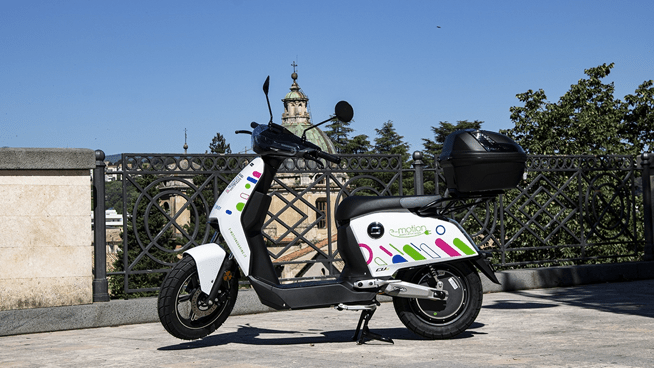
We started thinking about an innovative mobility service in 2019. Over time we contacted numerous providers and changed our project several times, without ever finding the right solution for us. Something that offered the right blend and balance of flexibility and efficiency. Until we stumbled upon 2hire….
2hire, in the person of COO and co-founder Elisabetta, was always willing to discuss, suggest and follow our path. Another point in Elisabetta’s favor is that she never put any pressure on us. And when we chose Supersoco as our vehicles’ supplier, they suggested 2hire as the right technology provider.
It was almost an ideal scenario for us!
We have three main objectives:
❶ To expand our fleet.
❷ With the addition of new vehicles and the expansion of our fleet, we will be able to ensure adequate density to broaden our operational area to more suburban areas.
❸ Finally, we are considering opening new branches, perhaps with a franchise business model. As a side project, we are starting to think about expanding our service with e-bikes!
So…watch out!!
Massimiliano: One evening out of many, the phone rings at 11.30pm.
I pick it up and a voice says: “Hello, I left my vehicle under my house this afternoon with 38% remaining battery. No one took it and now the battery level is 100%. How is this possible?”.
This is just one of the odd questions asked by our customers. There is a lot of cluelessness about electric micromobility, people still don’t really know the dynamics, let alone the benefits. Only a few people know that the battery of a moped can be charged directly from a socket!
Valerio: We were running operations in Rende, in the University area. A group of students came up to us and said lovely words: ‘Thank you for your work. Since the university area is connected with a mobility service, everything is easier and more pleasant for us students’.
It was very touching.
There are about 5,000 students in Rende and after 11.30 p.m. public transport stops, getting around is almost impossible. E-motion is the only way for them to get to the city comfortably and quickly and have fun without stressing about how to commute!
This is our goal: to create a new mobility for our city 🛵💨
Sorry… attorney-client privilege!
Ahahahah, no, all jokes aside. We have hired a Social Media Manager to manage our Instagram page. She is completely autonomous, very creative and so far she is doing a fantastic job! Maybe our profile is so beautiful just because of the autonomy she has in handling it!!!
YES! If it were possible, with fewer mistakes along the way, of course.
It has been, and still is, a long journey but we are satisfied with our work and the achievements of E-motion.
What makes the difference for us is taking note of the mistakes and using them as we go along to improve.
Massimiliano: Well, overall I’m happy with it. It’s a unique experience! Valerio only has one problem… He can’t wake up early in the morning, it’s stronger than him!
Valerio: Okay, that’s true…. But I stay up later in the evening than you! Ahahah
Joking apart, I must admit that we work very well together. We don’t really argue, as we always work closely together, we figured out how to solve problems as a real team.
Massimiliano: I agree. If I could go back I would not change partners. I would still choose to work with my brother!

Customer Success Specialist at 2hire
I think that the most accurate adjective which describes me is: curious. My curiosity brings me to define my primary interest: reading. Read entails a contemplative state of mind.
Posted on August 8, 2022 by Benedetta Biggi
05 Sep 2022 | 3 min read
“The multiple launches of e-bike services reveal that the shared micromobility market is maturing.” – Fluctuo
Cities around the world are seeing a shift in the way people are getting around. With the covid-19 recovery, e-bikes sales in Europe and US reached the highest peak ever recorded. E-bike sharing is becoming more and more popular, it is one of the quickest, green, and most efficient ways to get around town. In this article, we will take a closer look at the e-bike sharing trend growth.
E-bike sharing is a system where e-bikes are made available for short-term use.
These services, which can be either provided by municipalities or by private corporations, require users to return the e-bike to a designated station (station based model), while others allow users to leave the e-bike anywhere within the service area, (free floating model). The e-bikes wave is increasingly spreading around big and small cities since they provide power assistance to the rider, making it easier to pedal over long distances while producing, in its small way, a green impact.
There are many reasons why bike sharing is becoming popular in cities. Firstly, e-bike sharing is a sustainable mode of transportation. E-bikes produce zero emissions, which is good for both the environment and public health.
Additionally, e-bikes services made riding to work and living the city way more comfortable and cheaper rather than owning and maintaining a private vehicle. And also cheaper than other modes of transportation, such as taking a taxi or Uber.
E-bike sharing works as a more flexible form of public transport (and with public transport too), which is perfect for those who don’t have, or don’t want, a car.
These benefits have been compounded by the social distancing needs of the pandemic. Biking is a great way to get around while still maintaining a safe distance from others.
The global e-bike sharing market was valued at $3.43 billion in 2019, but its recent rise in popularity means it is projected to reach $6.98 billion by 2027, registering a CAGR of 14.0% from 2020 to 2027.
Italian glimpse 👀🇮🇹🚲
E-bike sharing has experienced a boom in Italy.
E-bike sharing is the most popular sharing mobility service in Italy, around 2.5 million Italians used an e-bike sharing service in 2021, and together with scooters, it is the service that has shown the most marked upturn once the lockdown period ended.
The number of available e-bikes in Italy has tripled since 2015, and currently, 265 municipalities and other local authorities have e-bike sharing schemes active, the overall number of shared bikes in Italy is 39,500.
What is clear is that bike sharing is riding the wave to get around cities, with the number of e-bike sharing schemes and available e-bikes continuing to pop up around.

This is partly due to the fact that electric bikes make cycling easier and more accessible for a wider range of people, including those who do not need to travel long distances, but still want to make the most of the convenience and swiftness of such a service.
The coverage in Italy goes from the top to the heel, from Milan to Venice, from Rome to Naples, and Sicily. It’s easier to say that in every region you visit, there is sure to be an e-bike at your disposal!
A gaze at Europe 🇪🇺
Europe alone hosts 41% of all bike sharing services.
Several European operators have launched e-bike sharing services to jump into 2022 with a head start and more than 13,000 new free floating e-bikes have hit the streets of Europe just in the last six months.
In 2020, the market of e-bikes in Europe had an estimated value of $8.01 billion. The projection for 2026 is $16.58 billion.
Clearly, the benefits of such vehicles have played a major role in the popularity of e-bikes sharing around. The acknowledged benefits are:
With the rapid rise in market value, more and more e-bike sharing schemes are likely to spring up in the coming years. This is good news for those of us who want to see more sustainable, emission-free transportation options made available to the public, not only in big city centers, but also suburban areas with lack of efficient transportation.
E-bike sharing comes with: inclusivity in enabling connection between city centers and surrounding areas and relieving traffic jams while facilitating transport for citizens.
With this data and facts at hand, we can say that e-bike sharing is here to stay, and its spread shows no signs of weakening 🚀
Sales and Marketing Associate at 2hire
I love running and daydreaming losing count of the distance I’m covering, cooking (and especially eating) and Drake is my spirit guide.
Posted on July 27, 2022 by Benedetta Biggi
30 Aug 2022 | 4 min read
“Startup success can be engineered by following the right process, which means it can be learned, which means it can be taught.” – [Eric Ries]
Eric Ries coined the term Lean Startup to describe a methodology geared towards supporting organizations to complete phases of experimentation and iterate on these when looking for a sustainable business model. At the root of Lean, we find the BML process, which in layman’s terms means: Build – Measure – Learn/Iterate.
In this article, we will discuss the implications of this decision and what it could mean for the future of automotive transportation and the diffusion of more and more electric vehicles.
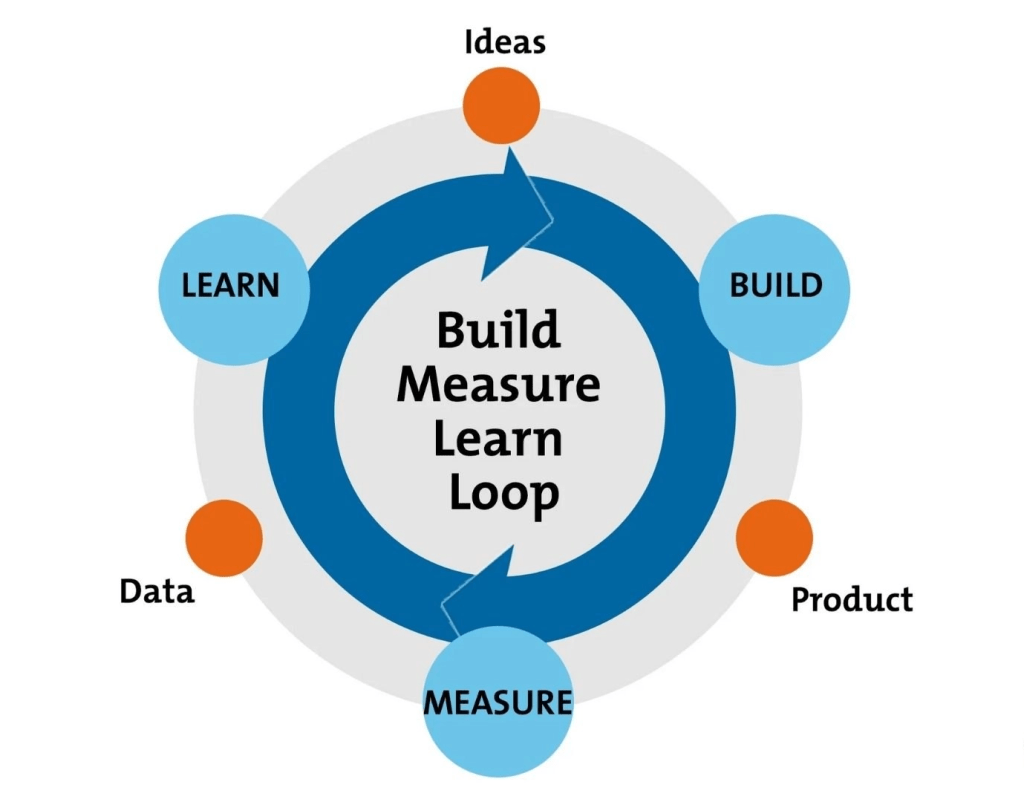
In terms of how a lean startup behaves, its actions can be broken into these three above mentioned steps:
Build → Building experiments where the entrepreneur acts as a scientist. He/She, through the manipulation of controlled variables, notes the variation of independent variables. These are used to test the business model hypotheses. There are tons of types of experiments to test, and Minimum
A concept coined by Ries stresses the impact of learning in new product development. According to him, an MVP is the version of a brand new product that allows a team to collect the maximum amount of validated learning about customers with the least effort.
A) Pivoting is the “all in” phase in which the action of radically changing one/more dimensions takes place to formulate new hypotheses and test them again.
B) Iterating is more “calm and steady”, it’s about pushing and promoting one/more changes in the product/service/business model to test the new hypotheses.
C) Escalating is the “go for it” phase, where the entrepreneur understands the business model might be the right one and is willing to invest more in it to obtain economies of scale.
D) Giving up can simply be the “game over” phase. It occurs when tests, feedback, and experiments clearly show the business vision and the product/service are not able to generate a solid business model.
In the early stages, BML most likely generates obstacles and bad news. That’s why keep following the learning – feedback loop is important, pivot repeatedly, and then persevere. Every failed MVP is a good chance to learn, grow, and recommit to the feedback loop. Perseverance is the secret ingredient to the success of the Business – Measure – Learn process.
A Californian file hosting service providing cloud storage, personal cloud, file synchronization, and client software. It is one of the most suitable examples to give an insight into the application and positive outcome of this framework applied at a company level.
Dropbox developed an MVP: a 3 mins screencast showing to consumers what Dropbox was able to do. In just a couple of days, dozens of people gave their opinion on it, sending a huge amount of feedback to the company, which helped them develop a fast-evolving, one-of-a-kind solution in the market.
Some numbers? With a Lean-oriented approach, in 15 months Dropbox increased registered users from 100,000 to 4 million.
1- Risk is harsh: giving all your energy and time to something that people might not want at all is the biggest risk.
2- Holding back is worse: having a production timeline is important, and not launching or delaying is painful. But not learning for haste is fatal.
3- Feedback storm: put something in people’s hands and get concrete feedback asap.
4- Authenticity: Be honest with your target. Speak truly.

Not all startups choose to follow a lean methodology. Those that do, however, may exponentially increase their chances of long-term viability for the simple reason that the build-measure-learn framework forces innovation.
The model of testing in small steps, measuring, and changing based on the gathered data is very useful for a startup that has little time, few resources, and wants to grow fast.
Lean startup (LS) in 2hire is indeed a mental approach of our company . It made us understand how to structure the entire team and how to try to have this methodology at the root of everything: how to launch new services, products, and initiatives, and how to keep working on innovation.
Lean’s final goal is fostering innovation, but innovation does not only mean something new, it’s about proving economical viability, technical feasibility, and therefore its success in the market.
According to Tim Brown, CEO of IDEO, an MVP must be desirable, viable, and feasible. Many companies rush headlong into the implementation of their MVP without considering one of the most valuable resources: the user’s point of view.
That’s why many products/services fail: the developed idea doesn’t actually solve a user’s problem, in the eyes of the users the MVP is not desirable.
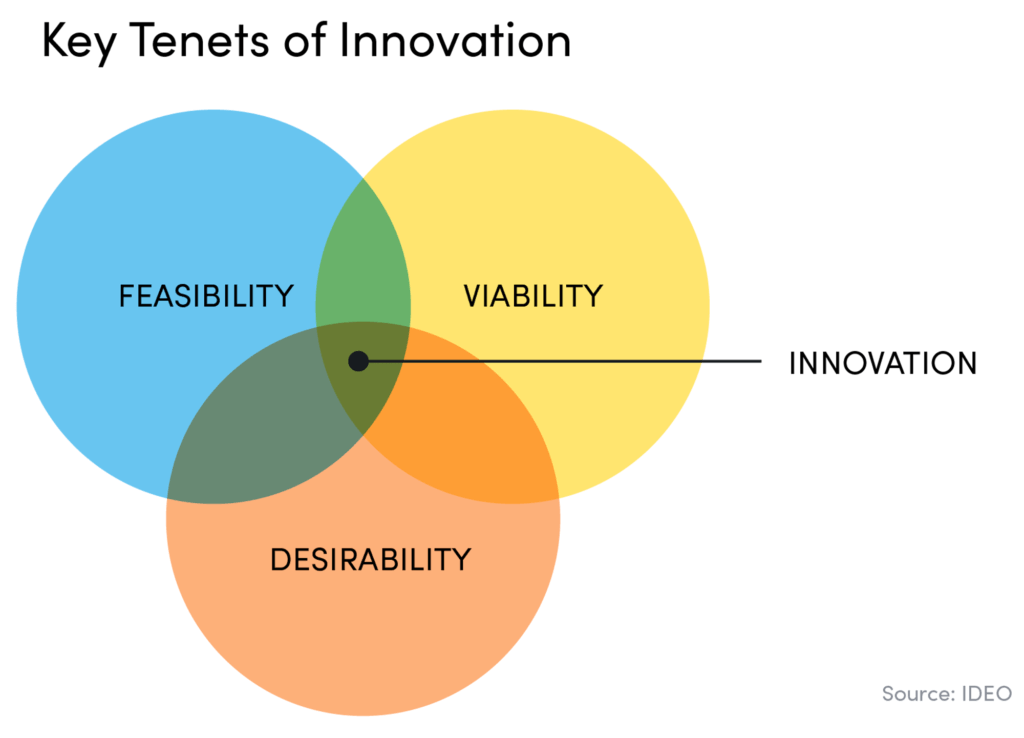
Hence why Build, Measure and Iterate is part of the 2hire process. Those are the principles for what we do in 2hire. That’s the framework we use. It’s a universal framework that our team adopts in the development of our solutions: from our rental product to how you start to do communication. Every project developed in 2hire has an underlying footprint that is based on this approach. The outcomes produced are measured on a weekly/bi-weekly basis by analyzing the projects we are carrying out.
Through retrospectives and regular meetings, we can track the results and progress of our work. Notably, retrospectives in 2hire are done every two weeks, we do a review of what was done and the obtained results, giving us goals for the next two weeks and correcting if something is not working as expected.
According to this, a great example to showcase how we adopt a process of evaluating the state of progress and measuring results afterward is the application of the Agile Methodology within one of our development teams at 2hire: Phoenix.
We use these retrospectives to analyze and measure results, but also to gather feedback on how we can improve to move forward better and faster.
From what we know, from what we’ve understood so far, Lean methodology can really be useful for a young company, a startup, but also larger companies. As long as we continue to be satisfied, we will continue to use lean methodology to keep us at the cutting edge of mobility, to reach our final goal of connecting all vehicles and making millions of people move.
Sales and Marketing Associate at 2hire
I love running and daydreaming losing count of the distance I’m covering, cooking (and especially eating) and Drake is my spirit guide.
Posted on July 14, 2022 by Benedetta Biggi
13 July 2022 | 2 min read
“ Microchips are in many ways the lifeblood of the modern economy. They power computers, smartphones, cars, appliances and scores of other electronics. But the world’s demand for microchip has surged since the pandemic, which also caused supply-chain disruptions, resulting in a global shortage.” – NY Times
The gloomy economic outlook being sensed worldwide owes so much to different factors – yet the microchip crisis is undoubtedly one of them. Our era of IoT and connectivity demands a level of supply that seems constantly out of reach, and the automotive industry alone has faced disruption after delay thanks to the microchip shortage affecting our industrialized world.
At best, the chip crisis renders vehicles of all kinds far more difficult for consumers to purchase – and at worst, it causes even the most seasoned automotive OEMs to have to halt production at a time when productivity and economic output has never been more important to enliven.
Most concerningly, the chip shortage affecting both the automotive industry and the technology ecosystem at large seems to only catch marginal reprieves – never a full solution.
The question here arises: What has led to this microchip crisis, and what is being done to overcome it?
While the automotive chip shortage has undoubtedly had a big impact on the number of new vehicles entering the market, the entire technology industry is similarly being buffeted by these circumstances – from interactive entertainment to work computers and household electronics.
Yet with many industries recovering post-pandemic, why does the microchip crisis persist?
The ability to source microchips and control mineral resources is directly linked to dominance in strategic technology sectors, and the US and China currently have the widest margin of control.
While it’s easy to blame disruptors such as the growth of working from home or the effect of lockdowns in China, the world is also enduring significant supply chain woes.
Soaring demand versus a lack of rapid production techniques – indeed, POET Technologies CEO Dr. Suresh Venkatesan advises that advanced chips take over 20 weeks to produce – mean that even accelerating production methods today are only barely being felt in tangible results.

Production plant shutdowns and difficulties in obtaining the materials necessary for vehicles with even more IoT capabilities mean that the automotive sector has endured a difficult few years under the yoke of the global chip crisis.
After the 40% cut announced by the Japanese Toyota, Stellantis, and Volkswagen had to intervene in August 2021 to cope with the shortage of microchips. Stellantis was forced to stop production at two factories in France, in Janais and Sochaux. Volkswagen announced a production cut at the Wolfsburg factory, the German group’s main one.
And since fewer cars are being produced at higher prices, the leasing, rental, car subscription, and car sharing market is gaining in relevance.
However, further burdens are being felt not only in OEMs’ order books but in their bottom lines. The global chip crisis has fallen amid an era of evolution for automotive OEMs, as the demand to shift from internal combustion engine (ICE) vehicles to battery electric vehicles (BEVs) continues to add complexity to the conversation. Research firm AlixPartners, already recognising that the microchip crisis will cost the automotive sector $210 billion worldwide, has also stated that the increased IoT and technological complexity of BEVs will create more bottlenecks.
Necessity demands agility, and the automotive industry is turning the tide on the chip shortage not only through better forward planning but also by sidestepping certain restrictions.
For example, software in IoT elements of modern vehicles is being rewritten to use fewer chips for more functionality.
More predominantly, the reshoring of microchip production is being implemented in the United States and worldwide, solving immediate chip crisis woes by keeping production closer to home.
Expanding on the reshoring idea discussed above, the EU announced in February 2022 the European Chips Act.
This movement aims to centralise much of semiconductor production in European nations, in a bid to improve supply chain resiliency and mitigate the seemingly endless churn of the global chip crisis.
By 2030, the EU aims to more than double European semiconductor research, development and manufacture – leaping from 9% of global output to 20% by the new decade’s dawn.
Big tech businesses are echoing the positive stance the EU is taking against the microchip crisis too, with Intel investing $36 billion into developing European semiconductor production potential, with production coming online by 2027.
According to sources, Intel and the Italian government are discussing a total investment of $9 billion over 10 years from the start of the construction of the factory in the country. Rome wants Intel to clarify its plans for Italy before formalising a package of favourable conditions, especially regarding jobs and energy costs. Once an agreement has been reached between Rome and the American company on the action to take regarding this problem, the next step will be to decide in which area to begin with the construction of the Italian production facility.
Immediately, the global chip shortage remains a key area of concern, for the automotive sector and beyond. Yet hope is on the horizon, and resources are being put into action – causing many to feel optimistic that a difficult few years may soon give way to a reality on the upswing.

Sales and Marketing Associate at 2hire
I love running and daydreaming losing count of the distance I’m covering, cooking (and especially eating) and Drake is my spirit guide.
Posted on July 8, 2022 by Benedetta Biggi