14 Jul 2022 | 4 min read
In the big city, getting around is very often a cause of stress. Traffic jams, scarce parking, and long walks from public transport stop to your final destination can make even the simplest journey a true ordeal.
But what if there was an easier way?
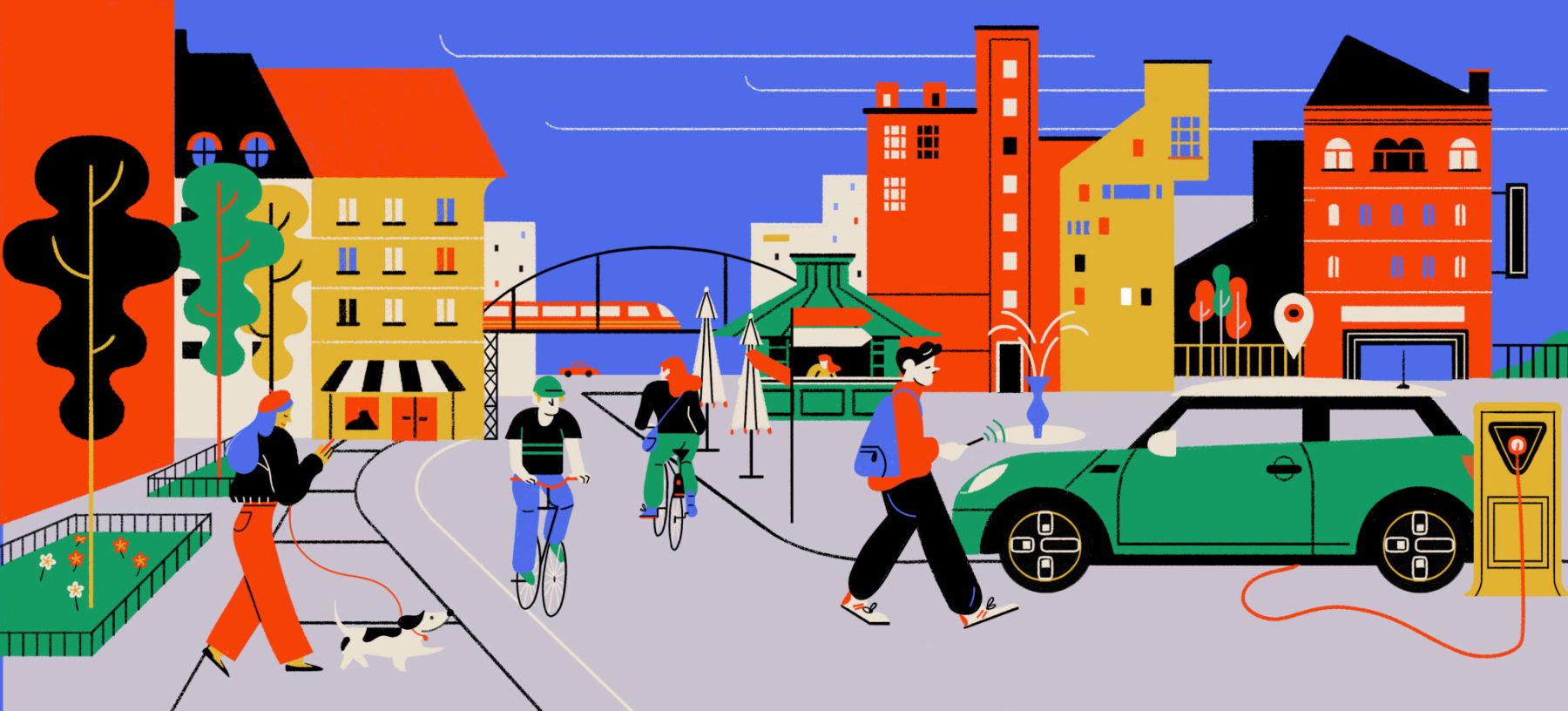
Shared mobility offers you smart urban transportation that is tailored to your needs. Whether you need a ride for a few blocks or want to use a shared bike for your whole commute, sharing operators have got you covered!
Shared mobility is the most modern way of getting around cities using non-owned vehicles. You can choose from a variety of modes of transport, including cars, bikes, scooters, mopeds and more!
Shared mobility services are operated by mobility providers that can offer a single-vehicle or multi-vehicle fleet at your disposal, with a free-floating or a station-based type of service. To use such services, you simply need to download the operator’s app and create an account. Once you’ve found the vehicle you want to use, you can unlock it with your phone and away you go!
There are many benefits to using shared mobility services. Firstly, they can save you time and money. Commuters can avoid the hassle of owning and parking a car, and business travelers can save on expensive taxi fares.
Secondly, shared mobility services are more environmentally friendly than traditional modes of transport. They help to reduce traffic congestion and pollution in cities, and can even help you to be more active!
And finally, they offer you the flexibility to choose the right means of transport for your needs at any given moment. Whether you need a car to reach a restaurant far from your area, or an e-bike to cycle to work, there is always a shared mobility option ready to solve your problems.

There is a range of shared mobility vehicles available, including electric bicycles, cars, scooters, mopeds, and quadricycles. You can find shared mobility services in cities all over the world, so there’s sure to be something to suit your needs.
The most common and popular vehicles include:
Car ownership is not for everyone. It can be expensive and time-consuming, especially if you live in an urban area. Car sharing allows you to use a car when you need it, without the hassle of ownership.
For example, the Enjoy fleet of Fiat 500 Hybrid cars and Fiat Doblò vans available to drive in Turin, Italy, can be rented by the minute, hour, or day. This allows you to use a car for short trips around the city.
The company has also expanded its fleet with XEV YOYO electric quadricycles to allow for a greener, more sustainable form of transport.
Shared bicycles are a great way to get around cities. They’re usually cheaper and definitely faster than public buses, for example, and you don’t have to stress out about finding a parking spot since most of the time they are free floating.
Bike-sharing schemes are popping up all over the world. According to the latest Fluctuo European Shared Mobility Index, free floating bike trips are up 143% from Q1 2021.
Some highlights from the european landscape:
– Rome: RideMovi launched a fleet of 2,000 e-bikes
– London: Dott & Human Forest launched e-bikes in Hammersmith & Fulham
– Netherlands: GoSharing expanded in several dutch cities with e-bikes.
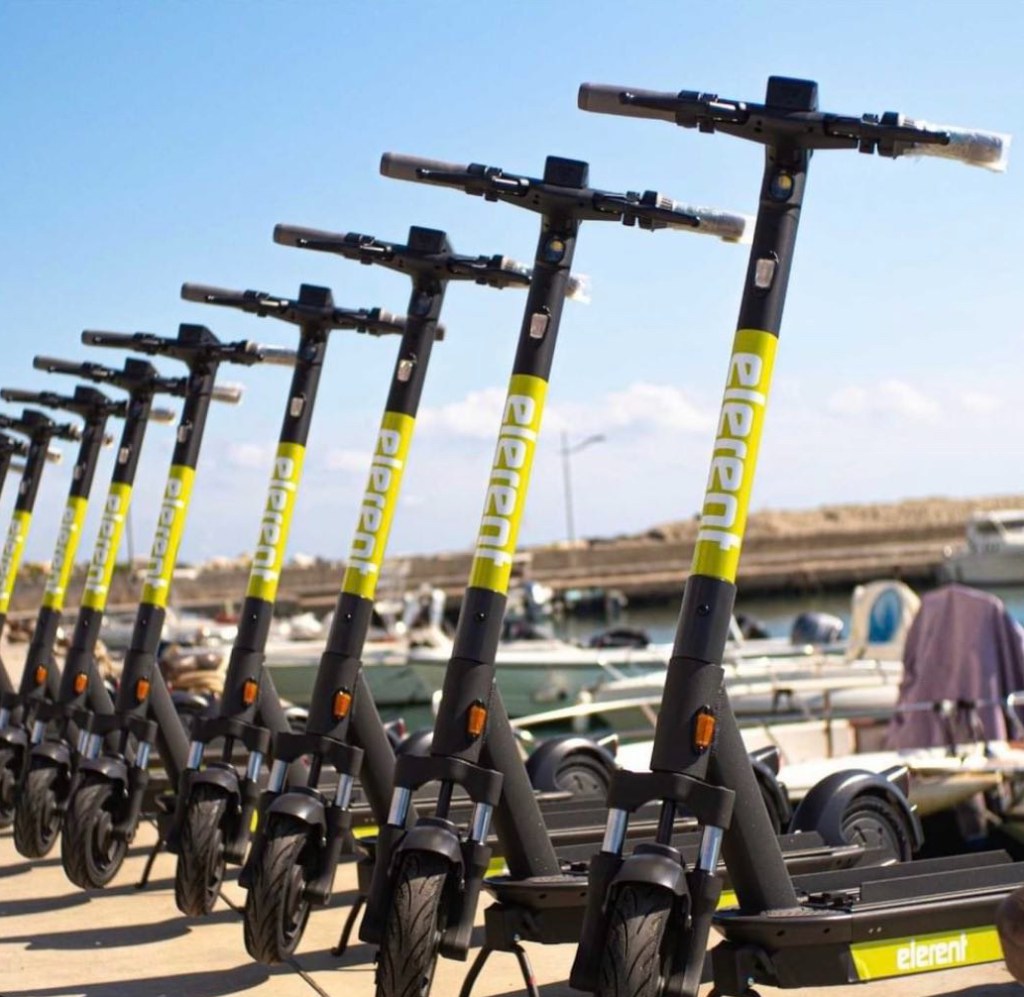
Another popular form of shared mobility for your free floating or station based service is the scooter. Their dynamicity is ideal for those who don’t want to hassle with parking in city centers!
There are several scooter-sharing businesses available, such as Bird, Lime, and Spin. Elerent is one of them. Starting from many cities around Italy, it has recently entered the foreign market with a new, scooter sharing solution around Greece!
Mopeds are going pretty well too. Just in the last 12 months, a total of +12,000 shared mopeds have been put on streets worldwide.
One of the latest examples is GO Sharing, which made 500 Supersoco CUX mopeds available in the Italian capital with a free floating model around the city. This is the first step toward a bigger scenario, since they affirmed they want to triple the sharing fleet in Rome to 1,500 e-mopeds by the end of the year.

Shared mobility is spreading like wildfire. With innovation and new technology, shared mobility is becoming more and more convenient, smart, and popular all around.
The latest data from the National Observatory on Sharing Mobility states that just in Italy there are 5,600,000 subscriptions to shared mobility services and 158 active sharing services. Today, 49 cities offer shared mobility solutions to their citizens: three times as many as in 2015.
All these options popping up are giving citizens the opportunity to indulge in the way they move around the city. Freely.

Sales and Marketing Associate at 2hire
I love running and daydreaming losing count of the distance I’m covering, cooking (and especially eating) and Drake is my spirit guide.
Posted on June 24, 2022 by Benedetta Biggi
30 June 2022 | 3 min read
The Italian Government has announced a new financial policy that will support the development of bikes lanes in Italy. This is a major step forward for urban mobility, as it will make it easier for people to get around cities without having to rely on cars.
Cycling is a perfect solution for both climate change and environmental objectives, and this new policy will help promote its use. E-bikes are becoming increasingly popular, and with good reason. They are a more sustainable way to get around cities, and they also help reduce traffic congestion.
In this article, we will take a look at the new financial policy, how it will help promote cycling and e-bike usage in Italy, and how the wider European Union is facilitating this kind of project to promote sustainable urban mobility.
The National Recovery and Resilience Plan (PNRR) is the Italian section of the Recovery and Resilience Facility, which is part of the European Union’s overall response to the COVID-19 pandemic.
The PNRR has set aside €30 billion for sustainable mobility projects, with a particular focus on e-mobility, public transport, and active travel such as walking and cycling.
From that fund, €200 million has been dedicated to the construction of urban cycle paths and €400 million to the construction of tourist cycle paths. The aim is to create a network of cycle paths totaling at least 565 km, which would be more than double the current length.
The funds will be used to construct new cycle paths and improve existing ones.
The construction of new cycle lanes will take into account the needs of all users, including people with disabilities.
One of the primary aims of the program is to connect universities with nearby train stations and to promote the use of bikes as a means of commuting.
The construction of new cycle paths is not the only objective of the program. In fact, a large part of the funds will be dedicated to the improvement of existing infrastructure. This will include the widening and resurfacing of existing bikes lanes, as well as the installation of new signage and lighting.
The increased focus on green mobility is part of a wider effort to improve the quality of life in urban areas. By promoting the use of bikes, the program will help to reduce traffic congestion and pollution, while also improving public health.
In addition, the program is expected to create new jobs in the construction and tourism sectors. With more people cycling, there will therefore be a need for new businesses to provide services such as bike sharing services.
The program is also an important step in meeting Italy’s commitments under the Paris Agreement on climate change. By investing in cycling infrastructure, the country can help to reduce its emissions of greenhouse gasses and make a positive contribution to the fight against climate change.
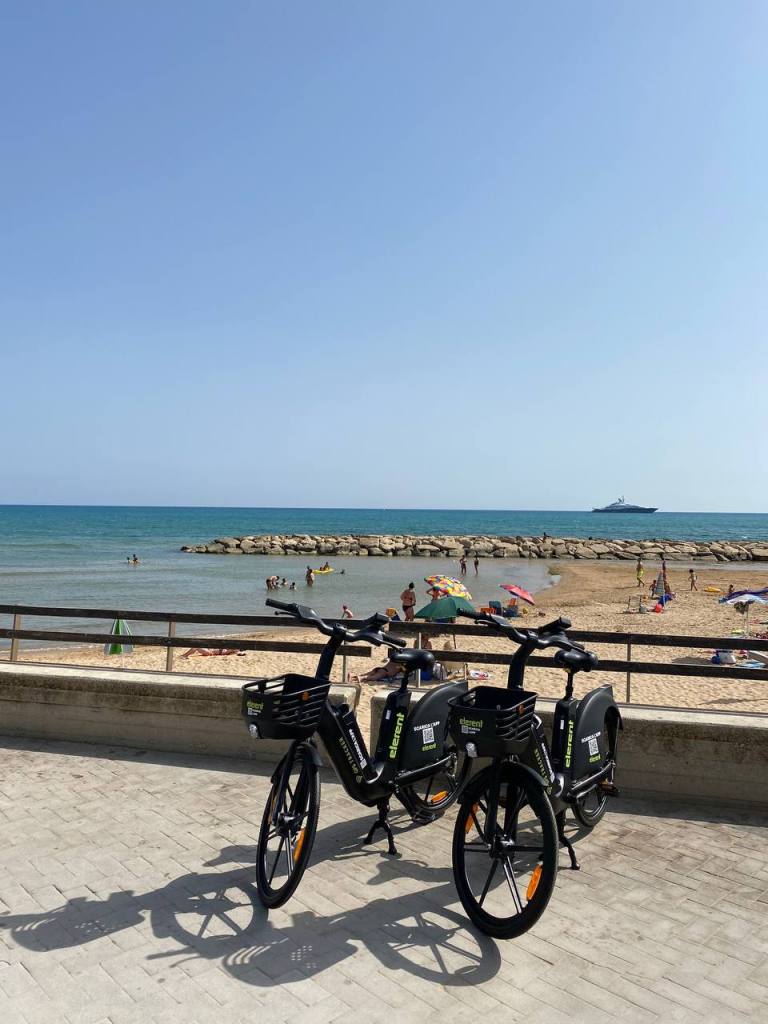
Shared bikes programs have been shown to be an effective way of reducing congestion, and pollution, improving air quality in urban areas, as well as providing a transportation option that is accessible and affordable for everyone.
Further investment in cycling paths and lanes is therefore a key element in the development of smooth and green urban mobility, which is essential for the future of our cities.
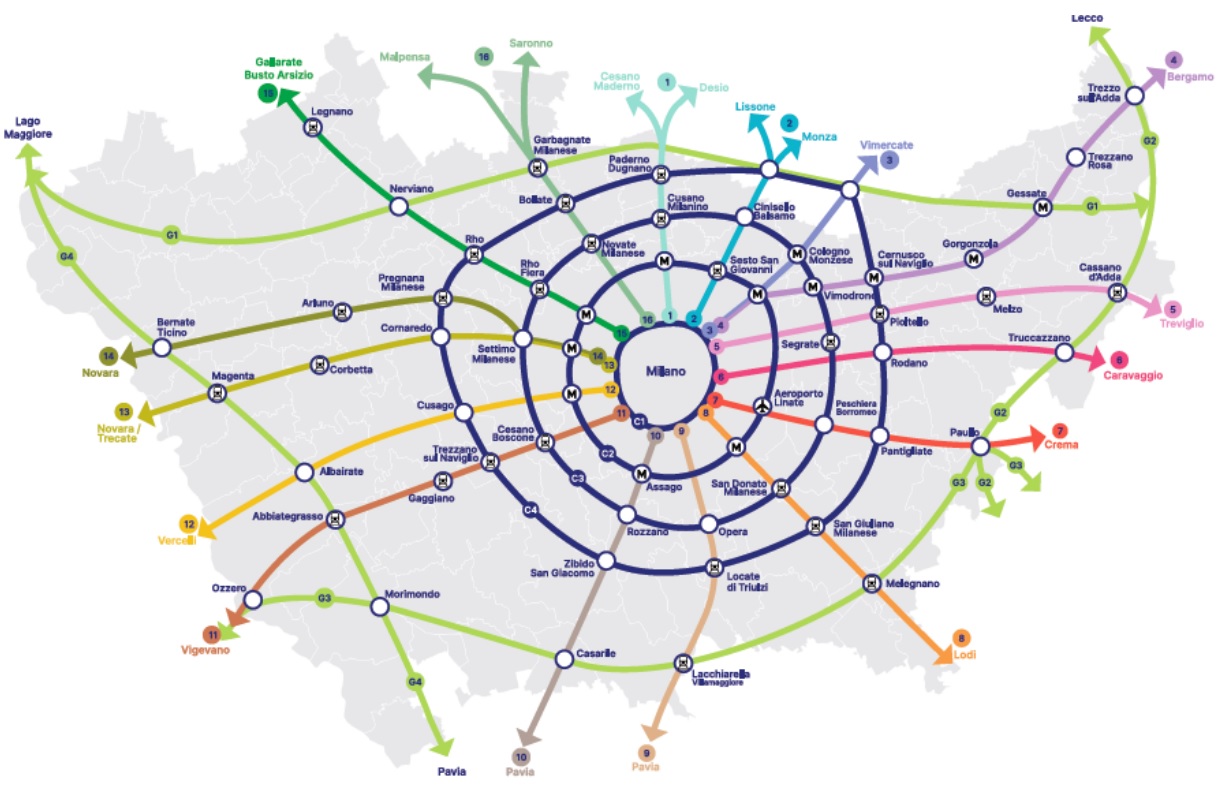
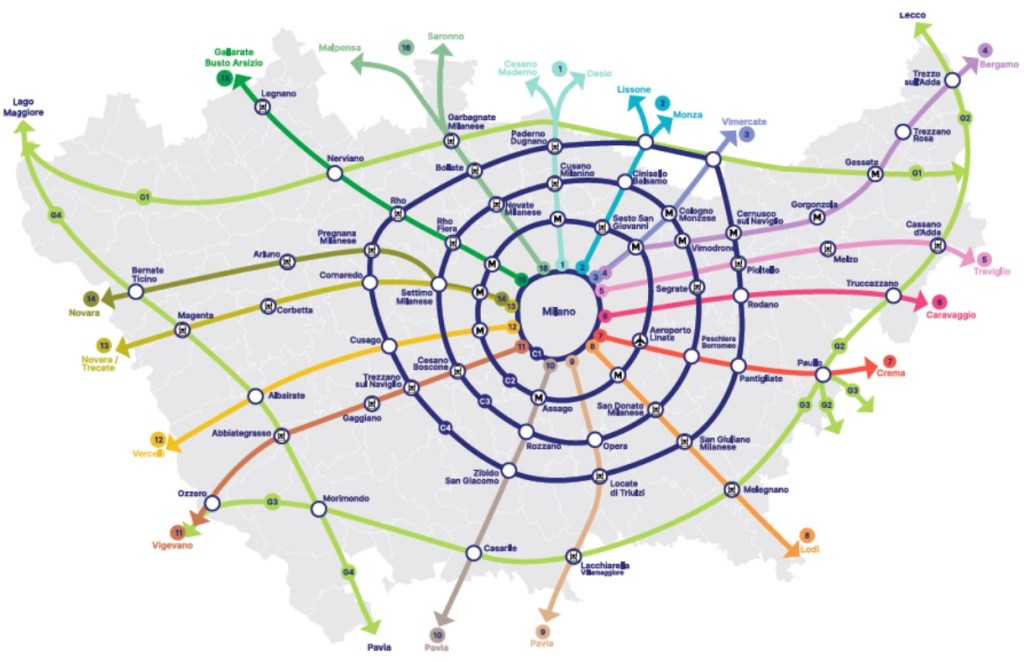
A Cool Example – Snapshot of the Milan Bikes Lanes project for 2035
The project foresees the coordinated and planned implementation of 24 cycling lanes throughout the territory of the Metropolitan City. This ambitious project will aim to make bikes the main means of transport for 20% of total trips.
While the environmental benefits of increased cycling are clear, it is important to note that the socio-economic benefits are just as great.
A recent study from the Cycling Embassy of Denmark found out that every euro invested in cycling infrastructure generated up to six times more in health and societal benefits than it cost. The study also found that, on average, each person who bikes regularly saves society around 600 euros per year.
With these benefits in mind, it is clear that investing in cycling infrastructure is a smart move for any city or country looking to create a sustainable and prosperous socio-economic effect.
Just think about the 150 million from the EU Next Generation for the construction of cycle paths in urban and metropolitan areas to connect train stations to universities. This is one of the most considerable measures on urban cycling in Italy in addition to the EUR 4.2 million already allocated by the Ministry of Infrastructure and Sustainable Mobility for the first six pilot station-university cycle connection projects in the cities of Rome, Milan, Bari, Palermo, Pisa and Padua.
If we look at this initiative with an analytical lens:
Hence the opportunity not only to improve the urban infrastructure but to enable thousands of students to reach their university campus in an easy, sustainable, and healthy way.
The new EU financial policy is a response to the unprecedented health and economic challenges caused by COVID-19. It will contribute toward making Europe a pioneer in responsible and sustainable transformation so that it can meet the ambitious goals of the European Green Deal.
One of the key objectives of the new financial policy is to support the transition to a climate-neutral economy. This means investing in renewable energy, green infrastructure, and sustainable transport.
Cycling is a perfect solution for all of these concerns, as it is a low-carbon form of transport that also has health and social benefits.
It is encouraging to see that the Italian government has recognized this and is investing in cycling and e-bike infrastructure. Hopefully, this will encourage both entrepreneurs to launch e-bike sharing services, and citizens to cycle, leading to less congestion and pollution in cities.
Sales and Marketing Associate at 2hire
I love running and daydreaming losing count of the distance I’m covering, cooking (and especially eating) and Drake is my spirit guide.
Posted on June 22, 2022 by Benedetta Biggi
22 June 2022 | 3 min read
Hi y’all!
I am Matteo Scarpello and I have been working as a Backend Developer in 2hire since January 2021. From day 0 I worked remotely from my hometown, Chieti.
Even with my previous employment, I never experienced office life, I did not live the daily activities, spend time with colleagues, or enjoy face-to-face interaction. But then…
Once I got the job, the onboarding process was very cool and well structured.
Firstly, a “buddy” was assigned to me, Emanuele Loreti, 2hire’s Customer Support Specialist, who gradually introduced me to a member of each team.
Then 2hire’s Head of Backend Development, Angelo Di Pilla, introduced me to a more technical onboarding process.
This technical onboarding was made in order to align with the rest of the tech team; and since we have embraced the Agile methodology, the onboarding has become even smoother, in less than two weeks a new developer is able to contribute independently to the project.
Finally, I also had a meeting with Filippo Agostino and Elisabetta Mari, our CEO, and COO, who gave me an overview of the company, a detailed 2hire background, and a roadmap of the progress made so far.
I immediately felt surrounded by a very cool atmosphere, supported by all the team.
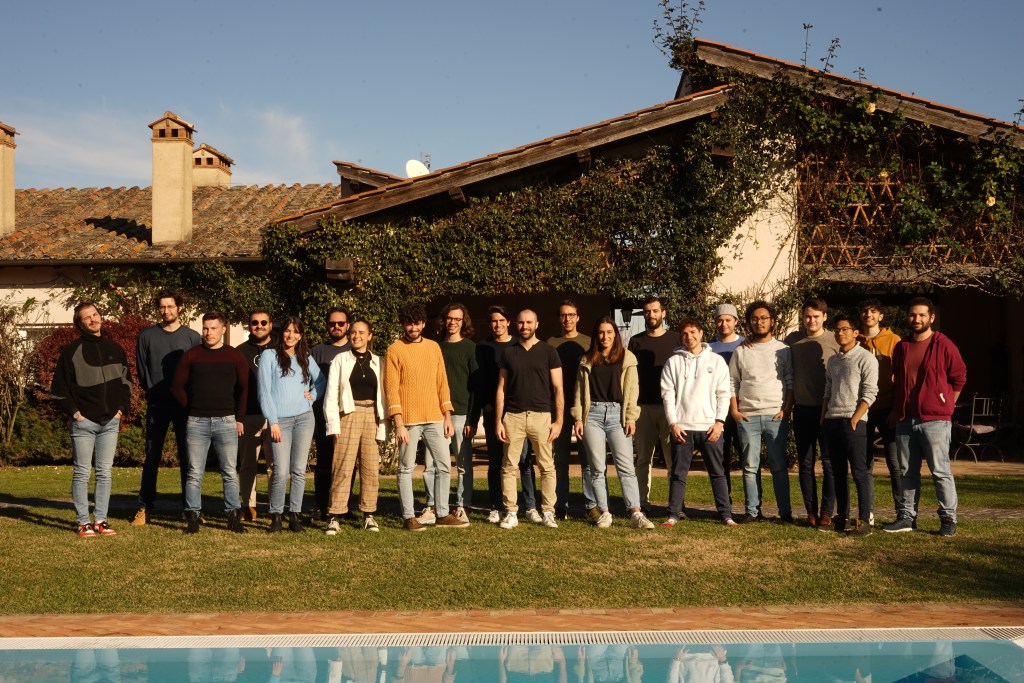
I clearly remember my first visit to the office in Rome, just two weeks after my recruitment. At the end of January, I was invited to the office for my official presentation to the 2hire team. I was a bit scared and shy. It felt weird to finally realize I was no longer an all-remote worker but a hybrid figure, I finally had the opportunity to enjoy an in-person space, surrounded by so many different stimuli.
Once I got there, I experienced on hand the ambient, the people, and the mentality of helping each other that characterize 2hire. In a nutshell, I can easily say that one week was more than enough to realize that I would have wanted to move to Rome and experience office life on a daily basis.
Remote Working is definitely comfortable and cheap, why would you want to change this?
Well…There are several reasons.
When working remotely you have nothing to worry about in the morning, no waking up hours in advance to get ready and travel a route, perhaps stuck in traffic that will make you worry about being late for the office. So, it can be very cool if you are a logical person fan of task optimization like me!
But, there is a big BUT.
From my personal experience, at home, I definitely felt more alone. There, I had a time when I spent several days without even knowing the weather outside. And just to be clear, I am not a metheoropathic person, but if there is something I am sure of, it is that as comfortable as smart working is, I love being surrounded by people (even with the bad weather!).
Ok, that’s a legitimate thought.
The moment I found myself, by my own choice, deciding between working at home or outside, I said to myself that if I wanted to move from home it made more sense to simply join the team in Rome. At 2hire I always had the possibility to choose, but for me, it wouldn’t have made sense to keep working remotely, and simply change location.
The devs room in the office is called “Open space”. The cool thing about every room in the office is that if you want to exchange a feeling, if you have a doubt, or simply want to “go with the flow” and know more about everyone’s status (not only about devs 👀), you just have to speak up!
For me it was a natural step: if I wanted all of this, daily, I had to work in the office.

In January 2022, after a year of working remotely at 2hire, my moment arrived and I finally moved to Rome!
So far, what I can say is that it was (and still is) a great decision for my personal growth and my career. Here at the office, I feel like I am more actively participating in the workflow. Thanks to the proximity not only to the Tech Team, to which I belong, but also to the Business Team, I am also more up-to-date on the daily progress of our prospects and customers, as well as the growth possibilities that our company is working on.
In-person it is also easier for me to come up with interesting ideas and proposals. The latest proposal we implemented, for example, was to involve Cosimo Calciano, Business Developer at 2hire (not just a colleague but also long time friend from the University days) to present 2hire to Svoltastudenti, a big students association of Politecnico di Milano, of which we were both members when we studied engineering there.
There was a triple objective in proposing this mission:
The opportunity to bring one’s own ideas to the table and put them into action is an incredible opportunity that 2hire gave me, and that gives to everybody on the team.
I am glad I embraced this opportunity and made it a reality. I think that there is nothing better than being appreciated for who you really are, especially in the work you carry out daily.

Backend Developer at 2hire
I’m a logical person fan of time optimisation and organization. Not the first Matteo in the team, you can call me Chopper if you prefer (like the doctor reindeer).
Posted on June 22, 2022 by Benedetta Biggi
13 May 2022 | 5 min read
And here we are again! While in the previous episode we illustrated the potentialities and the features of electric kick-scooters and quadricycles, today we talk about two other types of vehicles that are among the most sought-after in micromobility: mopeds and e-bikes.

One of the widest range of vehicles that you can use at its most for micromobility purposes is mopeds. Mopeds offer a great alternative to bigger and bulkier vehicles because they are small, compact, and easy to ride.
The best part? As for scooters, there are plenty of options available for finding the right moped for your sharing service. Some of our best-recommended models are:
The NIU NQi GT/ NQi GTS mopeds are built for high performance and speed. Some of the features that make these mopeds stand out for micromobility include:
Improved 4th Gen. NIU Energy Lithium Battery
The NQi GT / GTS is equipped with a high-performance dual lithium-ion battery system. The extended range battery pack version gets instantaneous acceleration from a standstill. Creating a whole new speed and riding experience for a city life moped.
The right choice for your sharing business
These models can be easily and immediately connected via the 2hire box. Through a quick <10 minutes installation these mopeds will turn into the perfect fit for your sharing & delivery service!
Safety and Reliability
The products are built with durable materials and state-of-the-art technology in mind for safety’s sake.
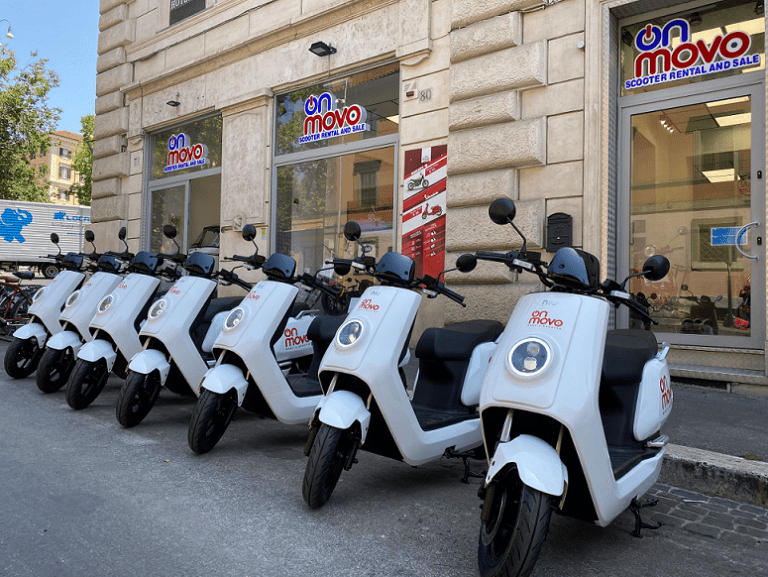
The right moped for people looking for a more compact and agile micromobility solution.
Fast Charging
The Supersoco CUX has a fast-charging battery that can be fully recharged in just three and a half hours. The perfect scooter for those who need to recharge their vehicle on the go quickly!
Speed and Travel range
The CUX reaches speeds of up to 45 km/h, perfect for urban roads. The VMoto model has a rechargeable lithium-ion battery that can last for up to 75 km on a single charge, such as an impressive durability.
Multi-Function Push Button Panel
The pushbutton panel on the CUX makes it easy to change settings and control the scooter without having to take both hands off the handlebars and ensuring safety and reliability.
Moped connectivity
The Supersoco models can also be turned into connected in a snap. The 2hire box makes connectivity possible in a few steps, helping you boost your micromobility sharing service faster than ever.

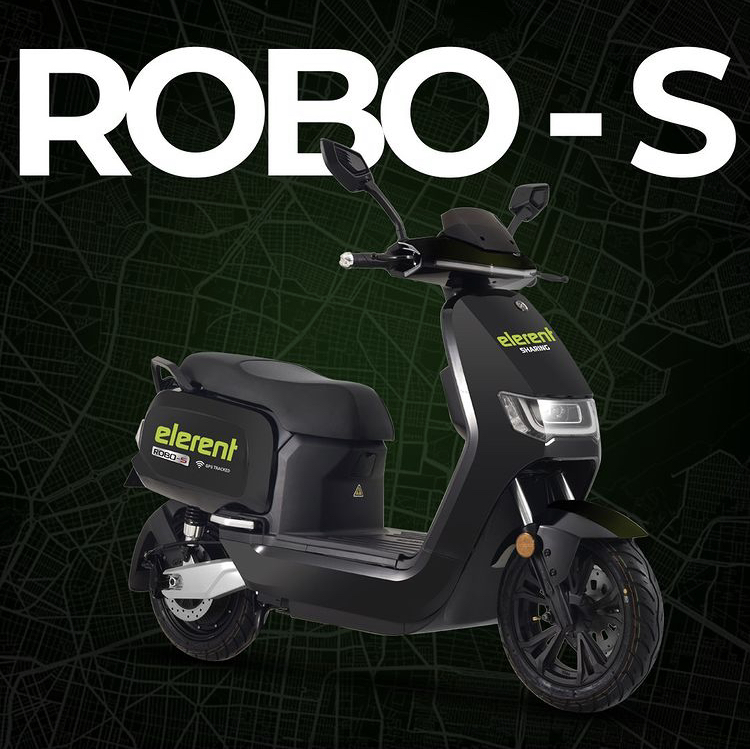
The Sunra Robo-S is an excellent 125cc option for an eco-friendly micromobility service.
Instrument Panel
The Robo-S has a digital instrument panel that provides information about the battery level, speed, and distance traveled. It also includes an eco-mode to help conserve energy while riding.
Sporty Full-LED Lights and
The scooter features a stylish full-LED headlight and taillight that provides excellent visibility while riding.
Digitalization
The 2hire box makes the control of the moped’s data and interactions reliable and in real-time, allowing the operator to have complete control over the vehicle, at all times.
Double SUNRA 72V and 20Ah Removable Batteries
Sunra Robo-S comes with two removable 72V and 20Ah batteries that provide a long range of travel. The batteries are located under the footrest for easy access.
Askoll ES2 is one of the core micromobility solutions made for the city, the two-seater scooter reaches a speed of 45km/h, ideal for compactness and agility.
Made in Italy product
The chassis design ensures the best protection against impact damage due to its high-quality materials, 100% made in Italy.
Rapid integration with telematics solutions
The company can integrate with the most suitable telematics solution via its CAN-BUS protocol, meaning 2hire is on hand to provide the ideal connectivity to your sharing service!

The Segway E-Moped is designed for safe, reliable, and long travel sharing. Here are the features that make the e90L so great in micromobility:
Speed and Capacity
This two-passenger capacity moped reaches speeds up to 45 km/h, is perfect for city streets or highways, and has a maximum power of 1500 watts, ensuring people get where they need to go quickly and safely.
E-Lock and Helmet Detection
E-lock and helmet detection to ensure the scooter can’t be started without a key.
API connection
The e90L has built-in IoT technology to connect wirelessly with the Cloud, with the connection via the universal API layer provided by 2hire, the potential of the connected fleet can be exploited to the full.
Smart Dashboard
The Smart Dashboard on the Segway moped provides information about a ride and its safety; all displayed through a beautiful, customizable glow.

E-bikes are the other top-of-the-range micromobility vehicles we are illustrating today. These bicycles have an integrated electric motor that can power the bike or help with pedaling. 2hire top recommendations on this topic are:
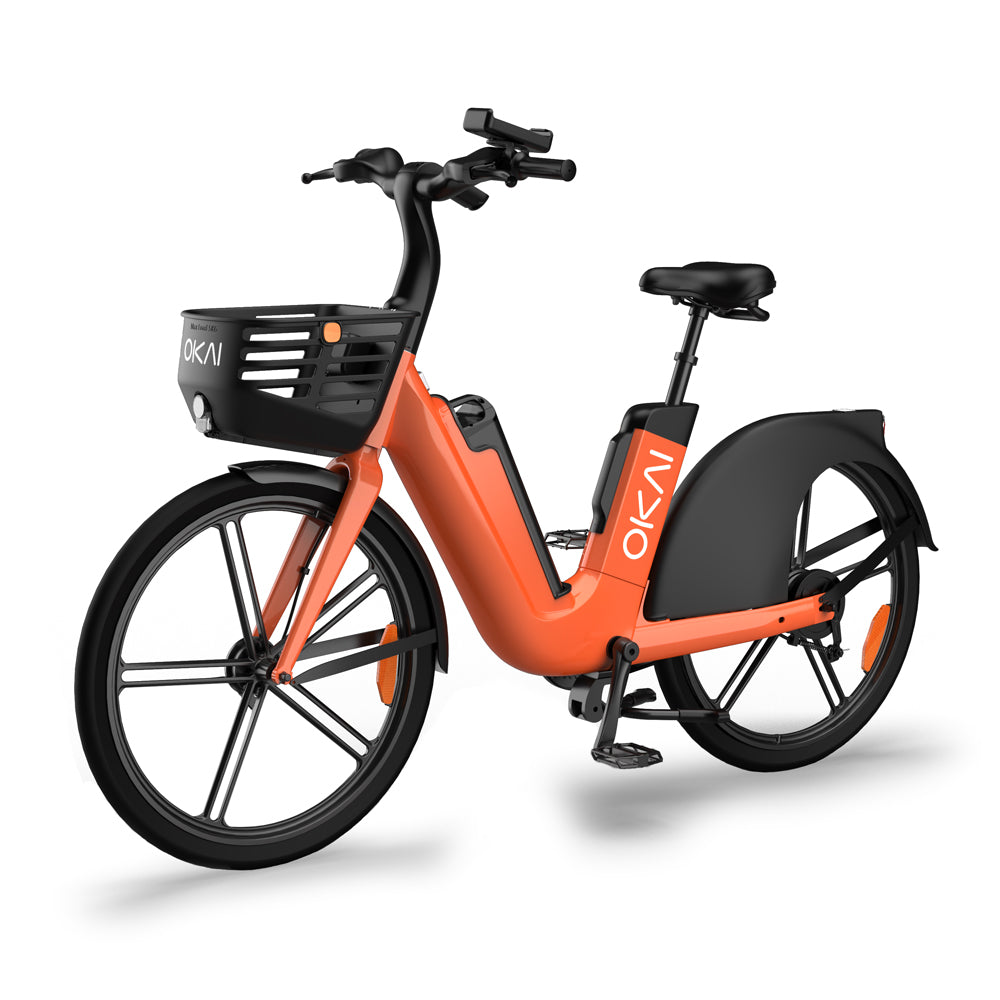
OKAI EB100 is one of the most advanced e-bikes designed for sharing. The EB100 is a high-torque, heavy-duty electric bike that can handle any daily traffic challenge with ease.
With 500w max power and 250W rated levels (on the motor), as well as 47Nm net torque from its dual battery system, this e-bike will make it easy to commute while helping out those who need help.
Supercharged Quality Batteries for Everyday Usage
The EB100 has a range of 60 km on one charge and a maximum speed of 25 km/h, which is perfect for those who need their e-bike in tip-top shape.
It also sports high-quality batteries made with 39 Samsung cell cultures (50e), giving it 48 volts 15 Ah capacity. With swappable tech, it’s to cut down operational expenses while still getting reliable performance every time.
Built-In IOT
The built-in IoT is a game-changer for e-scooters and bikes. In-house engineers designed the patented 4th generation module to ensure clean integration of electronics inside frames. The integration between OKAI’s IoT and 2hire’s technology allows any operator to launch its micromobility sharing service smoothly and quickly.
Security
This bike features GSM and BLE 4.1 for lock/unlock. It has an anti-theft feature that alerts if someone tampers or moves the bike.
And it also features Topple Alert, which detects when the bike topples over – allowing for instant retrieval of stolen goods.
Lightweight and Portable
Designed to be lightweight, compact, and easy to use by people on the move – this e-bike is great for daily use both indoors as well outdoor areas.
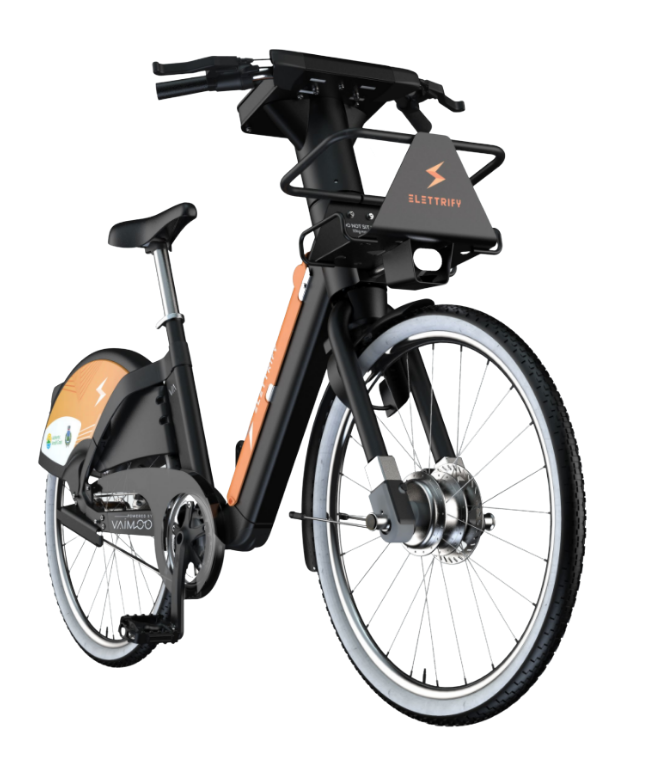
Vaimoo is an e-bike that guarantees the strength and durability of components to provide a pleasant and comfortable driving experience.
Ultimate Flexibility and Control
The integration between the theft protection feature on the Vaimoo e-bike and its ability to park anywhere, thanks to a virtual frame, will allow riders to leave it anywhere close to designated stations or outside their drop zone at an additional charge.
Easy Integration
Vaimoo’s technology allows for easy integration with existing systems. With the 2hire software integration, every bike can be connected, controlled, and checked remotely, making it controllable flexibly.
Eco-Friendly
The VAIMOO e-bike is an environmentally conscious micromobility product that features an aluminum frame and recycled parts.
Rechargeable Longer-lasting Batteries
With a 36V 11.6 Ah or 14Ah Li-ion bike that’s rechargeable from the station, this e-bike is perfect for cycling around town!
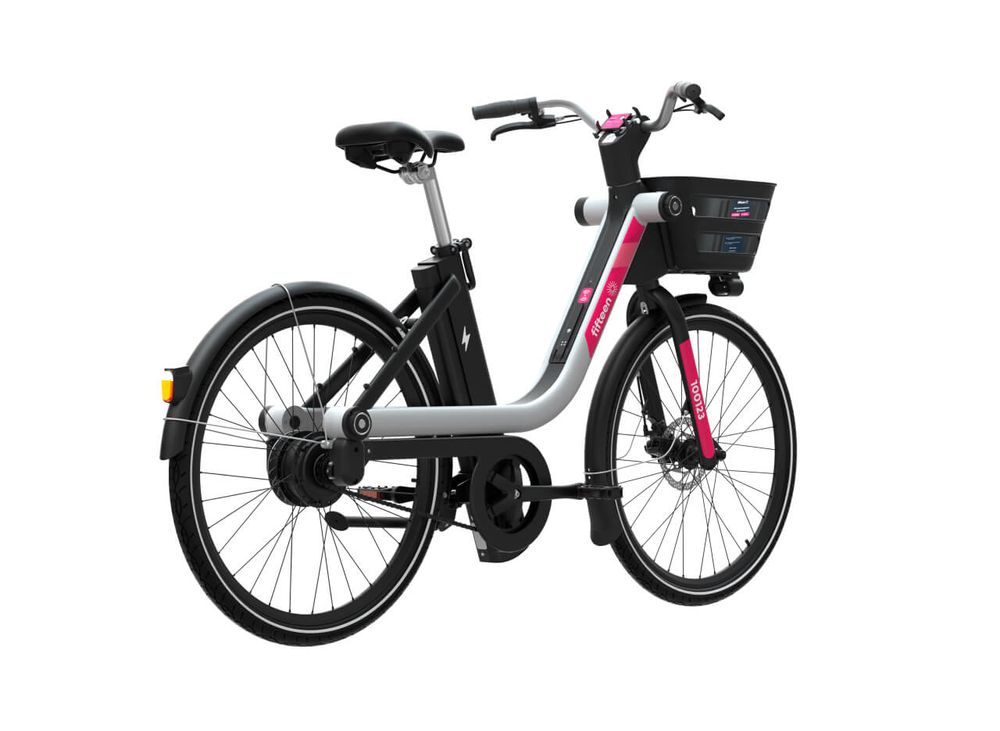
Fifteen is an accurate option for your micromobility sharing project. Some of its top features include:
Energy-Saving
Fifteen’s electric bike with pedal assist is the perfect solution for long journeys. With up to 65 km of range, this sleek and stylish device can do multiple rides before needing a charge.
Extra Fast
The bike has no gears but can go up to 25 km/h. It is easy for new riders because the software ensures that pedal-assist kicks in right when it’s needed, seamlessly supporting them in all conditions – even those toughest inclines!
Shimano Disc Brakes for Safety
The ebike has powerful yet smooth front disc brakes that offer strong, reliable stopping power. Combined with the rear V-brake, this system provides quick and efficient stopping in any weather conditions.
Easy-Detach, Rechargeable Battery Pack
The Fifteen electric bike features a rechargeable battery pack that is easily removed and charged when necessary – or replaced with another unit for a longer range.
Ready for sharing
Fifteen ebikes can easily integrate with 2hire technology, the efficient option to empower your sharing service and have full control over your bike fleet!
Segway eBikes are lightweight and easy to operate. They’re perfect for sharing purposes. Some key features include:
Some numbers
Segway’s electric bikes can reach speeds up to 32 km/h and travel ranges of over 80 km on a single charge! This makes it perfect for longer trips or sharing with others.
Low Operational Costs
Ninebot E-Bike’s built-in batteries compatibility with the Max Pro and Plus scooters significantly lowers operational costs.
IoT
This bike can be remotely controlled and monitored by its operator thanks to the integration with 2hire. The turning point to get complete control over all your bikes.
One-Size-Fits-All
The “one-size-fits-all” bike frame is a perfect option for anyone who wants to get on the road without worrying about their height. This model comes complete with an adjustable saddle, making it suitable for almost everyone, whether 5’1″ or 6’2”.
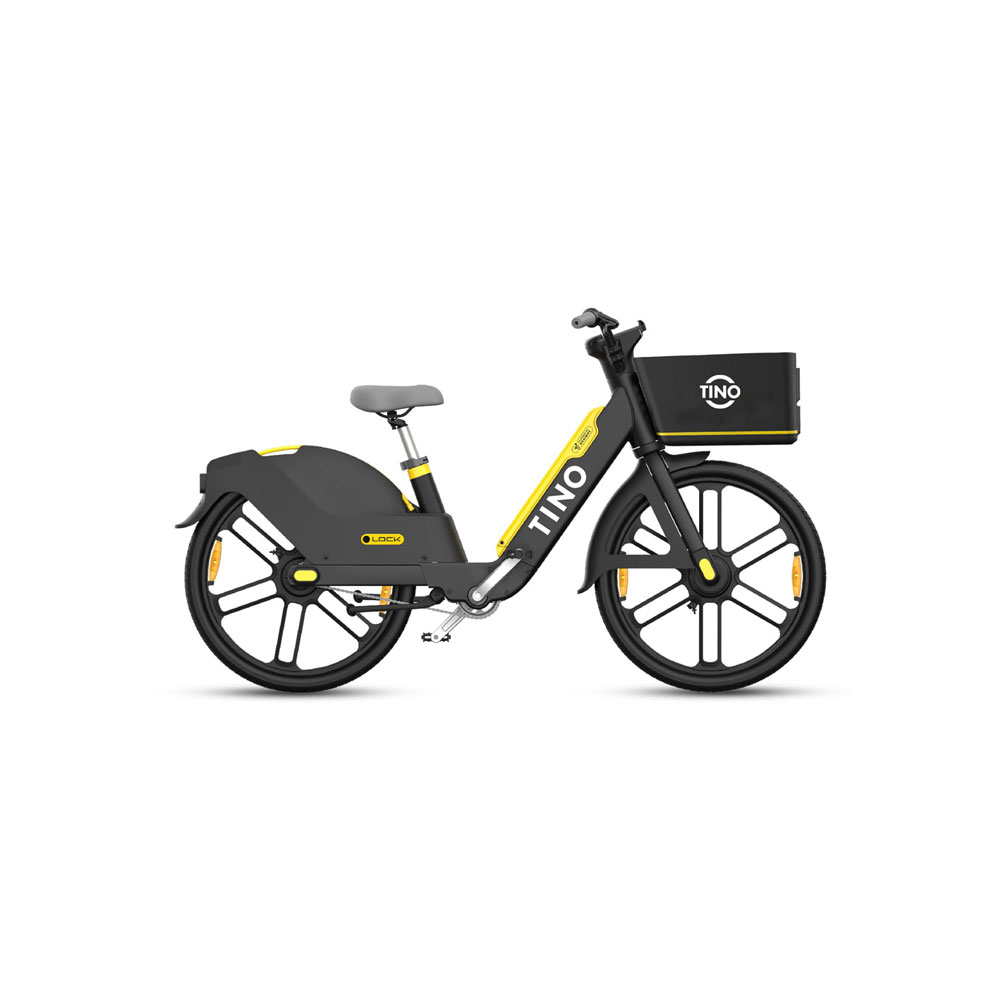
Although choosing the right micromobility vehicle for a sharing service can be harsh, choosing the provider to rely on has never been easier!
The flexibility of 2hire’s technology allows it to adapt to any kind of vehicle, integrating with the major manufacturers of electric vehicles.
Still not convinced?
Drop us a message, let’s have a chat and we will help you launch and scale your sharing business from A to Z in a blink of an eye.
Sales and Marketing Associate at 2hire
I love running and daydreaming losing count of the distance I’m covering, cooking (and especially eating) and Drake is my spirit guide.
Posted on May 13, 2022 by Benedetta Biggi
7 Apr 2022 | 4 min read
Sharing mobility is a whole world.
Starting a new service of sharing mobility is tough.
You have to choose what kind of fleet you want (mopeds, kicks, scooters, bikes, cars… or a mix of them).
You have to choose what kind of the selected type of vehicles you want (NIU, SuperSoco, and so on).
You have to choose a provider for the connectivity of your fleet.
You have to choose the name of the service, its colors, the app.
You have to choose. A lot.
Even when everything above is set, you have to answer the million-dollar question. How many vehicles do you need for your service?
The decision is crucial to the fortunes of your service, and still, there is no clear answer.
Why?
Because they will tell you that every city is different. Every country is different. Every person has habits, rules, timetables.
Well, guess what.
It’s a lie, and this article is all about this.
From our experience as 2hire, we found a rule which helps you to answer the most difficult question you will ever face in the starting process of a mobility service: how you choose the number of vehicles in your fleet.

Finding a rule that fits different cities, with different climates, and different habits is not an easy process. In the summer of 2021, however, at 2hire, we had the opportunity to observe a single service act across multiple cities. The Elerent service has been active in almost 30 cities in Italy, from North to South, from East to West, from the mountains of Abruzzo to the seaside resorts of Sicily, Sardinia, and Puglia. The dataset lends itself to analysis for many reasons, but one of the things that makes it so valuable is that each site uses the same app, with similar costs for end-users. Often, when comparing different services, too much diversity in user experience can lead to lost value in the analysis. This is not the case here.
For each city, for each day in August, the following variables were selected as variables:
At the end of the month, for each city, the information collected contained:
As expected, these numbers are not comparable with each other: it would be wrong to compare the earnings of a city with a fleet of 60 vehicles with those of a fleet of 10. The same goes for the number of trips, users, or active vehicles. What is needed is a different measure, generated by putting together more than one of the metrics above.
Our analysis considered the Net Profit per Trip (NPT), calculated as the algebraic sum of profits, minus some fixed costs such as operational costs, IoT provider, and so on.
A sharing service will have to sustain other costs, but they will generally be costs that will impact with the same proportion all the earnings and that, for now, we can exclude.
We put the four standard quantities (revenues, fleet size, number of active users, and number of trips) in a correlation matrix with the Net Profit per Trip. The goal is to understand if the NPT is valid as a control metric. A correlation matrix is a tool for understanding whether quantities are in any way proportional to each other. The higher the correlation between two variables, the closer to 1 is the value. If two metrics are not correlated, the corresponding number on the matrix tends to be -1.
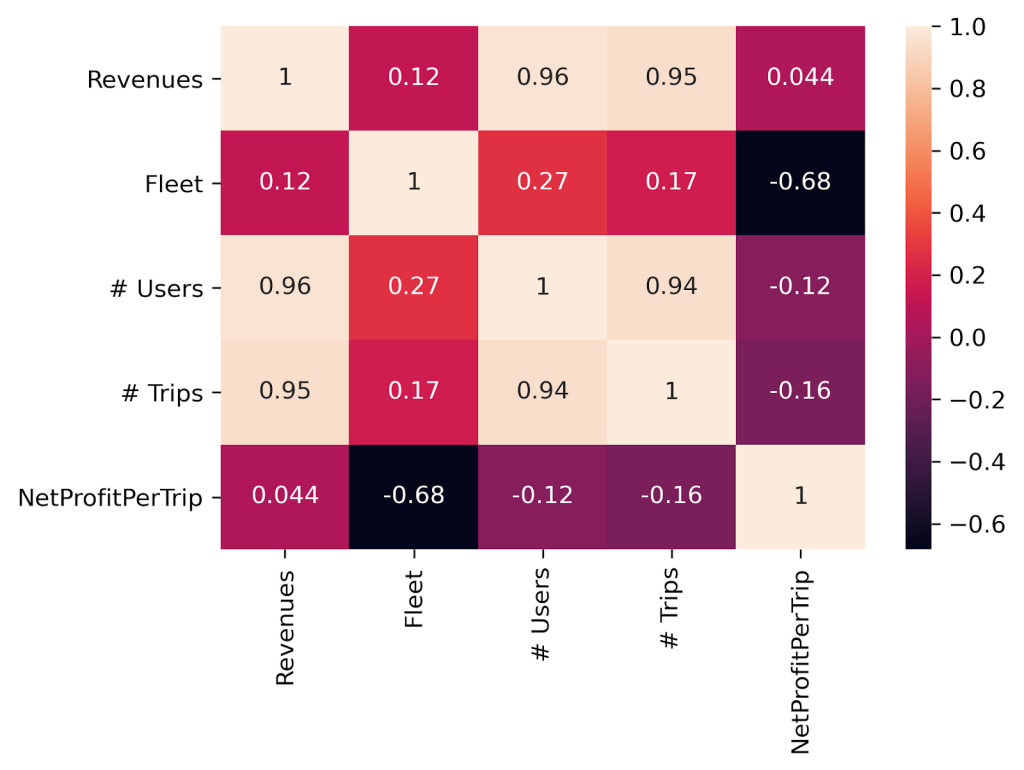
As you can see, the Net Profit per Trip is not correlated with the other quantities, which are strongly related to each other as expected.
This means that Net Profit per Trip is a good informative metric, and since it is independent of fleet size, the number of active users, trips, and revenues that are made in a city, it must depend on some external factor (such as the average trip duration, which maybe depends on the size of the geofence, or the habits of the inhabitants of that particular city).
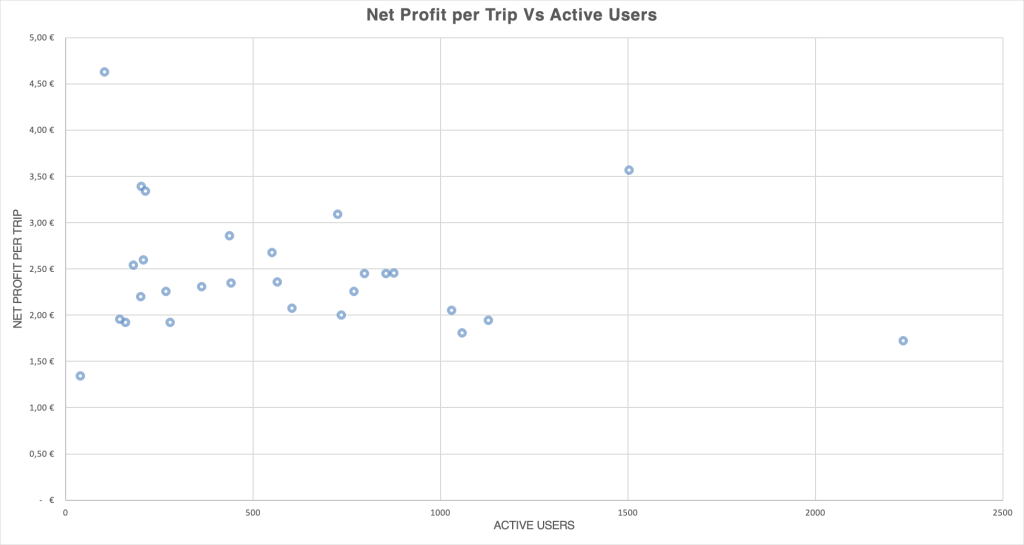
We know that Net Profit per Trip is independent of other quantities, and we can estimate it around 2.5€ per trip, according to the dataset we analyzed (graph) and the estimation previously made. So, this number can change according to possible fixed costs variations, and it is not intended as specific for the use case.
We know that fleet and users are correlated, as well as users and trips, as shown in the figures below
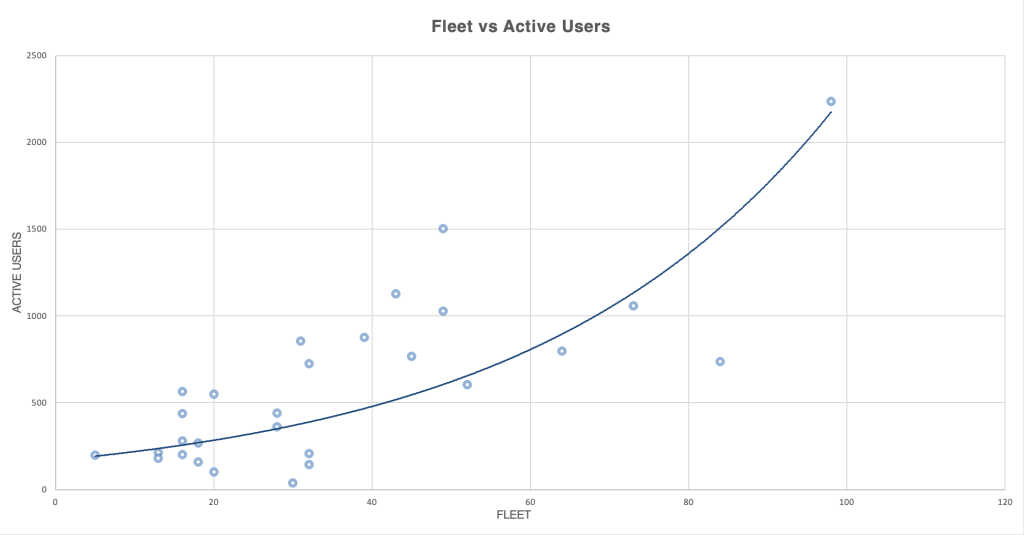
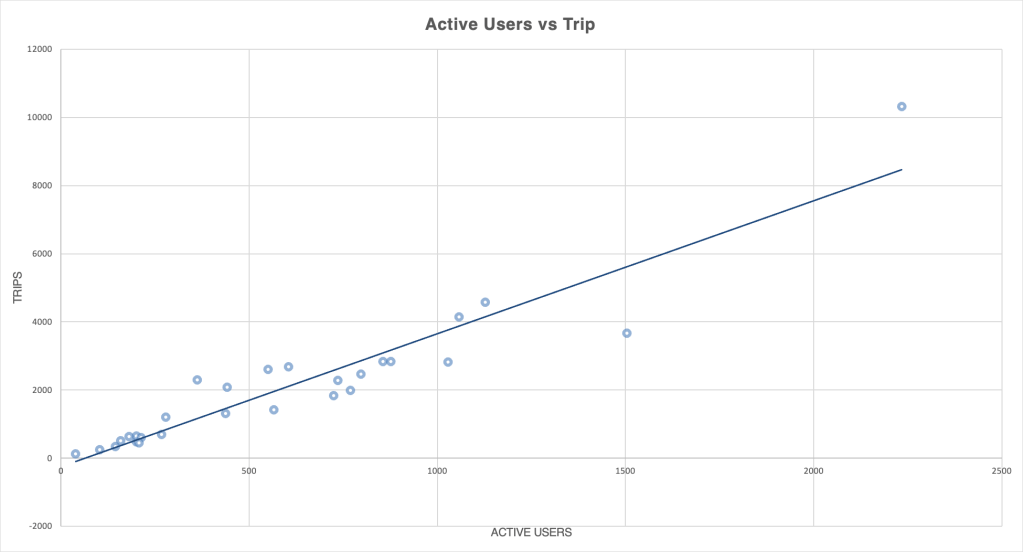
The Net Profit per Trip is crucial to start a sharing service because it can be used as a starting point to calculate the number of vehicles needed for the service to have a certain amount of monthly gain.
For example, suppose you want to earn 10K€ per month (Net Profit).
We know that the number of trips needed can be evaluated starting from the Net Profit, divided by the NPT, so 10000/2.5 = 4000 trips.
From figure 4, we know that for 4000 trips are needed about 1100 users, which according to figure 3 are obtained with about 60-70 vehicles.
Nothing more than that.
This is not as random as it sometimes seems. You just have to know how to read the numbers
All this needs to be parameterized and scaled, considering that the analysis looks at the month with the most trips in the year, but it is the information that the analysis contains that is crucial, much more than the final numerical result. Finding a rule that can give our customers an idea of how many vehicles they need, answering the million-dollar question that no one ever answers.

Data Scientist at 2hire
Less is more. I look for science and numbers in all my interests and emotions with the people I surround myself with.
Posted on April 7, 2022 by Benedetta Biggi
30 Mar 2022 | 3 min read
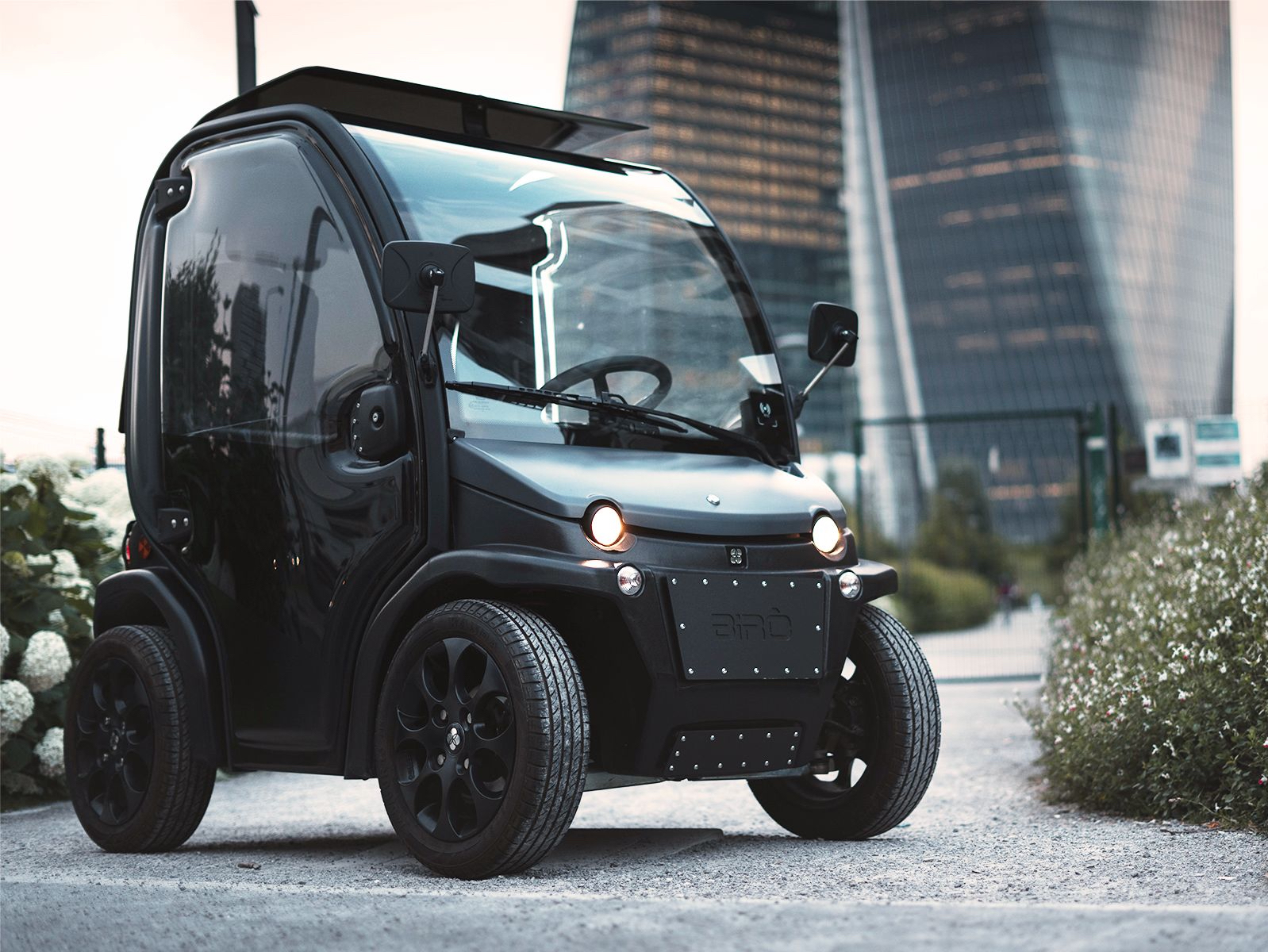
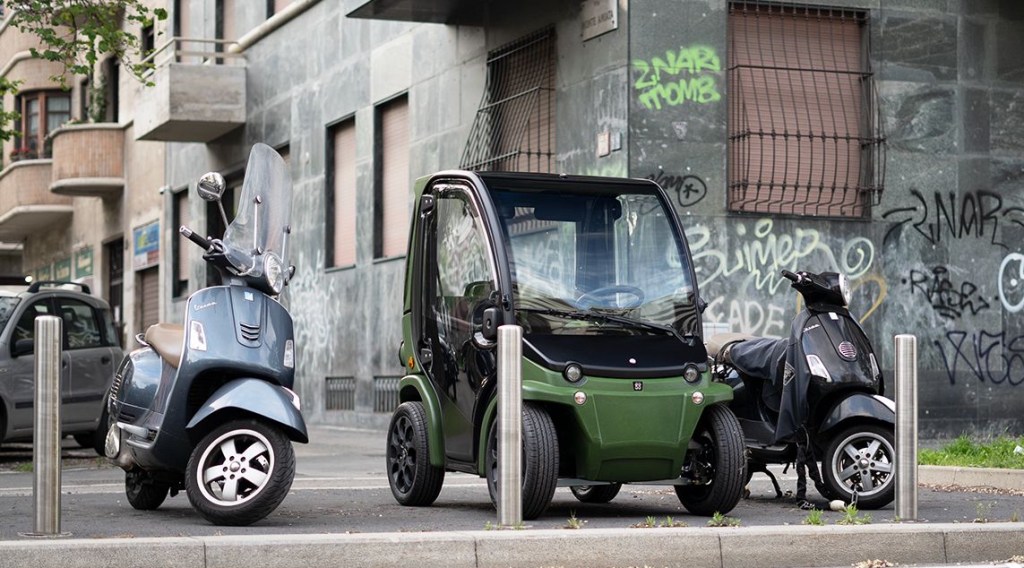
Birò is the world’s smallest electric vehicle, and an Italian first. The vehicle is achieving enormous success in its home country and around Europe. That’s because its features are definitely unique.
Birò combines the safety of a car and the advantages of a moped. Riding a Birò is also cheaper than driving an automobile, and definitely easier to park. At the same time, it is safer than a motorbike: it is the smart 4 wheels solution to weathering. It manages to be eco-friendly, and futuristic at once.
Birò represents an all-Italian success story. The electric vehicle was created in 2008 by Estrima, which carries out R&D, design, production and distribution of electric vehicles under the Birò brand, and between 2010 and 2011 it became the most registered electric vehicle in Italy. Further, due to the fact that it is a covered vehicle, it has already crossed the national borders to establish itself in cities such as Amsterdam and London, quickly gaining the interest of several companies, professionals, and travellers from different cities.
Birò is an innovative idea to give everyone the freedom to move around their cities. The city is its natural habitat where the benefits of a Birò can be experienced by everyone, such as the protection from the weather, the rapidity of movement in traffic jams, and the safety during day and night driving. It also guarantees the same advantages as when driving an electric moped such as the minimum cost per kilometre and easy parking.
As for a moped, Birò also allows you to get around the city centre in an extremely easy way. When riding the vehicle, you can access all restricted traffic zones free of charge.
The company is embarking on a strategy of further expansion. The goal is to enlarge Estrima’s sales network in a further 23 European cities by 2025, expanding its presence by opening new Birò Stores and establishing a network of local partners.
Indeed, a new Birò Store has just been inaugurated in the heart of Le Marais in Paris, where an important network of sales partners will be set up throughout France. Furthermore, the recent joint participation with 2hire at Autonomy Paris , one of the biggest international mobility events, has been an excellent opportunity to openly showcase about the new era of connected Biròs.

The convention was also an opportunity to open up about the partnership with 2hire as official technology provider. In fact, since 2021 every Birò that is produced is natively integrated from the factory with a 2hire board.
The start of this collaboration marked the beginning of a new chapter, in which the connectivity of 2hire and the flexibility of Birò combined to create a 2.0 mobility product.
There are different kinds of Birò vehicles, but all of them share some advantages:
This means drivers don’t need to have a space like a garage to charge their vehicle, nor do they need to look for electric charging stations (that can anyway being used as well). They can simply unplug the battery and charge it at home, in the office, wherever they want. It is extremely moderate in size and easy to transport, but not inefficient. The battery allows the minicar to travel up to 55 km on a single charge, thanks to the small design and light-weight of the car itself too.
One of the points that make us at 2hire proud is that the Birò O2 model is the first 100% electric four-wheeled vehicle made from 80% recycled plastic.
“Less plastic on the planet, and more clean air in our cities”, as the company declared.
Having a Birò O2, it is a support to the #ChangeClimateChange Legambiente’s campaign. Both Estrima and Legambiente believe in the importance of making the world a greener place and actively strive together to fulfil their mission.
The flexibility and modularity of Birò has made it possible to build different solutions around this vehicle.
In September 2021, Estrima presented the smartphone app Birò Share at the mobility event Citytech in Milan. The car is equipped with full remote management, geolocalisation, and service management via the technology entirely developed by 2hire.
A family, business, and community car-sharing service is offered to users and owners of Birò, who are able to share the vehicle with up to three people and manage the sharing simply by typing into their mobile phones.
But that’s not all: Birò doesn’t need a starter key anymore. Through the sharing solution provided by 2hire, the Birò Share app makes it possible to directly manage interactions with the vehicle, keylessly!
A further new entry in Estrima’s world has been the possibility of developing an end-to-end sharing solution thanks to the flexibility of 2hire’s technology, one of the latest projects on which the two companies have worked closely together.
This project has seen Estrima develop the brand new Birò Share as a sharing service, which will initially launch in a few Italian municipalities, with the goal of branching out afterwards.
The Birò Share project includes:
This new project within the world of Birò does not only involve the digitisation of vehicles, but the digitisation of the entire business.


Sales and Marketing Associate at 2hire
I love running and daydreaming losing count of the distance I’m covering, cooking (and especially eating) and Drake is my spirit guide.
Posted on March 25, 2022 by Benedetta Biggi
1 Mar 2022 | 4 min read
“Processes don’t do work, people do” [John Seely Brown]
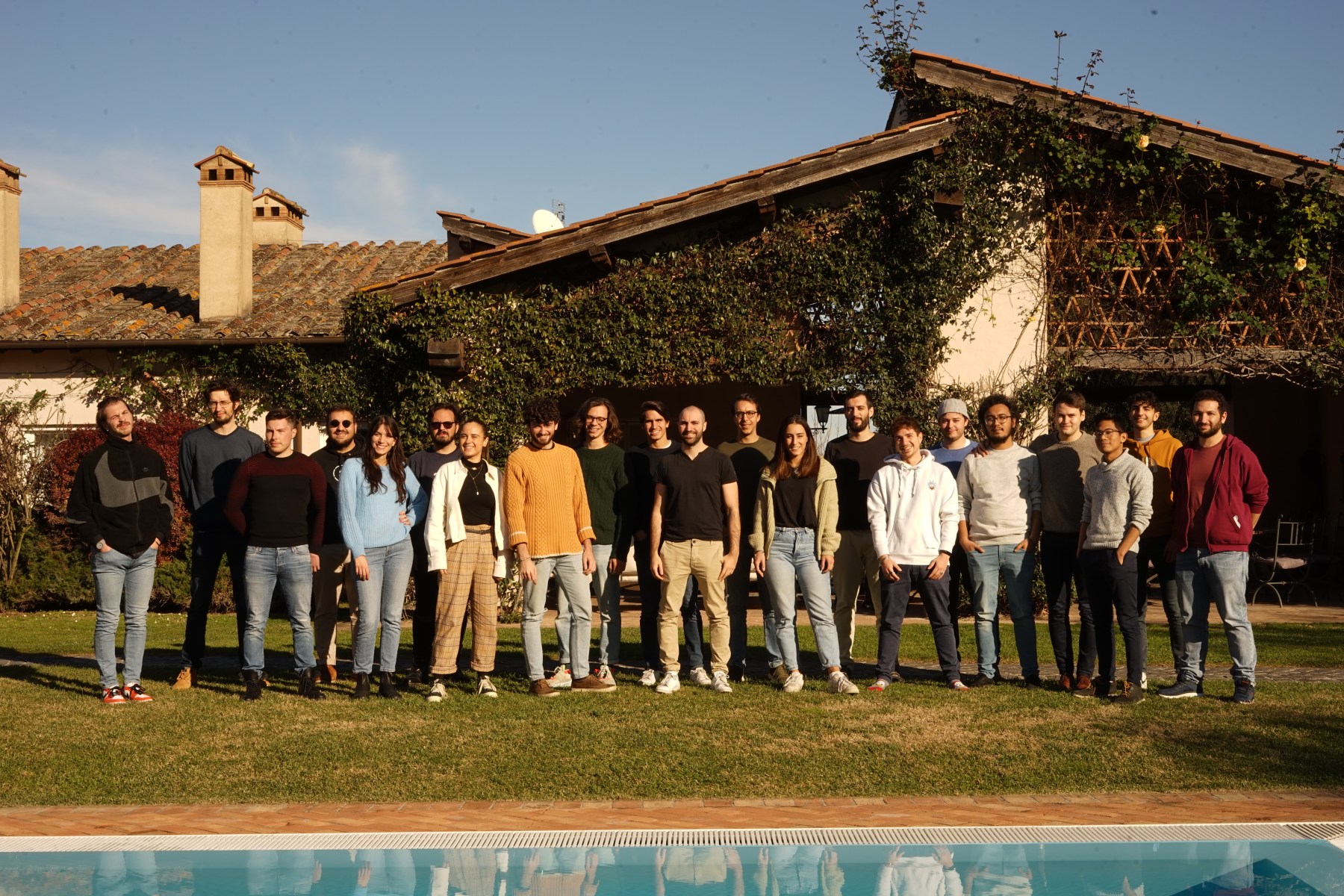
In 2hire there were 4, then 5, then 10, and now there are 30 of us.
When we were five, the process concept was simple as you can get: input → development → output. We all knew all the issues, the product, the destination of the product, the development.
As we became more, the concept of establishing a process took hold. It is not easy to take care of a process, whatever you choose. A well-designed board is not enough for the process to be simple. On the other hand, we were immediately struck by the concept behind Agile: “people before processes.”
It is long, and maybe even not interesting, to point out every step we took from day 0, but the turning point was July 2021: we decided to fully commit, all together, to the “process of establishing a process.”
We had in mind four main lines:

Agile methodologies are ways of development that align with the principles and values laid out in the Agile manifesto for software development. Agile approaches aim to produce the correct product using gradual and regular delivery of smaller portions of functionality. This is accomplished by small self-organizing teams that are cross-functional and allow frequent feedback from customers with subsequent adjustments where needed.
The advantages of Agile include its capacity to support teams in adapting to a changing environment, focusing on the efficiency of delivering business value. The collaborative environment created by Agile can also boost efficiency across the company since teams work in tandem and recognize their respective role within the process. Moreover, companies that employ Agile Software Development can be certain that they are releasing quality products since testing is conducted throughout the development process, the ability to make adjustments as needed and notify teams of any issues that might arise.
By doing this, Agile aims to right the problems posed by traditional “waterfall” techniques of delivering large items over prolonged periods in which customers’ requirements often change, which results in the wrong items being delivered.

Agile software development refers to an assortment of software development techniques based on iterative development in which requirements and solutions are being developed through the collaboration of self-organizing, cross-functional teams.
Agile methodologies (or Agile processes) generally advocate a disciplined and systematic process of managing projects that promotes regular review and adjustments and a management philosophy that encourages teamwork, self-organization, and accountability.
It is a collection of best practices in engineering designed to facilitate the rapid release of high-quality software and an approach to business aligned with the customer’s requirements and business goals.
Agile development is any method of development that is in line with the principles in the Agile Manifesto. The Manifesto was formulated by 14 prominent figures from the software industry and reflects their knowledge of the various approaches that work and do not work for software development.

Since 2001, Agile methodologies have gained acceptance, and with the advent of Agile methodologies, more and more companies and teams embrace the techniques and practices.
An ecosystem has been developed which includes everyone who uses Agile software development, as well as the individuals and organisations that aid in the process by providing workshops, consultation, and structures and tools.
In July 2021, we began planning for this change. In October 2021, we formed the first development team, and we started the first project, within the estimated deadline of January 2022. It seemed impossible, but it just turned out to be difficult.
It’s not “just” having a process that works, it is being more confident in our reliability as developers when it comes to giving a feature delivery date, and our ability to get new members of each team productive as soon as possible.
Having a process is not a panacea to every problem, but it is a way to gain structure and be more efficient. It’s then up to people to make sure the structure has a good foundation, and every one’s work is more efficient.
Those were the first lines of the article, and the last lines as well:
“Processes don’t do work, people do“.
Want to join the team? Check out our open positions or feel free to send a spontaneous application!


Project Manager at 2hire
I’m not a big fan of the self description, but if I have to do it, and this is the case, I’d say that my brightest trait is curiosity.
Posted on March 1, 2022 by Benedetta Biggi
15 Feb 2022 | 4 min read
No one wants to be stuck in traffic when there are other options. The solution may be as simple as sharing. Plus, in a world of environmental and economic uncertainty, it’s no surprise that the idea of sharing and micromobility is quickly becoming more popular.
The trend of shared transportation has increased tremendously in recent years, owning to various factors, such as rapid urbanisation, increase in environmental issues, limited resources of energy, and economic concerns, which are expected to further boost the global shared mobility market over the forecast period.
Only in Italy, more than 5.5M users benefit from sharing services. In Italy, sharing started in the major cities (Milan, Rome, Florence, Turin) and is now proving to be a widely appreciated service suitable for smaller municipalities too.
In 2021 GreenMo Rent, a partner of Vaimoo, operated more than 30,000 electric sharing vehicles in seven European countries. That shows how the industry is growing fast, making a perfect investment opportunity.
With that said, e-vehicles owners and operators need to know the best sharing vehicles to buy or invest in. But with so many options to choose from, it can be hard to decide which one is the best.
We are here to help, let’s give a look at some of the most astonishing micromobility vehicles in the scene!

Kickscooters are a great example of micromobility vehicles to get around town without worrying about traffic. They are also perfect for short distances, so they make the ideal addition to any sharing fleet. Kicks have quickly become a popular mode of transportation in Europe. They are small, easy to use, and can be parked almost anywhere.
Kickscooters can be found in most major cities and work best for dense areas with people and traffic. And while they may not be the best option for long-distance travel, they are perfect for getting around town quickly and easily. Two of the most popular shared scooter available are:
The top features of the OKAI ES400 scooter are:
IoT
The IoT in every OKAI scooter and e-bike is one of the latest, most advanced technologies to date. OKAI’s in-house engineers designed the 4th generation IoT module. That ensures worry-free rides because the vehicle will never fall out of alignment or break down. With IP67 ratings against water & dust ingress, the e-scooter will be protected from all angles.
Swappable Battery, 55 Km Range, and 55 km/h speed
The battery compartment of this device features two locking mechanisms to prevent theft and an indicator screen that shows how much power remains.
The built-in handle makes removing the batteries easy while also providing peace of mind knowing exactly where they are at all times!
The top speed of this device is 55km/h, with a range of more than 50 km. This scooter has everything that you need for fun and efficient journeys.
Solid frame
OKAI is built with an aluminium frame crafted through some of the latest production methods. These include hydro-forming, drop forging, and extrusion, to name just a few!
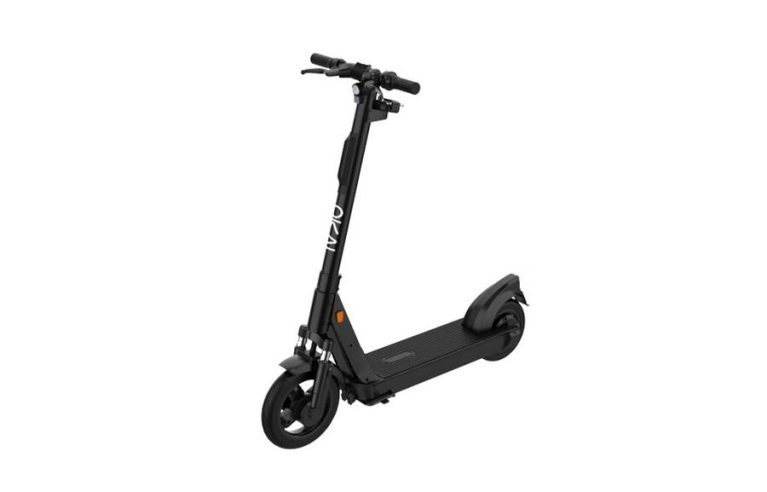
Things that make the Segway MAX Plus scooter stand out are definitely:
Safety and Efficiency
With a wide variety of features, this scooter has everything you need. From the dual brakes and suspension systems to the easy-to-use kickstands that will keep your feet planted on any surface at all times. The high-performance design makes it a premium model on any terrain.
Easy and Effective Operations
The innovative design features an easy-to-use battery compartment cover for swappable batteries that opens at any angle and retracts automatically.
Power and Travel range
This Segway model operates at 350 watts. It is perfect for those who want a reliable, powerful scooter that they can use for commuting or pleasure riding.
The travel range is of over 50 km on a single battery charge and an additional top speed of 25 km/h.
In-built IOT
The built-in IoT integration with the dashboard allows Max Plus’s abnormal situation alarms and comprehensive data collection to handle a single, secure device. Its API protocol is such that it is one of the market leaders and the most widely used scooter among different sharing services.
Quadricycles’ small size and nimble handling make them perfect for darting around town.
Estrima vehicle is the perfect solution for those who need a small, easy-to-handle vehicle for running errands around town. These vehicles are the first ones to be natively integrated with 2hire, which makes the choice of such a micromobility vehicle ideal for launching your own sharing service or to easily share with the family!
The size
Birò Big might be the smallest 100% four-wheeler in existence. But the electric vehicle has over 300 litres of space and a spacious trunk that can store up to 41 litres of luggage.
100 Km of Autonomy
With a max speed of 45 km/h and an autonomy of 100 km, the Maxi lithium is perfect for several trips around town.

There are so many different types of micromobility vehicles on the market today that it might be difficult to orient and understand which is the best choice. Whether it’s a light and versatile kick scooter or a larger quadricycle, there’s something for every kind of sharing business.
The constant in all of this?
2hire is there, ready to be your technology partner, regardless of which vehicle you choose!
Stay tuned for Episode 2… The coolest vehicles don’t stop here!

Customer Success Specialist at 2hire
I think that the most accurate adjective which describes me is: curious. My curiosity brings me to define my primary interest: reading. Read entails a contemplative state of mind.
Posted on February 22, 2022 by Benedetta Biggi
26 Jan 2022 | 5 min read
“Shared mobility is considered an emblem of a shared economy, linked both with sustainable travel behavior and sustainable urban infrastructure from the social, economic, and environmental perspectives.”
As of mid-2021, Europe’s shared mobility industry is breaking new ground. After months of movement restrictions, pandemic lockdowns, and long winter, the number of monthly trips has comfortably surpassed their 2020 levels.
With advancements in tech, more people are abandoning the vehicle ownership craze in favor of sharing services. The suite of opportunities revolving around sharing businesses is huge, some examples are:
In this article, you’ll learn five practical steps on how to launch a sharing service within the shortest time.

Scaling the sharing industry can be a frustrating experience without the right tools. You need a reliable platform through which to manage your sharing business. The good news is that there are tech providers that can help you manage your fleet through trustworthy software applications. At 2hire, we work everyday to make a difference in a unique way, and that’s what sets us apart from the rest.
Wunder mobility launched its service as a vehicle-sharing software provider in 2013. The platform has over 50k active vehicles at the moment. It also has active users in more than 900 cities. Wunder had close to 22 million shared rides by the year 2020.
Atom is a Latvian technology provider, they are one of the latest operators who entered the market, but with satisfactory results.
Their sharing platform empowers entrepreneurs intending to expand the vehicle sharing service provision. Entrepreneurs keen on achieving multi-vehicle integration can trust the capacity inherent in Atom to achieve scalability.
Joyride is a leading bike-sharing management system. The successful micromobility platform launched its services in the year 2014. Joyride has managed to combine payment gateway options, IoT connectivity, and backend management operations in the few years it has been in operation.
The easiest way to scale the sharing sector is with the provider that’s most suited to you.
2hire is among the leading technology companies in the market today. With 2hire, you can quickly scale your scooter, moped, e-bike, or car-sharing services.
2hire offers a fully featured, scalable, and multi-vehicle end-to-end sharing platform. It is suitable for both small and large fleets, for customers located in a single city, and for those who aim to offer a service in multiple locations.
By offering 360° mobility services, 2hire has the power to be a trusted partner to all other sharing providers, as one of our greatest capabilities is to connect any kind of vehicle. Therefore, using any sharing management software, 2hire can be the ideal communicative solution between the platform and the vehicles.
This ultimate sharing solution provides:
Compared to other players in the market, we have top-rated value delivery standards. You can read more about our products and services on the 2hire website.

Due diligence is mandatory when sourcing a sharing tech company for partnership. After the process of market research comes the hard part. You must now narrow down your options to one provider. Your product choice should satisfy all the prerequisites of a reliable service provider. The best software provider for your sharing venture should assure you of exemplary convenience.
A reputable software provider should bridge the best vehicle manufacturers with potential customers with minimum bottlenecks. The main objective of a reliable sharing technology is to:
Every entrepreneur focuses on the need for scalability. The best sharing solution should be one that assures you of scalability as your business grows. You don’t want to end up in a situation where you need to source another solution once the venture grows. The best software provider is one you can grow with over time. It’s essential to ask in advance the provider’s plan for scalability.
Check out 2hire sharing website section and contact us!
When satisfied with the preliminary data, your next step is to consider a demo.
A software demo forms a core part of any developer’s sales and marketing journey. The primary goal is to help potential users quickly understand the software’s main features. You also get to understand the benefits and usefulness of the specific product. When settling for the best sharing software provider, a demo should be at the center of your decision-making process. The demo ensures that you understand the software’s functionality before committing.

Every great onboarding process should be collaborative.
On the one hand, the client must:
On the other hand, the technology provider must:
The software service provider should tailor the onboarding process to suit your needs. It’s also essential to have an onboarding process that incorporates remote working. Every customer’s situation is different and unique, and the onboarding process should therefore be dynamic yet flexible enough. This helps to accommodate such realities. Training should be among the primary considerations during the service setup process, and at the end of this training phase, the client will become a sharing expert!

The software, just like vehicles, requires a test run. You need to undertake a comprehensive assessment of the sharing app before committing. Testing should be both from an end-user point of view and an admin point of view.
Congratulations! You are about to launch one of the most promising sharing services.
It would be best if you considered making the services you offer public. Social media is an excellent place to start the process of publicizing your services, hand in hand with this, local presence makes a difference. Some old-fashioned initiatives such as leafleting, or partnerships with local businesses are important too.
It would be best to decide the combination of product offerings you want to have. The final step is to get vehicles on the streets.
By relying on your technology provider, you’ll be ready to start an adventurous journey with loads of returns!

Starting a sharing service company is a rewarding adventure. Apart from the prospects of growth attributable to the gradual return to post-Covid recovery, there’s also a favorable rise in sharing trends.
The market trend is also reaching smaller towns and not only large cities. Even collateral business such as sharing on university campuses, affiliations with hotels and corporations are becoming more and more popular.
Our services are a notch above the rest. 2hire is a customer-centric company, which is rooted on:
People don’t buy things, they buy solutions to problems.
We are the solution to your problem: finding the best technology provider for your mobility service.
Customer Success Specialist at 2hire
I think that the most accurate adjective which describes me is: curious. My curiosity brings me to define my primary interest: reading. Read entails a contemplative state of mind.
Posted on January 26, 2022 by Benedetta Biggi
15 Jan 2022 | 3 min read
In July 2020, the European Council approved the Next Generation EU, most commonly known as the Recovery Fund or Recovery Plan. Italy is the biggest recipient of the EU fund, achieving more than €200 billion to invest in different areas. One of the six missions that Italy aims to accomplish is titled “infrastructures and sustainable mobility”. The overall goal of the project is to invest in making it easier to have a connected mobility throughout Italy, without burdening our precious environment.
The Recovery Plan is designed to relaunch the EU economy overwhelmed by the pandemic crisis, which seems to be quite an expensive affair. The Recovery Fund amounts to €750 billion. The Italian Economy Commissioner, Paolo Gentiloni, defined it as “the most important economic decision taken since the introduction of the Euro”.

Italy got the first part of a more than €200 billion, obtaining 28% of the total European Union fund. The largest chunk of money, €74.5 billion, was decided to be invested in the green revolution. Indeed, 30% of the total Recovery Fund is earmarked for the Green New Deal, in accordance with the Paris climate agreement. Further, €48.7 billion was planned to be invested in digitalization and innovation. And finally, the third biggest investment was made in sustainable mobility and infrastructure, with an amount of €27.7 billion. The rest of the money was allocated for improving education, research, health care, and gender equality.
So, let’s dig a little deeper.
The allocations for mobility in Italy are mainly allocated to the realization of the high-speed railway lines. Within this project, one of the main objectives is the completion of a high-speed network in the South of the country, where the railway system is the poorest.
In Italy, we are below the European average for train travels. In fact, according to Eurostar data, only 6% of Italians move by train as passengers, while 8 out of 10 of us drive a car. Therefore, the Italian Ministry of Transport has decided to incentivize Italians to use trains, and make it an easy game for us through the realization of strategic operations. Most of the projects concern the South part of our country, and many others focus on regional commuter routes. Among the main ones are the high-speed lines of Salerno-Reggio Calabria, the lines between Palermo, Catania and Messina, and the connection line between Venice and Trieste. Further, a series of other works in Liguria, Rome, Sicily and Puglia.

On the other hand, €8.5 billion was the money invested in urban mobility. This amount of billions was allocated to the strengthening of sustainable local transport through the extension of bicycle paths, buses, subways, and streetcars.
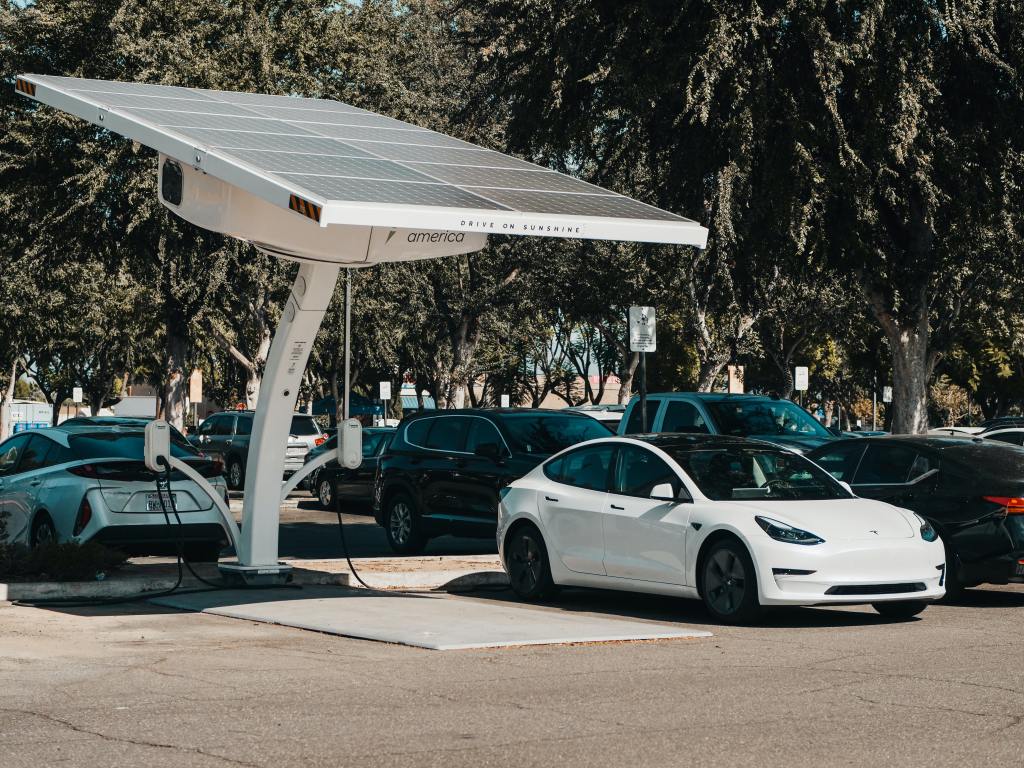
The “urban mobility” project also includes the construction of electric charging stations throughout the country, and hydrogen refueling points for road and rail transport.
Next Generation EU focuses on revitalizing its member countries through a different and more sustainable development model. Precisely, one of its strategies is to increase the sustainable production of hydrogen.
As a result, Italy has allocated €3.2 billion for research, testing, production, and use of H2. Quite simply, a hydrogen car emits zero CO2, as only water vapor is emitted from its exhaust pipe.
The Italian government, therefore, assigned an important role to hydrogen in the plans for ecological transition and set up ambitious targets for the development and application of this energy vector by 2030.
But this is not only happening in Italy. The Next Generation EU commission presented Flagship projects across member states, and one of them is called “Recharge and Refuel”. Within this, green technologies are promoted to incentivize the future use of sustainable, accessible and smart transport, zero and low emissions vehicles, charging and refueling stations. By 2025, the completion of charging points and hydrogen stations around the EU countries is expected to rise up considerably.
We all know it by now: Greta was right, the future is green. To be fair, not only the Swedish environmental activist says so. More than 99% of climate scientists agree with establishing human responsibility for climate change.
Italy recently presented its National Green Transition Plan, also responding to the challenge of the Green Deal, which sees the European Union commit to ensuring a more sustainable future for all. Thus, the Recovery Fund grants are closely linked to the country’s Green Transition Plan in order to boost Italy’s economy.

Starting from 2030, to reach the goal of completing decarbonization, the plan foresees that at least 50% of motorizations will be electric. But this isn’t everything.
Among the regulatory interventions to encourage the development of clean road mobility in Italy, we find the eco bonuses: monetary incentives for the purchase of electric or hybrid vehicles. The bonuses were initially launched in 2020, to then be repeated in 2021 with an additional stationing of €100 million.
The eco bonuses really seem to have an impact on the electric vehicles market in Italy. According to the data provided by the Ministry of Infrastructure and Sustainable Transport, in June 2021 the new registrations of electric cars recorded an average increase of +350% compared to 2020.
On the one hand, the “kick-scooter bonus” has been contested and mocked by many, on the other, it seems to have started a trend in the use of electric vehicles. Between September 2020 and September 2021, the eco-scooter increased by 35%. Surely, the electric vehicle is one of the greenest ways to move around the city. The use of it does not cause any carbon dioxide or particulate matter emissions. Moreover, it is a pretty fast way to avoid a traffic jam.
In 2020, 7.4 million rentals of electric scooters were recorded in Italy, costing a net saving of 2 million kg of CO2. But we do not need to read numbers to realize that the phenomenon is growing, we can simply look around us.
For example, one of the latest initiatives launched by two sharing companies, Helbiz and Bird Rides Italy, involved offering two free 15-minute rides on electric scooters to the polling station to vote in the October 3-4 local elections. The service not only encouraged citizens to vote but also incentivized the use of micro-mobility in large cities.
Unfortunately for the most curious, it will be necessary to wait until the end of 2026 to find out all of the projects in which the recovery fund will be committed. The €27 billion investment in “sustainable mobility and infrastructures” makes room for imagining further upgrading of national railways and roads, safer bridges and viaducts, new cycle paths, greener cities, and cleaner air. The overall mission goal is to make it easier for all Italian citizens to be connected in an eco-friendly way.
Time will tell if Italy will succeed in accomplishing the imposed targets of the European Union. What is clear right now is that we, as a community, have the occasion of a lifetime to really change the mobility, finding a green, sustainable path to the future.

External contributor at 2hire
I love going to live in places where no one knows my name. I prefer nature over cities, books over movies, music over silence.
Posted on January 19, 2022 by Benedetta Biggi
Theories and concepts about Artificial Intelligence were born in the 50s. Yet, Artificial Intelligence (AI) achieved functional applicability in the last two decades, with the rise of machine learning and deep learning. Today, everybody is talking about AI, and businesses across various industries have realized that this revolutionary technology can drastically increase the speed and quality of their products and services.
At this stage, AI is on its path to creating a revolution in the mobility industry. Cities around the world are constantly suffering from increasing traffic, limited availability of space in urban areas, traffic-induced noise, and pollution. Meanwhile, cities are becoming more and more connected and harmonized with sensors, and so the possibilities for AI to improve energy efficiency, liveability, and mobility, will grow exponentially.
Let’s take a look at why AI is the key enabling technology in creating individualized, environmental-friendly, and autonomous mobility systems.

The role of AI in mobility systems will undeniably be tied with the development of smart cities. Both concepts are becoming a necessity, as the urban population is increasing constantly and consumer needs are changing every day.
According to research conducted by the United Nations Department of Economic and Social Affairs, 55% of the world’s population lives in urban areas. What’s more, this number is going to rise to 68% by 2050.
This rapid increase of population in major cities will lead to pressure for sustainable environment initiatives, demands for better infrastructure, and better quality of life. Smart cities, powered by AI technology, are a part of the solution to these demanding challenges urban areas face.
To function properly, smart cities require the processing of enormous amounts of data, also known as Big Data. Big Data is described in three terms: high volume, high-velocity datasets, or high-variety information assets. High volume represents massive datasets, high velocity datasets mean they are processed very quickly using algorithms, and high-variety information assets represent the use of different data sources.
When AI and Big Data collaborate, the results can be more than promising. AI is described as a non-human system that learns from experience and imitates human behavior. It can efficiently look through Big Data, and create predictions and cost-effective solutions to drive smart city technologies.
Smart city technologies will play an important role in fixing the ongoing problems of public transit and public safety. When it comes to public transit, cities with large transit infrastructures have realized that they must begin the process of harmonizing the experience of their passengers. Whether passengers are traveling by car, moped, scooter, train, or bus, they can provide real-time information using their mobile apps. As a result, passengers can communicate delays, breakdowns, and find less congested routes.
Once cities gather and analyze public transit usage data, they can make better decisions when improving routes and timings, and distribute infrastructure budgets more accurately.
Transportation is heavily tied to complex hardware-based ticketing systems that don’t have the flexibility for dynamic pricing. Once transit operators switch to software-based platforms, they will be able to know how many seats have been booked and how many tickets have been sold in real-time. Furthermore, operators can cross-reference these data points with the capacity of trains and busses to propose different prices throughout the day. Using AI, operators can learn from rider patterns and use that data to form a dynamic pricing strategy.
Dynamic pricing has been around since the 70s, and It was mainly used by the airlines for selling airplane tickets. Unlike fixed prices for airplane tickets, prices are chosen based on current demand and other factors. Therefore, prices can change every day and even throughout the day.
Artificial Intelligence can absorb large amounts of data from various sources including historical booking and pricing information, route information, schedule changes, competitor pricing, and web user interaction behavior. Dynamic pricing engines when combined with machine learning, can suggest price structures that can be regulated on a dynamic basis.
When it comes to urban transportation, they contrarily have fixed prices for mass transit. Passengers pay the same price at 1 a.m. as they would pay at 1 p.m. or 3 p.m. This system is pretty counterproductive if the goal is to prevent rush-hour crowds and create better vehicle distribution throughout the day. To fix this, transit operators could apply the highest price during rush hour and apply lower prices during less busy schedules. As a result, this would stimulate drivers to ride when the price is lower, and would also have a positive impact on urban mobility and general healthcare.
Interestingly, ride-hailing companies have implemented a similar strategy called surge pricing. In plain words, they raise prices during peak demand and lower them when there is less demand.
Another similar concept has made a good impact in London, and it is called congestion pricing. Drivers are charged a premium tariff, when they want to drive in or out of the city center, during rush hour.
It may be hard to believe, but a Swedish railway company called SJ has been offering dynamic pricing on its tickets since 2004. Namely, this company has been selling tickets online since 1997, and this is why more than 90% of their passengers are purchasing tickets through dynamic pricing.

The goal of smart mobility systems is to increase safety, reduce traffic congestion, improve air, and reduce noise pollution and costs. Smart mobility systems have been recognized as essential for decarbonizing the transport sector and reaching the EU emission reduction goals. Artificial intelligence is proving to be a powerful tool that has the potential to drive a sustainable transition to more efficient, liveable, and more human-centric mobility systems.
AI, when applied to urban mobility, can rely on data from existing infrastructures such as traffic controller detection, urban centers, video data, fleet data, and public and private third-party data. In this transition, the public sector will play an important role in ensuring that AI solutions are secure, inclusive, and rely on non-biased, fairly shared data that still preserve citizens’ privacy.
The shift towards an AI-driven mobility will bring a positive impact on all the value chains involved. Municipalities and private mobility operators will be working together to get closer to this evolution.
MaaS systems have proven to be a great alternative to personal transport. These systems offer different means of transportation, and users can book, manage, and pay using their smartphones. Also, MaaS is proving to be a key player in reducing traffic congestion, enabling vehicle-free cities, and system-level optimization of mobility investments.
When powered by AI controllers, MaaS systems can optimize, monitor, and coordinate fleets and, at the same time, offer great options to individual users. What’s more, AI-based MaaS can enable ride-sharing users to share autonomous vehicles across an optimized route in a much cheaper and safer way.
Self-driving vehicles are finally making their way into the transportation sector. Although the majority of these vehicles are still pilot projects, some companies have already deployed their vehicles on public roads.
Computer vision and deep learning systems are the foundation of self-driving vehicles. They are responsible for processing and giving context to all the data that is received from the sensors. Self-driving cars collect data from various sources such as cameras, radars, LIDAR, etc.
As AI technology continues to evolve, self-driving cars might become increasingly popular among consumers.

As AI and machine learning continues to evolve, there is no doubt that the mobility industry will be changed forever. In the future, AI assistants will organize our trips and instantly help us find, book, and pay for the best transport option, depending on our situation and needs.
As of now, mobility is such a fast-pacing phenomenon that we always have to be ready for the next change. Just think of the helicopter cab that takes you from Fiumicino airport to Rome, or Elon Musk who wants to replace Los Angeles-Sydney flights with Falcon Xs.
These are just a few novelties worth mentioning, what is certain is that the mobility of this era is the real booster for accessibility and flexibility.
Artificial intelligence will not just change the way we travel, but will also revolutionize our lives in urban areas, by improving energy efficiency, and the overall quality of life.
Customer Success Specialist at 2hire
I think that the most accurate adjective which describes me is: curious. My curiosity brings me to define my primary interest: reading. Read entails a contemplative state of mind.
Posted on December 15, 2021 by Benedetta Biggi
12 Nov 2021
In this day and age, every industry including transportation records an extraordinary amount of data. Big data has emerged as a result of rapidly decreasing costs of collecting, storing, processing, and dispersing data. This decrease in data storage costs has allowed the possibility of absorbing data rather than discarding it. To quote science professor George Dyson “Big Data is what happened when the cost of storing information became less than the cost of throwing it away”.
In the past, data that was considered insignificant or trivial (digital dust), was discarded. Today, ‘’digital dust’’ is analyzed with sophisticated software, and when merged with other contextual trivial data, it can provide valuable insights.
Let’s take a look at why Big Data is the future of urban mobile operations and how it can help travelers, transportation services, and public agencies make smarter decisions.

Without a doubt, we have witnessed the rapid development of software that is changing our transportation. Most people are using mobile websites and apps for a variety of transportation functions including vehicle routing, parking, trip planning, and fare payment.
Most people aren’t aware of the fact that real-time analytics and algorithms are constantly working to improve their travel experience. This includes managing crowdsourced and flexible routing, providing predictive analytics for accurately forecasting and responding to demand, and improving operational responses, when natural or manmade hazards occur.
Although transportation public services already use a vast amount of data in their modeling and operations, Big Data along with data sharing has a much bigger potential to exceed transportation planning and traveler services.
A good example of this was the 2014 Soccer Cup in Rio De Janeiro. Namely, the local government acquired driver navigation data from Google Waze and combined it with the data gathered from the pedestrian transit app Moovit. All this data provided crucial real-time information about the transportation network. As a result, engineers and local transportation planners were able to get ahold of data on half a million drivers and identify operational issues.

An important factor to consider when selecting a data source is its quality for analysis. Data analytics refers to how all information is extracted from a data set. First, it is categorized into relevant fields such as origin, destination time, longitude, and latitude. Next, a series of operations are performed to clean, transform and model the data to obtain significant conclusions.
At this point, a range of techniques and tools have already been developed to manipulate and visualize Big Data. Furthermore, expertise is drawn from various fields including statistics, computer science, mathematics, and economics. As we can see, there are more than few challenges to face, and that’s why it requires a multidisciplinary approach.
When it comes to transportation planning and urban mobility, spatial analytics are used to extract the topological, geographical, and geometric properties that are encoded inside a data set.
One of the most important factors when selecting a data source is the scope and quality of the data set. Naturally, data extracted from a single source is considered clean and precise.
In reality, data from a single source is often messy and includes incorrect, mislabelled, missing, and even spurious. Because of its heterogeneous nature, it is often incompatible with other sources.

Although traditional methods that involve statistics and optimization are still relevant, they have certain limitations when faced with high-velocity data sets. Approaches such as data mining, network analysis, visualization techniques, and pattern recognition have shown much better results when it comes to Big Data.
Rather than assuming a model that describes relationships in the data or requiring specific queries on which to base analysis, data mining lets the data speak for itself. This means it relies on algorithms to discover patterns that are not evident in single or joined data sets.
Data mining algorithms perform different types of operations and these include classification, clustering, regression, association, anomaly detection, and summarization. These approaches can be based on examples provided by human operators. They are used to guide the process using unsupervised operations, in which patterns are detected algorithmically.
Building and running models are crucial for testing hypotheses concerning the importance of different variables in real-world systems. Models can simulate real-life scenarios and, as a result, can characterize, understand, and visualize relationships that are difficult to understand in complex systems.
Using Big Data, the scale, scope, and accessibility of modeling exercises are increased drastically. Through modeling exercises, we can ensure that the right questions are asked and remain essential for providing high-value outputs.

Urban mobility is an ongoing problem for cities worldwide. Cities have a giant task of guaranteeing travelers to get from point A to B safely and affordably. Because of this, cities need to have a better understanding of their complex mobility systems. Naturally, this is where Big Data and visualization take over, and so let’s take a look at what the future holds for urban mobility systems.
As we already mentioned, data analysis can simulate real-life scenarios. Using data, cities can now understand their ecosystem better and answer various crucial questions. This includes travel demand throughout the day, public transport system capacities, bottlenecks, etc.
Using heatmaps, cities can now illustrate their traffic volume, whether it’s neighborhoods, roads, or entire regions. These visualizations can now help traffic planners to optimize infrastructure more easily.
According to Inrix and Tom Tom, traffic volume dropped due to the global pandemic, and also fewer vehicles on the road in 2020 resulted in drivers saving money due to the lack of congestion. However, traffic jams are still a huge problem in cities around the world. They produce large quantities of carbon dioxide and therefore raise public health risks and medical treatment costs.
Traffic congestions can be avoided with the help of transportation data. Three modules make up the general framework of this data-analytics-based traffic flow prediction‒ data collection module, data analytics-based module, and application module.
Transportation data can be collected from various vehicle-mounted devices including GPS, WiFi, Bluetooth, and RFID. For instance, shared bikes can be equipped with GPS, WiFi, and Bluetooth for tracking. As a result, we can see when the bikes are used and their traveling trajectories. However, micro-mobility vehicles have one big disadvantage: they are small in size and this affects their visibility on the road which causes crashes on the road.
Transportation data can now be analyzed with methods such as deep learning, classification, ranking, and regression to predict traffic flow. Technologies such as the time series model, deep- learning-based predictor, Markov chain model, and the combination of neural networks, can be used for data-analytics-based prediction.
Predicted results can be used to support many applications for improving the quality of life in cities. This includes transportation planning, transportation management, and city management and planning

Cities have an ongoing problem with construction work. It creates constant disruptions in traffic and cities are forced to create changes in routing. Using data analytics, cities can now look at possible scenarios that can have an impact on traffic flow.
A good example of this method in action is the district Harburg in Hamburg. The city had many construction projects planned for 2021, which required full or partial road closures. The Authorities used simulation software to plan detours. The software showed that these alternative roads will end up clogged, and so they decided to begin construction projects at different times.
Cities can now use software to simulate incidents or events that usually affect the road network. This can help the authorities to stabilize the traffic situations by suggesting alternate routes and sharing them on the news. Hamburg is once again a good example of putting this strategy to good use. Namely, in 2020 the environmental movement ‘’Extinction Rebellion’’ blocked all access to Hamburg’s Köhlbrand bridge. However, Hamburg’s police had already simulated this kind of street closure and were able to instantly make clever decisions.
Big Data and predictive analytics are creating an impact on the mobility industry. However, we are also witnessing an exponential growth of global data, enhanced by emerging technologies such as automated vehicles, drones, automated aerial vehicles, robotic deliveries, etc. Once these technologies become the new standard, we will surely see the true power of Big Data and predictive analytics.


Data Scientist at 2hire
Less is more. I look for science and numbers in all my interests and emotions with the people I surround myself with.
Posted on December 3, 2021 by Benedetta Biggi
01 Sep 2021 | 6 min read
“Happiness is only real when shared”. Many scientific analyses reveal the existence of a positive correlation between social relationships and biological markers of longevity. Studies of behavioral and psychological mechanisms have shown that lack of social connections increases the odds of death by at least 50% (1). On the other hand, an efficient mobility system in a city is directly proportional to the ability to participate in society. If the mobility system is effective and pleasant, it results easier to maintain our connections.
In simple terms, human beings are social animals. We need to connect with people to be healthy, and we can rely on a variety of digital innovative technologies to make our mobility easy-breezy.
Many of us are not even aware of why and how digital mobility can improve our daily life. So, here is the deal: you are about to find this out.

Nowadays, in our hyper-technological world, face-to-face meetings are fundamental. Indeed, many of us emigrate to the big cities to work and study. Commonly, our friends and loved ones live far from us. We can maintain our long-distance relationships quite simply thanks to new technologies such as social networks and video calls.
But chatting on WhatsApp will never be enough.
People spend so much time typing on our phones, and we are all constantly in such a rush that sitting up in a bar with a friend is a true blessing.
Moreover, the current Covid-19 emergency has given a strong acceleration towards the adoption of smart working. Considering we work much more from our houses, and therefore we spend days entirely at home, meeting up in person with our affections is essential.
Humans need more than Zoom calls for building strong relationships.
In addition to that, meetings in person are still crucial for doing business. Surely, emails can accelerate the communicative process in a work environment, but face-to-face communication “builds stronger, more meaningful business relationships”, as said by the 80% of business professionals interrogated during a Forbes Insights survey (3).
Nevertheless, we live in a busy world, there’s no space for extra stress.
After a day sitting in front of a computer, we want to reach our friends’ house with a rapid and enjoyable transit system to groove on that salami pizza watching the football match all together.
But here’s the rub: we might as well enjoy that night at our friends’ place, but how to get there is also important.
“Life is a journey, not a destination”, as the American writer Ralph Waldo Emerson once said. And we agree with you Ralph, we rather go watch football at our mates’ comfortably driving a sharing vehicle rather than blindly relying on unknown timetables of public transport systems.
Surely, driving our own car is more enjoyable and relaxing than being on a crowded bus. So, in the case we cannot afford, or simply do not want, to buy a car right now, but we still desire to drive around the city, sharing mobility can be the right trade-off.

The revolution in the mobility market concerns the modernization of traveling by IT advancements. Not only we can pass the costs of vehicle ownership, but we can also reduce traffic jams, carbon dioxide emissions and benefit the environment.
Today, it is estimated that 55% of the global population lives in a city, and the phenomenon is believed to increase exponentially.
Clearly, more people in the cities leads to a rise in congestion. And we all know this is a big issue, anyone can agree on how frustrating it is to be stuck in traffic.
Indeed, there are around one billion vehicles on the roads today, which are estimated to become as many as four billion by 2050 (2).
Our world is changing, and we need to go hand in hand with it. Carbon dioxide emissions are the primary cause of climate change (4). In the EU’s countries, it is estimated that nearly 30% of carbon dioxide emissions come from transport, of which 72% are from road transportation (5).
People sharing the same car leads to fewer cars on the street, which also means healthier air to breathe for us all. So the result is less cars leads to fewer emissions.
It’s that simple: by increasing our use of sharing mobility we become more sustainable to our planet, and we make connectivity an easy game while we enjoy our journey.
However, the future of mobility cannot only rely on sharing vehicles. In order to solve the mobility challenge and tackle city problems, it is necessary that the private and public sectors collaborate and take further actions. We need to progress in the use of the modernization of traveling and its commercialization, through funding and innovative business models as well (6).
As a part of the mobility revolution, it will be increased the use of digital services to deliver mobility solutions. For instance, there is an expected growth in the use of data-driven systems to manage the traffic flow. These innovative systems will work to limit the volume of cars allowed in the city center, while raising the number of buses and taking into consideration factors such as the weather. However, these kinds of systems need to rely on citywide connectivity across mobility (7).
In 2018, a mobile app was panted to find parking spaces via GPS and then show the exact location of the parking lot. To use this app it is necessary to have seamless connectivity across the city in order to save both drivers’ and space providers’ time (8).
Here, we find a key point. Let’s dig a little deeper.
Connections for us humans are critically important, and our means of maintaining them can often be traced back to a system of mobility. On the other hand, it is also the connections themselves that enable mobility. In a reality where the entire city is connected by transport, the mobility system could work efficiently in the prevention of overcrowding and reduction of dead time.

There will not be a new breath of connectivity without the use of digital frontiers of mobility, just as there will be no progress in digital mobility systems without a solid underlying connectivity system.
To satisfy this human’s need and therefore meet up with people, mobility is one of the most powerful tools.
Through digital innovations, mobility is adapting to the new world’s necessities embracing connection worldwide.
Thus, what does all this mean?
If you promised your girlfriend you are going to participate in her family lunch on the other side of the city, you must go with her.
The true meaning of happiness is sharing it with others.
Even so, we recommend you to enjoy the ride to get there thanks to reliable, efficient, and always available mobility services, before having to spend a terrible 8 hours Sunday lunch.

External contributor at 2hire
I love going to live in places where no one knows my name. I prefer nature over cities, books over movies, music over silence.
Posted on November 18, 2021 by Benedetta Biggi
04 Aug 2021 | 5 min read
The overshoot day. The day on which we all exhausted the resources that the Earth is capable of producing in the whole of 2021.
For the fourth time in five years, the overshoot day falls in July. The only time it didn’t was in 2020, with the pandemic shutdown. In other words, with this current consumption of resources, we would need 1.75 Earths this year. In Italy, we would even need the resources of 2.7 Earths.
We consume more than the planet is able to give us, which is why sustainability must become the cornerstone on which to build a mobility that is not only innovative, but also capable of supporting and being supported by the Earth.
EU leaders have committed to building a carbon-neutral economy and society by 2050, and transport is one of the key sectors targeted by effective public policies to reduce CO2 emissions and where adaptation measures are needed to reduce vulnerability to climate change.
Society must undergo a transformation that requires a drastic reduction in greenhouse gas emissions to achieve the goal of carbon neutrality by 2050, while ensuring affordable alternative solutions for citizens.
According to the latest statistics from the United Nations Economic Commission, the transport sector is responsible for about 30% of CO2 emissions in industrially developed countries and for about 23% of total man-made CO2 emissions worldwide.
New solutions must be found to increase resource efficiency towards a more socially and environmentally sustainable society.
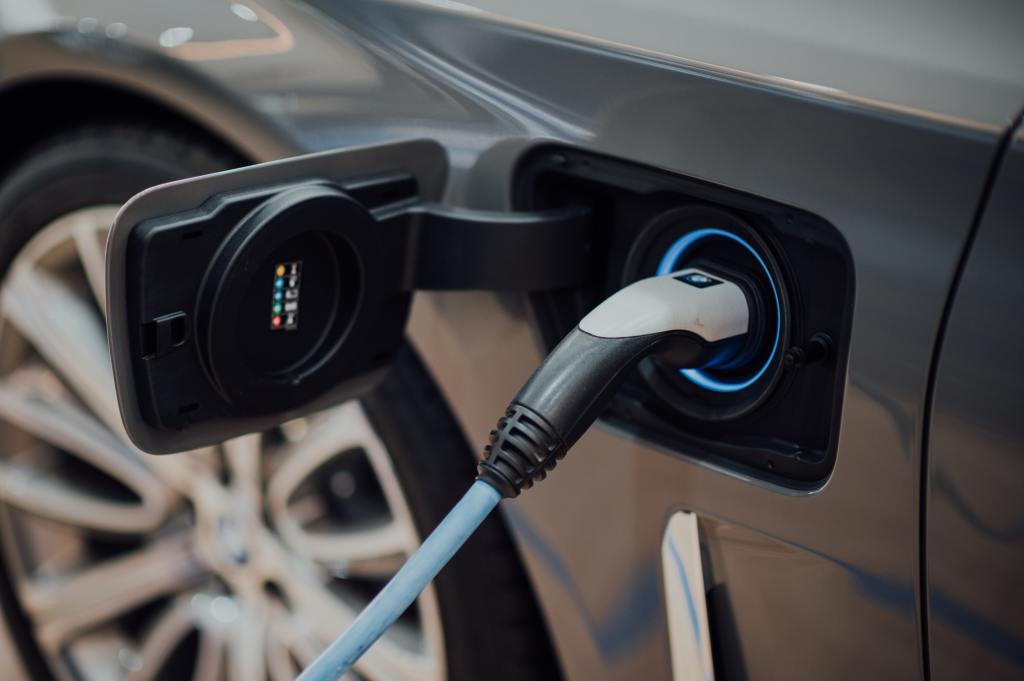
Gustave Le Bon said that the need for certainty has always been stronger than the need for truth. In the case of CO2 emissions, the need to publicise that it was not such a deep-seated problem has been, for many years, greater than the need to analyse and seek real solutions to a deep-rooted problem such as CO2 emissions.
Switzerland’s Energy Programme, launched by the Federal Council in 1991, promotes the rational use of energy in the country, and in a February 2020 report states that the production of electricity from renewable sources should be intensified in parallel with the development of electric mobility. In addition, electric vehicles do not directly emit pollutants, so in urban areas with heavy traffic, they can even improve air quality.
As things stand, yes, electric vehicles do still emit CO2, but in a reduced amount. The final goal is to reach such an energy autonomy and efficiency that the benefit gap between electric and combustion vehicles will become ever greater and will pave the way to a 100% EVs transition.

Vehicles sharing is an urban mobility tool based, as the term suggests, on the use of a fleet of vehicles by several people who use them according to their needs. It is a highly effective solution for those who do not have a mean of transportation but need it occasionally, for those with limited mobility needs and for those who need to integrate public transport services.
The established sharing services offer is characterized by several environmentally friendly effects:
In addition to the relief effects resulting from the environmentally conscious transport behavior of vehicles sharing participants, a positive effect is achieved by the fact that greener vehicles are used in sharing than in the private or company fleet. The tariff system, which is staggered according to vehicle size, leads users to choose vehicles with smaller engines and dimensions depending on their intended use. Compared to new private vehicles, sharing ones emit on average 15 to 25 percent less climate-damaging C02 per kilometer driven.

For example, the price structure of sharing services providers allows users to cover a wide range of user needs in a cost-effective and environmentally friendly way. To this end, the providers offer a variety of different vehicle models from which the user can choose the most suitable one for the upcoming trip: the compact one for the business trip, the station wagon for the family outing, the scooter for the leisure trip in nice weather or a minibus for the team of the local sports club.
This principle is applied to all kinds of vehicles when they are integrated into the fleet. Whether short or long distance, the most environmentally friendly drive is available for every purpose in the sharing mobility module. When booking vehicles, users can decide whether an electric car or a vehicle with a conventional drive is the right vehicle for their next trip and are gradually introduced to the use of electric vehicles.
The average usage patterns in the sharing world fit well with the performance parameters of modern electric vehicles. For example, an electric car in carsharing can easily handle three typical city trips of up to 35 km at a stretch without having to recharge at the charging station, making electric cars a commercially viable option for urban carsharing providers. In 2020, the fleet of the five major carsharing providers in the city of Paris consisted of 66% electric and battery vehicles, 17% hybrid vehicles and only 17% internal combustion engine vehicles.

Sharing mobility is a window on the future. To waste less through it means to ask less to the planet. It would only need to delay the Overshoot day by 5 days each year, to get even with the Earth before 2050. Mobility, as everything else, needs to do its job. We do not have 1.75 Earths available. We have just one, and it is not ours: it is in sharing.

Sales and Marketing Associate at 2hire
I love running and daydreaming losing count of the distance I’m covering, cooking (and especially eating) and Drake is my spirit guide.
Posted on May 7, 2021 by Benedetta Biggi